
Job's ordeal a good lesson in heroic endurance
BC Christian News, · Arts
 |
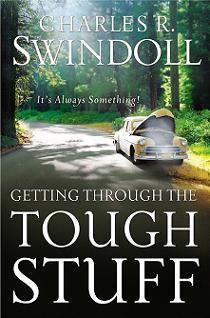
Chuck Swindoll has written dozens of books on Christian living, covering everything from compassion to Armageddon. One of his recent themes is suffering, as presented in two 2004 books from W Publishing Group: Getting Through the Tough Stuff and Job: A Man of Heroic Endurance. The following is an excerpt from the latter:
 |
LIFE is difficult.
That blunt, three-word statement is an accurate appraisal of our existence on this planet. When the writer of the biblical book named Job picked up his stylus to write his story, he could have begun with a similar-sounding and equally blunt sentence: "Life is unfair."
No one could argue the point that life is punctuated with hardship, heartaches and headaches. Most of us have learned to face the reality that life is difficult. But unfair? Something kicks in, deep within most of us, making it almost intolerable for us to accept and cope with what's unfair. Our drive for justice overrides our patience with pain.
An example: You're born and reared in Canada, and you're on ice skates as far back as you can remember. Throughout your growing-up years, while skating along the ice, you are dreaming of someday making it to the Olympics. Skating is difficult. You fall more times than you can remember, but in every fall you learn another lesson, and every year you perfect your technique. Ultimately, you learn to skate very well. You get a special teacher and you find a skating partner, who is also from your homeland.
The two of you skate toward your mutual dream of being at the Salt Lake City 2002 Winter Olympics. Finally, your moment comes. As your names are announced, you slide smoothly and gracefully onto the ice. Your dream has come true. You perform your routine to perfection-better than you've ever done it. And you know in your hearts as you finish that it was a gold-medal performance. Both of you are ecstatic. . . until you see the scores.
Your heart sinks. As you read those numbers you realize that you'll get the silver medal and another couple less qualified than you will win the gold. At that moment, life is difficult. In a few hours time, however, you will find out that the judging was skewed, that the competition was fixed. And in fact, one of the judges would later be removed. You didn't know that at the time you saw the score. When you find all that out, difficult is changed to unfair, and that's a whole different subject. Once you learn that the judging was deliberately unfair, you can't tolerate the thought of accepting the silver medal . . .
Welcome to Job's world. Without realizing it, you have just walked onto Job's turf . . .
For Job, life was not simply difficult; it became absolutely unfair. You may not know about Job's agony. It's easy to think that a story this old is familiar to everyone, but it may be new to you. So, allow me a few lines to offer a quick and dirty analysis.
Job was a man of unparalleled and genuine piety. He was also a man of well-deserved prosperity. He was a godly gentleman, extremely wealthy, a fine husband and a faithful father. In a quick and brutal sweep of back-to-back calamities, Job was reduced to a twisted mass of brokenness and grief.
The extraordinary accumulation of disasters that hit him would have been enough to finish off anyone of us living today. Job is left bankrupt, homeless, helpless and childless. He's left standing beside the ten fresh graves of his now-dead children on a windswept hill.
His wife is heaving deep sobs of grief as she kneels beside him, having just heard him say, "Whether our God gives to us or takes everything from us, we will follow him." She leans over and secretly whispers, "Just curse God and die. " Pause and ponder their grief – and remember the man had done nothing to deserve such unbearable pain . . .
Unfair suffering is never funny. Misery and mystery are added to the insult and injury of Job's real-life disasters. As he sits there covered with skin ulcers that have begun erupting with pus, swelling his body with fever and giving him a maddening itch that will not cease, he looks up into the faces of three friends who arrive on the scene. They sit and stare at the man for seven days and nights without uttering a word. Just imagine. First, they don't recognize him, which tells you something of the extent of his swelling and the sores that covered his body. The sight causes them to be at a loss for words for a full week.
Unfortunately, they didn't remain silent. When they finally did speak, they had nothing to say but blame, accusation and insult. "You're getting what you deserve." Though they shaped their cutting remarks in much more philosophical terms, they proved unmerciful. His pain only intensified.
His misery turns to mystery with God's silence. If the words of his so-called friends are hard to hear, the silence of God becomes downright intolerable. Not until the 38th chapter of the book does God finally break the silence, however long that took.
If it were just a few months, try to imagine. You've become the object of your alleged friends' accusations, and the heavens are brass as you plead for answers from the Almighty, who remains mysteriously mute. Nothing comes to you by way of comfort. It's all so unfair; you've done nothing to deserve such anguish . . .
The silence of God's voice will make you wonder if he is even there. And the absence of God's presence will make you wonder if he even cares.
He is. And he does.