
Reunion at Missions Fest
BC Christian News, · International
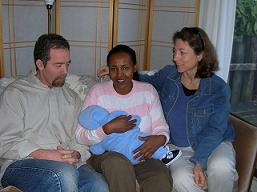
WHAT was meant to be an introduction became a reunion. Steve was at his mission's booth at Vancouver's Missions Fest [www.mfest.bc.ca/], when a Canadian couple approached with an Ethiopian woman. They had brought her to the booth because she had lived in Somalia, where Steve's mission had worked. The two recognized each other immediately – and there were hugs and tears.
Harage and her husband Sesay arrived in Vancouver in August, after a two-year process of gaining refugee status. Both are from Ethiopia, and had spent time in Somalia. One day, they met a Salvation Army couple at a bus stop in New Westminster; the couple had a strong interest in Somalia, and directed Harage and Sesay to Missions Fest.
Steve had been in and out of Somalia a few times in the early 1990s. The last time Steve had seen Harage, the two were in a church in Harjeisa, the capital of Somalia – a Muslim country that is resistant to foreigners and Christians alike. During the service, children threw rocks at the tin roof, but the believers kept singing out loud and did not hide their worship. A few months later, Harage and ten others were arrested for distributing tracts, and spent two weeks in jail.
Harage grew up in a Christian home, and had felt God speaking to her to evangelize in Somalia; but she resisted it at first because of the reputation the Somalis have of being 'difficult' people. She prayed a great deal; then, she told CC.com, "God changed my heart and gave me love for them."
By the time she met Sesay in the house church in Harjeisa, she had been back and forth between Somalia and Ethiopia several times with an Ethiopian mission called Phillip's Army, and also with her local church.
Sesay worked in a shoe factory in Harjeisa when the two were married. They had difficulty getting a wedding party for a Christian wedding, but eventually their friends overcame their fear.
The couple had twins. One day, when Harage returned from having the twins vaccinated, she discovered Sesay had been taken to prison. This was a fearful time for Harage – alone, with no money for food. But Sesay was released a week later. He was ill and had been beaten, but was able to go back to work.
"People in Somalia instill fear in people, often with bizarre rumours," Steve said. He added that people often spread lies about evangelicals, claiming they were giving money to children to become Christians. "There is an official government policy there that states there is freedom of religion as long as it is Islam; I have seen the document."
When Sesay's contract with the factory was over, he stayed home, and Harage worked for a Scandinavian Christian aid organization – one of the few that would keep coming back to Somalia, no matter how many times they were expelled.
Harage kept speaking to people who came to her home asking about Christ. But she was warned that she could be beaten, and said she was "getting a record at the police station." Once, when she gave a Bible and tracts to someone, the individual took the materials to a sheik at the local mosque; he used them to speak out against Christianity.
Now Harage and Sesay live in New Westminster with four children, including a newborn; Sesay is studying English fulltime.
The future is uncertain – but their refugee status is solid. And, as Harage said, "If Jesus is here, there is no problem."