
The Vatican welcomes Pope Benedict XVI
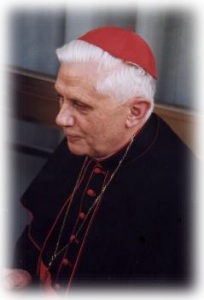 The new pontiff |
CARDINAL Joseph Ratzinger of Germany has been elected as the next pope -- the head of the world's 1.1 billion Roman Catholics. Taking the name Pope Benedict XVI, the new pontiff has appeared on the balcony of the Vatican palace to give his first papal greeting to the world.
His arrival was greeted by cheers from the many thousands of pilgrims who had packed Saint Peter's Square as news of his election spread. He was chosen on the third round of votes by the 115 cardinals meeting on the second day of the Conclave to select Pope John Paul II's successor.
Ratzinger was born into a traditional Bavarian farming family in 1927. His seminary studies were interrupted during the Second World War when he was drafted into an anti-aircraft unit in Munich.
His supporters say his experiences under the Nazi regime convinced him that the church had to stand up for truth and freedom. But his critics say he stands for suppressing discussion within the church. Wolfgang Cooper, a commentator on religious affairs in Germany, said before Ratzinger's election that the cardinal could become a divisive figure.
"I think if Cardinal Ratzinger was pope, a large distance could grow between the leadership of the Church and the faith," he predicted before the result was known. Cooper said the cardinal is a "scientist" who "prefers intellectual discussions," whereas many Catholics want priests and bishops "who will touch the hearts."
Cardinal Ratzinger has been a head of the Congregation for the Doctrine of the Faith, the Vatican's guardian of orthodoxy, since 1981. As such, he has also taken some uncompromising political positions: for instance, calling for pro-abortion politicians to be denied communion during the U.S. election campaign; and arguing that Turkey should not be admitted into the European Union. As the 265th successor to Saint Peter, he is expected to give the Church a clear -- if sometimes radical -- voice.
Cardinal Jorge Arturo Medina Estevez appeared on the balcony of Saint Peter's Basilica April 19, to announce the election of Ratzinger. Estevez made the announcement to a cheering crowd in Saint Peter's Square. The new pope then appeared on the balcony to give his blessing to the thousands gathered in the city of Rome, and watching from around the world.
In addressing the crowd, Benedict XVI described himself as a humble worker in the vineyard of the Lord, and asked the faithful to remember him in their prayers. He then appeared on the balcony of St. Peter's Vatican Basilica to greet the people and deliver his first papal blessing.
Earlier that day, white smoke rose from a Sistine Chapel chimney and bells rang, signaling the selection of a new pope. The crowd clapped and waved flags as the smoke began to billow over Vatican City. Suspense built as the throng waited for the symbolic ringing of bells, at which point the crowd broke into a roar of jubilation.
The conclave of 115 cardinals had voted three times previously -- once Monday night and twice Tuesday morning -- before selecting the new pope. The cardinals' morning ballots were burned at about 11:50 a.m. Chemicals are added to the ballots to turn the smoke white or black. Pope John Paul II, who died April 2 at age 84, had decreed that white smoke be accompanied by the ringing of bells, to avoid a repeat of the confusion after his election in 1978.
Ratzinger needed two-thirds of the votes to be selected. There had been a great deal of speculation about who would be chosen to succeed John Paul II. Some taking part in the conclave said they were looking for a leader who would present a hopeful vision, who could "generate some dynamism and some optimism within Catholicism," CNN Vatican analyst John Allen said.
The first clues to the process of finding a successor were sought during the homily or sermon delivered by Ratzinger at Monday's public Mass. "Having a clear faith, based on the creed of the church, is often labeled today as a fundamentalism," Ratzinger said. Allen said Ratzinger delivered a "very blunt" message for the church to "stay true to itself." That was a strong indication that Ratzinger, who celebrated his 78th birthday on April 16, wanted a "traditionalist" elected the next pope, Allen added.
John Paul II was widely credited with extending the reach of the papacy. He spoke more than a dozen languages and set an unprecedented pattern of pastoral travel, drawing huge crowds all over the world. He was also strictly traditional on issues of sexuality and the role of women in the church, which won him support among some Catholics but alienated others. Similar disagreement exists over the next pontiff's stances on issues such as birth control, stem cell research and the ordination of female priests.
- Assist News Service