
Superheroes and the redemption of pop culture
BC Christian News, · Top Stories
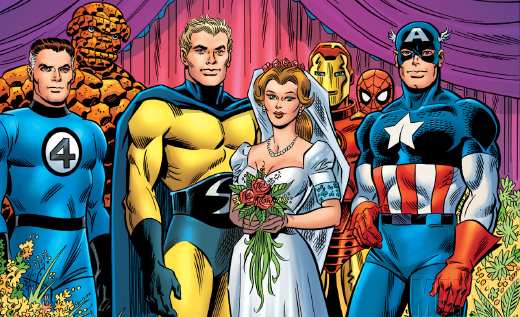
A MAJOR TREND sweeping through the evangelical subculture today is a move toward redeeming popular culture. A mere generation ago, movies, television shows, pop music, literature, comic books - virtually anything produced by the mainstream entertainment industry - was deemed corrupt by definition. Many evangelicals still indulged their interest in such things, but it was often regarded as a guilty pleasure.
Pendulum shift
No longer. The pendulum has shifted. Where you once found books decrying the evils of Hollywood, television, rock and roll or fantasy literature, you now find numerous books, websites and articles that seek to unearth the Christian images, parallels, messages and characters buried throughout these mediums.

Of course, the detractors are still hard at work. But more often than not, evangelicals are waking up to the idea that perhaps they were a little hasty in rejecting popular culture. Rather than demonizing these cultural products and the people who create them, perhaps we should stop and listen to what they have to say instead. Who knows? We may discover that we have more in common than we think. And what better place to build bridges of understanding than on common ground?
Two of the most recent entries into this effort to bridge the gap between Christianity and popular culture are H. Michael Brewer's Who Needs a Superhero? (Baker Books, 2004) and David A. Zimmerman's Comic Book Character (InterVarsity Press, 2004). It is interesting that two such similar books would come out at almost exactly the same time. But perhaps it just means the time for this message has come.
Juvenile obsession?
Christian images, characters and messages in comic books, you say? Come on, aren't these writers just fanboys who are seeking to justify their juvenile obsession with the medium?
I was an avid comic book reader and collector growing up, but I never associated that interest with God. Through these comics, I was seeking the same thing as every other pimple-faced geek: adventure, excitement and buxom, photo-realistically drawn women dressed in skin-tight costumes. Like those costumes, aren't these guys stretching things just a little?
That question was foremost in my mind when I first picked up Who Needs a Superhero? But I didn't get more than a few pages into it before I realized Brewer wasn't reading comics wrong - I was. Through a succession of tightly written chapters on classic heroes like Superman, Spiderman, Captain America, Thor and the X-Men, Brewer shows us that virtually all of these characters and their stories point us toward Christ rather than away from him.
Superman & Jesus
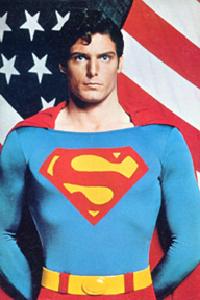
For example, take Superman - the first costumed superhero ever created, and the prototype for so many others. The parallels between the ‘man of steel' and Jesus are remarkable. Both have amazing abilities and powers beyond that of mere mortals; both came from humble origins and were raised by surrogate parents; both stand up for truth and justice; both are considered a menace to authority; and both do battle with humanity's archenemies.
Brewer admits that Jerry Siegel and Joe Schuster - the two Jewish boys from Cleveland who created Superman - probably did not intend their creation to mirror Jesus so closely. But intentional or not, the similarities cannot be denied.
In my case, such parallels did not lead me toward Christ on a conscious level. But I am willing to accept that, on an unconscious level, they prepared me to recognize and identify with the story of Christ when I heard it. After all, as Brewer points out, "Every heroic saga, legend and myth is ultimately a variation on one universal story: When all seemed lost, a hero stepped in to rescue us from the evil around and within us. As it turns out, this story happens to be true, and the hero is absolutely real."
Not every superhero Brewer profiles can be linked so closely to Christ. But he does a great job of demonstrating how all of them exhibit character qualities or spiritual truths that teach us something about God.
He cites the Incredible Hulk, an enormous, green statement on our inability to overcome our own sin; Batman, who shows us that even the best among us can only be made perfect by God; Wonder Woman, who is a study in the power of truth; and the Fantastic Four, who teach us about living in community. Brewer also offers a comparison between the Punisher and the Green Arrow, who illustrate competing images of God.

Mainstream
Written at a popular level, this book definitely sacrifices depth for accessibility. Brewer also restricts himself to mainstream characters published by DC and Marvel - rather than delving into more challenging independent titles like Hellboy, Sin City or 30 Days of Night. So, even though this book satisfied neither the theologian nor the comic snob in me, if you have a pimple-faced comic book fan in your house (or you used to be one yourself), you will definitely want to get your hands on this book - if only to offer a spiritual justification to your spouse for your ever-growing collection of double-bagged, mint copies.
Comic Book Character moves things in a slightly different and deeper direction. Rather than base each chapter around a particular character, Zimmerman takes a thematic approach and then brings in various superheroes to demonstrate his points as needed.
Questions covered in this book include: "Why are we sometimes so strong and yet often so weak? What makes the difference between righteous anger and blind rage? Why do superheroes (and we) wear masks? What's so super about being good looking, young or simply alive? Why are we so quick to marginalize people? Which higher power ought we to submit ourselves to, and which ought we to rebel against?"

As with Brewer, I was disappointed to see that Zimmerman restricted his pontifications to mainstream DC and Marvel characters. However, I tended to prefer his book to Brewer's, because Zimmerman's approach was more sophisticated and contained far less sermonizing.
Raising questions
Rather than show us how superheroes provide answers to our deepest questions, Zimmerman demonstrates that these characters are better at raising a number of interesting and important questions instead. They also offer far more in the way of social commentary than most people realize.
In this sense, I felt Zimmerman's book was less about trying to justify comic books as a medium and more about using them as an entry point into some basic theological and philosophical issues. He could have taken the same approach to another medium, such as film, and been just as effective.
It's not that Brewer's approach doesn't work or that it wouldn't work more effectively in the hands of a more capable author. But I suspect the questioning quality of Zimmerman's book will make it far more palatable to those outside of the evangelical community as well as those evangelicals who tend toward a more postmodern way of thinking.
Zimmerman is a self-confessed, post-pubescent fanboy. But, like Brewer, you never get the sense he is talking to comic book insiders only - exactly the opposite, actually. Like any closet comic book geek, Zimmerman loves nothing more than the opportunity to bring others into his four-color world - if only to show them that it's not all ‘Kapow!' ‘Zowie!' and ‘Wham!' (and also to show that most fanboys are far more imaginative and interesting than the bitter, overweight, socially inept comic store owner on The Simpsons).

Whether you've been waiting to come out of your own comic book closet, or would simply like an unconventional approach to some important questions about what it means to be human, I highly recommend Zimmerman's book. You don't have to be a comic book fan to enjoy it.
But don't be surprised if, after reading it, you find yourself hesitating outside your local comic book store - and wondering if you should have a look inside. And don't hate yourself if you do.
* William D. Romanowski: Eyes Wide Open : Looking for God in Popular Culture, Brazos, 2001
* William D. Romanowski: Pop Culture Wars: Religion and the Role of Entertainment in American Life, InterVarsity, 1996
* Rodney Clapp: Border Crossings: Christian Trespasses on Popular Culture and Public Affairs, Brazos, 2000
* Robert K. Johnston: Reel Spirituality: Theology and Film in Dialogue, Baker Academic, 2000
* Chris Seay, Greg Garrett: The Gospel Reloaded: Exploring Spirituality and Faith in The Matrix, Pinon, 2003
* Catherine M. Barsotti & Robert K. Johnston: Finding God in the Movies: 33 Films of Reel Faith, Baker, 2004
* Gareth Higgins: How Movies Helped Save My Soul: Finding Spiritual Fingerprints in Culturally Significant Films, Relevant Books, 2003
* Roy M. Anker: Catching Light: Looking For God in the Movies, Eerdmans, 2005
* Craig Detweiler, Barry Taylor: A Matrix of Meanings: Finding God in Pop Culture, Baker Academic, 2003
* Bryan P. Stone: Faith and Film: Theological Themes at the Cinema, Chalice Press, 2000
* Brian Godawa: Hollywood Worldviews: Watching Films With Wisdom & Discernment, InterVarsity, 2002
* Alex Field: The Hollywood Project: a Look into the Minds of the Makers of Spiritually Relevant Films, Relevant Books, 2004
* Peter Fraser, Vernon Edwin Neal: Reviewing the Movies: A Christian Response to Contemporary Film, Crossway Books, 2000
* Doug Van Pelt: Rock Stars on God: 20 Artists get Challenged About Faith, Relevant Books, 2004
* Steve Stockman: The Rock Cries Out: Finding Eternal Truth in Unlikely Music, Relevant Books, 2004
* Dave Urbanski: The Man Comes Around: The Spiritual Journey of Johnny Cash, Relevant Books, 2003
* Scott Marshall with Marcia Ford: Restless Pilgrim: The Spiritual Journey of Bob Dylan, Relevant Books, 2002
-