
The new prophets
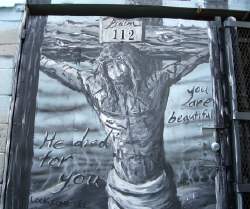
THE SIGHT of nearly two dozen bald eagles, mutilated and casually dumped near a hiking trail in North Vancouver in February, was an image distressing enough to be broadcast internationally.
All of the birds had their legs chopped off; some of them also had their beaks removed. It was theorized that poachers had sold the eagles' body parts, which were then used to make black market medicines.
While the general public decried the action as a brutal violation of a revered natural symbol, a group of prophetically minded Christians in Vancouver believed there was a deeper message to be heeded.
According to www.cityscapeprayer.org, a charismatic prayer website, the eagles were casualties in a spiritual war being waged in the city of Vancouver. Their deaths were "a clear prophetic sign of the enemy's desire to destroy the prophetic voice in our region," the site declares.
The diversity of denominations and spiritual leanings in the Lower Mainland ensures that not everyone sees such spiritual significance in February's events.
In fact, when the subject of prophecy comes up at all, reactions to this controversial aspect of modern faith are as varied as people's personal definitions of it. And that's where things can get complicated.
Those who see prophecy as a vital, significant part of their lives believe relativism in this area has led to misunderstandings of what prophecy is and what it actually adds to the spiritual growth of the average Christian.
God's heart
Sara Maynard, a local advocate for intercessory prayer who writes and distributes Cityscape Prayer's newsletter, says the prophetic is really about learning to discern and see God's heart, then interacting with it. It's about "looking more into the spirit realm and sensing what God's desire is," she says.
But to the conservative arms of the church - who, without question, still recognize the historical importance of prophecy - the very notion of the present day prophetic i not so easily embraced. There's still an Old Testament 'Thus saith the Lord' image of prophets that's hard to get past.
To many, the present day reality of prophesy is far different, however. Prophetic words are often understated, humble exhortations to specifically focus on one area of biblical teaching at a certain time. It's not all about dramatic signs gleaned from the headlines.
For instance, Maynard recalls a basic message of 'love your family' being decreed independently by many believers at one point this year. It's not exactly an earth shattering proclamation, but one she says "highlighted something the Lord wanted us to move toward in a more deliberate way."
As a result, people took that specific time to realign their priorities - and, says Maynard, it's probable that it saved relationships.
But how many Christians envision such down-to-earth exhortations when the word 'prophecy' comes up?
The apocalyptic, the political and - as in the case of the slaughtered eagles - the sensational, have always been at the forefront of prophecy's public image.
Because of this, many parts of the church avoid the phenomenon altogether, fearing the potential for divisiveness, abuse or just plain embarrassment.
Outside the box
Brad Jersak is the author of Can You Hear Me?, a book that encourages Christians to see that God is "accessible and interactive." As pastor of Fresh Wind Church in Aldergrove, he is quick to recognize that the word 'prophecy' doesn't fit into a nice tidy box.
He divides the present-day prophetic into four streams. There's the charismatic stream, typically where someone in church delivers a 'word' to a congregation of believers.
Asked to name charismatic prophets from history, he cites Jonathan Edwards, prime mover of the 18th century's 'Great Awakening'; Quaker founder George Fox; and the legendary Joan of Arc. From more modern times, he names Charles Parham and William J. Seymour, founders of Pentecostalism; and Vineyard founder John Wimber.
There's also a contemplative aspect of prophecy. Jersak cites several exemplars of this tradition, all of whom wrote extensively on the subject - including Teresa of Avila, St. John of the Cross, Evelyn Underhill and Thomas Merton (see page 12).
The idea of 'listening prayer' - a "contemplative approach to inner healing" that focuses on what God is saying to the individual - which Jersak actively practices in his church, would fall into this category.
The third stream focuses on social action, with Amos and Jeremiah being biblical examples.
According to Jersak, Catholic writer Dorothy Day, anti-slavery activist William Wilberforce, martyred priest Oscar Romero, assassinated U.S. civil rights leader Martin Luther King Jr., anti-apartheid champion Desmond Tutu and rock singer Bono are prominent examples of prophets from this tradition.
And finally, he says, there are the "apocalyptic guys," who make up the fourth stream - guys like Daniel and Zechariah, who Jersak says did a much better job than anyone that fits into this category today.
Eschewing more familiar examples such as Hal Lindsey and Jack Van Impe, he cites 20th century French author Jacques Ellul as "someone with much more depth." He adds: "There were dangerous ones - Thomas Munster, for example; but nevertheless, he was a Christian apocalyptic prophet.
"Good examples of apocalyptic after the apostle John are very hard to find, because they tend to become wacky; but Ellul and some of the anarchists, like William Stringfellow, are worth checking out."
Some of the angst about the prophetic centres around the validity of individual prophets. In basic terms, the question "Is everyone who prophesies a prophet?" is at the centre of the issue. While he's quick to say we need bona fide prophets, Jersak enthusiastically promotes the idea that God is saying things to everyone who believes in him; thus, believers just need to become better listeners.

According to 1 Corinthians 14, prophecy consists of sharing a revelation. If one subscribes to this concept, then simply offering an encouraging word one believes is from God would fall under that definition.
"If it's that simple, it's happening in every church," Jersak says. In essence, he believes that prophets are those who equip the sheep to hear for themselves; he also believes that prophets confirm what the corporate church body is hearing, that they work in tandem.
Prophecy industry
Though they may place heavy emphasis on the prophets, those in charismatic circles are still hesitant to name who they consider present day messengers from God; some would rather be labeled 'visionaries' said one interview subject.
But there are others who aren't so shy: people like Patricia King and Todd Bentley (both based in the Fraser Valley), who are part of what could be termed a mini-industry that focuses on the prophetic.
The online meeting place for these people is a website called the Elijah List, where books and CDs for sale are intermixed with prophecies. The site even has a 'last 20 prophetic words' section, to keep people up to date.
For example, in a prophecy from that section (dated early last month) a contributor named Bill Yount says he saw "'accounting' angels descending upon oil wells, banks and international treasuries, decreeing 'we've come to transfer.'" Yount goes on to explain how the words of Proverbs 13:22 ("The wealth of the sinner is laid up for the just") will come to pass as "miracle transfers" - and large amounts of money and merchandise will be given to "the just" by people who often won't know why they are giving. He also notes that the money will be used to build God's kingdom, not kept for selfish gain.
To their credit, many of the high profile personalities who call themselves prophets - in particular King - take great measures to make sure they are accountable.
 |
And those who are part of local prophetic ministries heavily emphasize mentorship, safeguards and the testing of prophecies - to ensure that, as Faytene Kryskow of Extreme Prophetic Vancouver puts it, "no one is Lone Rangering it." Yet, many Christians are turned off by the mass media approach to such an intimate spiritual issue.
"The order of the day is to train whole generations of people who can hear God, whether they want to be called prophets or not," says Jersak. "We need the prophets; but if I see a pedestal, I'm going to kick it."
Prophecy as evangelism
Beyond the borders of the Christian community, there is also a movement to bring to bring the prophetic to the streets. But you won't find the stereotypical 'doom-sayer shouting on street corners' approach here.
The Extreme Prophetic training school - which will be hosting Patricia King for two ministry training sessions this month - regularly sends out groups of students who offer 'destiny words' and 'spiritual reading' at booths in different parts of Vancouver.
One evening last summer on Commercial Drive, a line up formed behind the booth shortly after the group set up around 8 pm. By one in the morning, there were still people waiting to pray with someone.
"People are just so starved for words of affirmation," says Kryskow, who recalls men and women from the lineup calling her on her cell phone the next day.
"In this setting, people are blown away by the 'non-churchianity' of it . . . People who would never sit down in a church to pray will sit down on the street."
While some may be wary of nontraditional terminology such as 'spiritual reading,' Kryskow and her team make it abundantly clear that they are not telling fortunes - but rather inviting people to open their spirits to the voice of the God of the Bible.
"We simply pray and see if God puts a word of encouragement in our hearts."
Streams of prophecy
According to Brad Jersak, author of
Can You Hear Me?,
prophetic voices
from Bible times down through church history have generally fallen
into four distinct
categories.
Charismatic: George Fox
Contemplative: John of the Cross
Social Activist: Dorothy Day
Apocalyptic: Daniel