
Half-Blood Prince focuses on choosing to 'do the right thing'
BC Christian News, · Arts
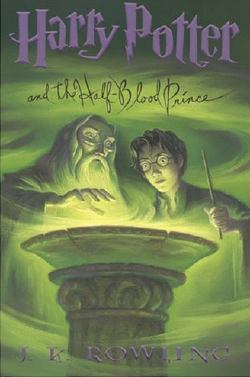 |
• J.K. Rowling: Harry Potter and the Half-Blood Prince, Raincoast, 2005
THIS IS way too eerie. Harry Potter and the Half-Blood Prince - in which the war between the evil Lord Voldemort and the forces loyal to Dumbledore really heats up - was released July 16, almost exactly one week after the first terrorist attacks in London.
And the first chapter concerns an anonymous British prime minister who wonders why his country has been hit by inexplicable acts of violence during the previous week - also in mid-July.
If it seems like a stretch to look for real-world parallels in the Harry Potter books, well, author J.K. Rowling practically invites them. Among other things, she makes frequent references to the increased security measures at the Hogwarts School for Witchcraft and Wizardry, and to the unwarranted imprisonment of innocent civilians.
But there are deeper themes here, too. Half-Blood Prince is profoundly concerned with the nature of love and free will, two themes that come together in one of the book's funnier recurring motifs: love potions. Harry and his classmates are 16 years old now, and they are often pairing off and splitting up and harbouring the silliest of crushes.
But the book also underscores the difference between infatuation, which potions can provide if need be, and true love, romantic or otherwise, which sets other people free and accepts their independence. The story of how Voldemort's parents met - and parted - is like a tragedy out of Dickens; and the book's shocking, climactic sequence hinges on the ability of certain characters to keep their promises, some voluntarily, others perhaps not.
In this light, it is also interesting to see how Rowling describes the effects of the Felix Felicis potion, which grants good luck to the person who takes it.
When Harry takes the potion, he finds that it does not change other people's actions, but rather, it guides his own. Harry experiences a feeling of "infinite possibility", and yet, the potion "sets a path" for him that he follows without hesitation. It is like having total freedom yet always choosing to do the "right" thing - a state which, when you think about it, must resemble what it is like to be made in God's image, but sinless.
At least some of the characters have become increasingly complex. The wise headmaster Dumbledore is more vulnerable than he has ever been before, both physically - one of his hands seems to be permanently injured after a mysterious incident - and emotionally, his eyes watering at one point after Harry matter-of-factly professes his loyalty to him.
Harry, for his part, comes to see a new side of the bully Draco Malfoy; he still doesn't like Malfoy very much, but for once, he begins to feel pity for him.
And Snape, the double-agent who is trusted by Dumbledore even though he was once one of Voldemort's infamous Death Eaters, is a much more ambiguous figure than ever before. Even if Snape really is on Dumbledore's side, you wonder how long he can go on convincing the Death Eaters that he is one of them without inadvertently convincing himself.
There is still one book to go. While he still has his adolescent foibles - once again, he keeps something dangerous secret for far too long - Harry is growing up, and taking charge in a battle that is much older than he is. This book shows Harry steeling himself for the battles to come, and it just may help its readers to prepare for similar challenges.