Talisman case proceeding in U.S. court
BC Christian News, · Top Stories
SERIOUS ALLEGATIONS made against one of Canada's most controversial corporate citizens are at the centre of an international dispute. Calgary's Talisman Energy is currently facing a lawsuit under the Alien Tort Claims Act in the United States District Court for the Southern District of New York.
Talisman, which spent four years as one of several companies carrying out oil explorations in Sudan, is accused of complicity in genocide attributed to that country's hard-line Islamic regime. The plaintiffs are the Presbyterian Church of Sudan and various Sudanese individuals. The case is complicated by the fact that the Canadian Embassy in Washington has attempted to intervene on Talisman's behalf.
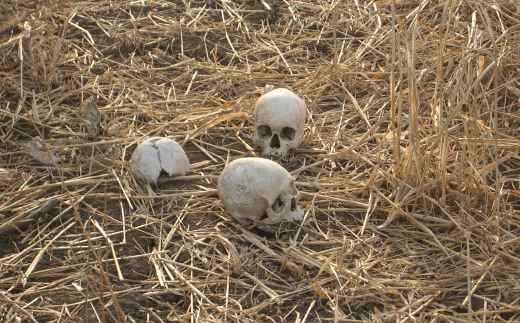
Alberta-based Mel Middleton, executive director of Freedom Quest International, has been advocating for peace in Sudan over the past several years. In a recent press release, Middleton said he had recently visited Ruweng County, one of the areas in Sudan where Talisman once operated.
"The survivors that I met virtually all had lost immediate family members to the ethnic cleansing. When asked whether they thought the oil companies knew what was going on, the people laughed, stating that the oil companies were helping the government directly. After the helicopter gun ships and tanks would go through the area, wiping out villages and massacring civilians, the oil company personnel, a few days later, would come and dispose of the bodies."
Talisman insists the lawsuit is unwarranted, and has expressed confidence that it will be vindicated. "Our company has a well documented history of corporate behaviour that is completely contrary to these false allegations, and we will defend ourselves vigorously," company spokesperson Barry Nelson told BCCN. He decried Middleton's allegations, asserting: "These outrageous claims are absolutely untrue."
Middleton clarified his previous statement, telling BCCN that Talisman was part of a consortium which included a company operated by the Sudanese government, the communist Chinese PetroChina, and a Malaysian operation. "The locals who reported to me could not distinguish between the different oil company employees. So while the locals did say that the oil company personnel did assist in the disposal of the bodies, this does not necessarily mean that Talisman employees themselves were involved. What it does mean, however, is that the atrocities were a lot closer to Talisman's activities than the company has so far been prepared to admit."
Middleton has denounced the evident involvement of the federal government. He supplied BCCN with a fax of a January 14 letter printed on Canadian Embassy stationery, and bearing an official stamp; the document had no signature, but initials were visible beside the stamp. The letter said the court action "infringes on Canada's conduct of foreign policy . . . Should the suit proceed, Canadian firms will likely absent themselves from Sudan and therefore not contribute to its economic revitalization out of fear of U.S. courts."
In an open letter to prime minister Paul Martin, Edmonton MP and former Secretary of State David Kilgour expressed dismay at this lobbying effort. "Talisman is accused of helping Sudanese officials to bomb churches, kill church leaders, and attack villages to clear the way for oil recovery in southern Sudan." Canada's intervention, he wrote, could be viewed as "a demonstration of a lack of concern for justice for the victims of the regime's brutal oil-fuelled crimes against humanity in southern Sudan." Kilgour slammed the government's "constructive engagement" approach, saying it was "precisely the policy which Ronald Reagan used in South Africa. It was unsuccessful [for Reagan], and it has never produced results when dealing with genocidal dictatorships."
Martin's government, Middleton asserted, "completely turned a blind eye to the death and brutality in Ruweng, and . . . will continue Canada's cozy economic relations with Sudan's military junta . . . . This has gone on for so long, and in such an unconscionably immoral manner, that anything short of calling for the complete resignation of our ‘government' is insufficient."
Sébastien Théberge, a spokesman for Canadian foreign affairs minister Pierre Pettigrew, denied that Canada was getting improperly involved in the court proceedings. "Canada did not intervene in this case, nor did we file any document in the court," he told The Toronto Star. However, he added: "We have expressed to the United States that a U.S. court was exercising extraterritorial jurisdiction."
Barry Nelson maintained that his company has been unjustly vilified, and that its work in Sudan has had a lasting beneficial effect. "After U.S. Senator John Danforth . . . was assigned to encourage peace talks between the warring parties, he noted that oil revenues could be a catalyst to peace.
"This has proven to be the case. A peace agreement based on sharing resource revenue is in place."
Middleton was dismissive of such claims. "When the Exxon Valdez messed up and created an environmental disaster, they were obliged to pay for the clean up and repair to the environment.
"Similarly, Talisman is morally obligated to clean up the human rights disaster it left behind in Sudan."
"We believe our published corporate responsibility reports have addressed our former investment in Sudan in detail," responded Nelson. "We are proud of the many successful community development projects that we supported and continue to support in Sudan."
Middleton has disputed this, writing of Ruweng County: "No one there had any knowledge of the ‘humanitarian' work that Talisman claimed to have carried out in all its corporate social responsibility reports."
The activist concluded his comments to BCCN with a cautionary statement for his fellow Christians - emphasizing that "decisions which we make here in Canada . . . can literally affect the lives and livelihood of millions of people."