
When Dylan was Judas
BC Christian News, · Arts
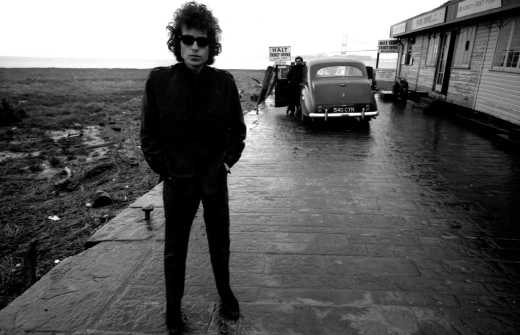 |
"JUDAS!"And with that immortal battlecry, some unknown twit secured his place as one of the great philistines of pop culture history.
 |
That heartrending cry of poetic despair was a watershed moment on the most sought-after bootleg tape of all time - featuring Bob Dylan's half acoustic / half electric May 17, 1966 show at the Free Trade Hall in Manchester, U.K.
The concert is the climactic moment of Martin Scorcese's No Direction Home - scheduled for September 26 - 27 on PBS TV's American Masters series, and a September 20 DVD release.
The film - featuring an exclusive interview with the Mystery Tramp himself, and tons of unreleased footage - promises to give a definitive answer to the Millennium's most pressing question: Just why was there so much fuss about this scruffy oddball 'going electric,' anyway?
 |
Finally, we will get to see the look on Dylan's face as many of his 'fans' applaud the "Judas!" cheerleader. Better yet, we'll see the singer's equally infamous response: "I don't believe you, you're a liar" - after which he tells The Hawks to "Play it f***ing loud!" and then launches into an incendiary assault on 'Like a Rolling Stone.' Going electric, indeed!
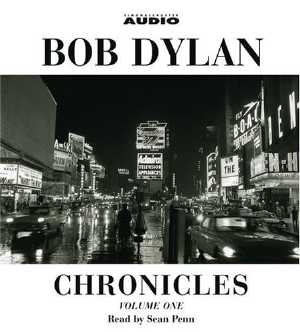
As insightful as Scorcese's work may be, though, it won't quite compare with Dylan's own account of those days, as outlined in Chronicles (Simon & Schuster, 2004), Volume One of his memoirs. "I was sick of the way my lyrics had been extrapolated," he writes, "their meanings subverted into polemics - and that I had been anointed as the Big Bubba of Rebellion, High Priest of Protest, the Czar of Dissent, the Duke of Disobedience, Leader of the Freeloaders, Kaiser of Apostasy, Archbishop of Anarchy, the Big Cheese."
 |
In addition to the nightmare his private life became because of some of his more obsessive fans, Mr. Zimmerman writes of his childhood, and details the recording of two of his most outstanding albums, New Morning and Oh Mercy. He wisely eschews chronological narrative and gossip, and instead presents a delightfully written, fascinating 'portrait of the artist' - revealing key influences and crucial artistic choices.
While he says little about his spiritual life, there are a few key tidbits: he read Foxe's Book of Martyrs in the early 1960s; considers Martin Luther a visionary; loves church bells and black gospel music; and played a Roman soldier in a high school Passion Play. He also confides: "I pray that I can be a kinder person."
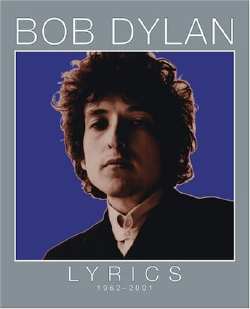
Another highly recommended book is Lyrics: 1962 - 2001 (Simon & Schuster, 2004). It's a great overview of a phenomenal talent. While there are a few frustrating omissions, itincludes many classic songs not available on Dylan's albums.
 |
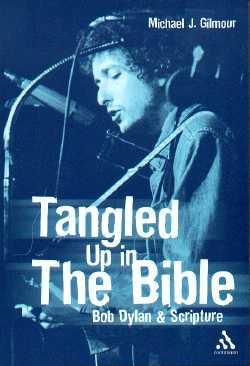
For an intelligent and detailed analysis of the biblical content of those songs, try getting Tangled Up in the Bible (Continuum, 2004) by Michael J. Gilmour, assistant professor of New Testament at Manitoba's Providence College. While the author over-interprets some lines, and makes a flimsy case for some of his interpretations, I appreciate the effort he has put into understanding the spiritual depth of Dylan's work.
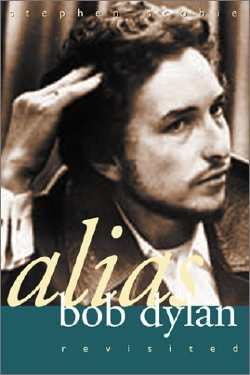
University of Victoria teacher Stephen Scobie offers Alias Bob Dylan Revisited (Red Deer Press, 2003). As both a scholar and poet, Scobie has some keen insights - and clearly appreciates Dylan's talent. However, he has some blind spots.
Regarding Saved, the best of what he calls Dylan's "religious albums," he writes: "The proportion of poor writing is so great that it can only be attributed to the constraints of a religious orthodoxy with a strongly formative rhetorical code." Presumably acquainted with the biblical influence throughout Dylan's career, Scobie ought to know better.
He redeems himself (so to speak) by offering one of the few intelligent, detailed and positive assessments of Dylan's phenomenal 1978 film, Renaldo & Clara.