
Louis Riel: the passionate faith of a Canadian legend
BC Christian News, · Top Stories
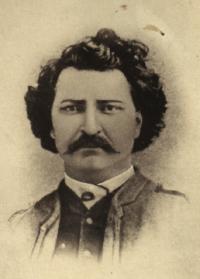
Louis Riel is a true Canadian legend - considered a martyr by many, and a traitor by others. This month marks the 120th anniversary of the Métis leader's execution for high treason at a police barracks near Regina, Saskatchewan. Anglican pastor Ed Hird offers this look at Riel's evidently profound faith in Christ.
 |
"THE FIRST TIME I received the Holy Eucharist, I was trembling," said Louis Riel.
Born in Red River, Manitoba in 1844, young Riel had a passionate, deep spiritual life. One early diary entry reads:
"Fasting and prayer are the two great keys to success in time and eternity . . . Nothing can resist fasting when it is done with humility, sincerity and devotion. Fasting opens prisons and releases the most hardened criminals . . . Days of fasting accomplish more than an army on the field of battle."
In 1858, his mother sent him to Montreal, to become Canada's first Métis priest. He wrote effusively of his mother's spirituality, noting "her eyes constantly towards heaven, her respect, her attention, her devotion to her religious obligations."
Riel was very Christ-centred, praying in his diary: "Lord Jesus, I love you. I love everything associated with you." However, he dropped out of the College of Montreal just four months before his ordination.
He struggled with other setbacks - including his father's death, and a secret engagement quashed by his fiancée's racist parents.
In his diary, Riel commented: "Men can struggle as they will against the will of God, and oppose its fulfillment - but they never succeed in excluding it from the guidance of human affairs. God has everything in his care. Have confidence in Jesus Christ."
Returning to Manitoba, he discovered agricultural, social and political devastation, especially among his Métis people. He stood up for their rights, and woke up our sleepy nation with the Red River Rebellion.
After seizing the Hudson's Bay Company outpost of Fort Garry without bloodshed, Riel was declared the president of a provisional government. He forced Prime Minister John A. MacDonald to recognize Métis land rights, and to accept Manitoba into Confederation.
However, Riel's most controversial move - ordering the execution of prisoner Thomas Scott - earned him much enmity. Eastern Canada would settle for nothing less than his head on a platter - so Riel fled to the U.S.
Over the next several years, Riel began to move more in the prophetic, sometimes experiencing both intense joy and deep sorrow in church services.
One notable diary entry said: "The Spirit of God penetrated my brain as soon as I fell asleep . . . The Spirit of God affects us where he wishes, and to the extent that suits him."
In 1884, Riel returned from Montana with his family - at the urgent request of the starving Métis - to Batoche, Saskatchewan. Riel unsuccessfully petitioned the federal government, before attempting to capture Fort Carlton.
Riel's North-West Rebellion was militarily doomed. Most of his 250 Métis had shotguns or old muzzle-loaders; a few had only bows and arrows. My great-grandfather Oliver Allen, as part of the 1,000-strong Toronto militia, had Winchesters, cannon and a Gatling gun.
While conquering Riel, my great-grandfather met my great-grandmother Mary Mclean - a Regina Leader news-reporter sympathetic to the Métis rebel. Right before Riel's hanging, Mary - who was fluent in French - disguised herself as a Catholic priest in order to interview Riel. On November 19, 1885, he said to my great-grandmother: "When I first saw you at the trial, I loved you."
Before Riel died, he passionately prayed in his diary: "Jesus, author of life! Sustain us in all the battles of this life and, on our last day, give us eternal life. Jesus, give me the grace to really know your beauty! Grant me the grace to really love you. Jesus, grant me the grace to know how beautiful you are; grant me the grace to cherish you."