
Activists gear up for WTO meeting
AS THE leaders of the world's developed nations look forward to the World Trade Organization (WTO) meeting in Hong Kong next month, millions of people are preparing to carefully monitor the proceedings.
As the anticipation builds, hundreds of groups worldwide - ranging from Oxfam Canada and Engineers Without Borders to World Vision and the Evangelical Fellowship of Canada - are turning up the heat on what many consider the defining issue of the decade: extreme poverty. Christians are in the thick of the discussion, as exemplified by initiatives such as The Micah Challenge.
Several groups worldwide chose November 14 to renew their call for action. A global press conference was held by leaders of farmers' advocacy organizations in India and Brazil. The event also featured anti-apartheid legend Nelson Mandela; rock icon Bono; former High Commissioner for Human Rights Mary Robinson; and Kumi Naidoo, CEO of CIVICUS World Alliance for Citizen Participation. In Ottawa, a similar conference featured anti-AIDS champion Stephen Lewis, rocker Tom Cochrane and actor/comedian Mary Walsh.
Outside the Vancouver Art Gallery, Make Poverty History activists took a creative approach, handing out 'Poverty Sucks' lollipops, and performing a 'Dumping Hurts' skit to protest what they see as the unfair flooding of poor countries with subsidized goods. Similar events were held in Toronto, Halifax, St. John's, Montreal and Ottawa. The same day, Make Poverty History launched an email campaign aimed at politicians involved in the WTO meeting. Notable participants included popsters Barenaked Ladies, who wrote: "Unjust international trade rules have a huge impact on the lives of the almost three billion people in the world who are living on less than$2 a day."
The following day, Geoff Tunnicliffe - B.C.-based chief executive officer for the World Evangelical Alliance - made a PowerPoint presentation to politicians in Ottawa. Only Conservative MPs were present; however, the absence of any government representatives was due to an unavoidable schedule conflict. '
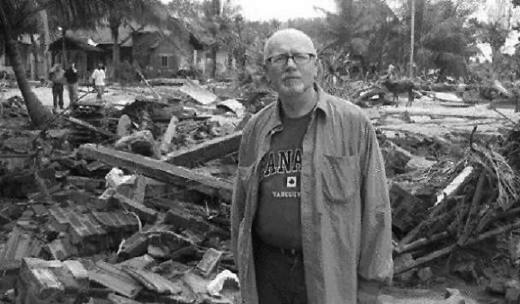
The Micah Challenge, Tunnicliffe told the MPs, is "a global Christian campaign that will raise a prophetic and powerful voice with the poor." Soon after the meeting, he told BCCN: "We're calling for a greater sense of partnership between government, the private sector and faith groups. A collaborative effort is needed."
Among other things, he said, "we talked about a proposal which was warmly received by the UN: to set up an independent African monitoring body." The purpose of the agency, he said, would be to make sure aid from the First World would get to the proper recipients - and also to ensure that wealthy countries fulfill their aid commitments. Additionally, "we hope to encourage the government to put into legislation that CIDA (Canadian International Development Agency) will make poverty their top priority."
Tunnicliffe addressed a familiar concern. "One complaint we hear all the time is that 'there's all these bad governments' in Africa. We hear lots of negative stories; but there are actually some very positive things happening out there. There are significant models of turnaround, such as Mozambique. You don't have bad governance in every country in Africa."
He also spoke of Canadian-based international success stories.
"Watoto is doing a wonderful job on the ground in Uganda. World Relief has a successful micro-finance program in Cambodia. There's an 'Expanded Church Response' program in Zambia. In that country, they see the church as a significant delivery system in the fight against HIV/AIDS. One organization involved there is SIM Canada."
Further, "Opportunity International Canada is conducting the largest microfinance operation ever seen in Ghana. And the Canadian branch of ADRA is helping finance an 'animal bank' in China." The latter is an inventive program involving the loaning of animals to citizens, for the purpose of starting herds which benefit entire communities.
Debt relief, he said, is a key initiative. He cited debt reduction in Tanzania, which resulted in the abolition of school fees. Not long ago, Tunnicliffe said, "1.6 million kids went to school for the first time."
The sixth annual WTO Ministerial Conference is set to begin December 13.
"Whatever is decided," stated Miriam Palacios, Oxfam Canada's B.C. program
coordinator, "could seriously impact millions upon millions of small-scale
farmers the world over, for a generation to come." She added: "You can't overestimate how critical these meetings are. A bad deal could mean increased poverty and misery for the over one billion people who live in extreme poverty and rely on farming for their survival. Current trade rules are pitting millions of small farmers around the world in a losing battle with big corporations, who are dumping artificially-cheap subsidized products into poor countries' markets."
"Unless things change dramatically, the poor may actually come out worse after these talks," said Gerry Barr, co-chair of Canada's Make Poverty History initiative. "Millions of small-scale farmers, mainly poor women, will lose their earnings in the face of continued dumping of subsidized exports; workers will face lay-offs, as local firms are forced to compete with global corporate giants before they are ready; and essential services like water may be privatized, leading to user fees the poor cannot afford."
"We're unclear what the Canadian message is going to be at the WTO," said Tunnicliffe. "We've asked the MPs to make sure they find out what the Canadian government team will say at the meeting. We will then respond to what they say.
"The bottom line is this: I hope they don't sign a bad deal. I'd rather they sign nothing, rather than a bad deal. Our hope is that they'll put a fair trade process in place." Much is hanging in the balance, he stressed. "People's lives are at stake, worldwide," he said, referring to what he termed the "absolute poor" - an estimated one billion people who earn less than a dollar a day.
The goal is to halve poverty by 2015.
"For us as followers of Jesus, that isn't enough; but we must alleviate it as much as possible." To accomplish this, he said, "volunteers are going to be needed in the millions. They have to be volunteers, because no one can pay them. The church can help supply those volunteers."