
Vampire author Rice now writing 'only for the Lord'
BC Christian News, · Top Stories
'By Michael Ireland
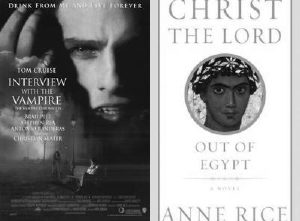
GOTHIC mystery writer Anne Rice has evidently turned to Christ - and has dedicated all of her future writings to God.
The chronicler of vampires, witches and - under the pseudonym A.N. Roquelaure - of soft-core S&M encounters, has just published Christ the Lord: Out of Egypt, a novel about the seven year old Jesus, narrated by Christ himself.
"I promised," she says, "that from now on I would write only for the Lord."
After 25 novels in 25 years, Rice, 65, hadn't published a book since 2003's Blood Chronicle, the 10th volume of her best-selling vampire series.
David Gates, in the October 31 Newsweek, writes that the past several years have been hard on the author. She came close to death last year, when she had surgery for an intestinal blockage, and also in 1998, when she went into a diabetic coma; that same year she returned to the Roman Catholic Church, which she'd left at 18.
Gates writes, "Stan Rice, her husband of 41 years, died of a brain tumor in 2002. And though she'd moved out of their longtime home in New Orleans more than a year before Hurricane Katrina, she still has property there - and the deep emotional connection that led her to make the city the setting for such novels as Interview with the Vampire."
"For the last six months," Rice tells Gates, "people have been sending emails saying, 'What are you doing next?' And I've told them, 'You may not want what I'm doing next.'"
Gates says it's the most startling public turnaround since Bob Dylan's Slow Train Coming announced that he'd been born again. Gates writes: "Rice knows Out of Egypt and its projected sequels . . . could alienate her following." As Rice writes in the book's afterword, "I was ready to do violence to my career." Gates says she sees a continuity with her old books, "whose compulsive, conscience-stricken evildoers reflect her long spiritual unease."
In the afterword, she calls Christ "the ultimate supernatural hero . . . the ultimate immortal of them all." In order to render such a hero and his world believable, Gates says Rice "immersed herself not only in scripture, but in 1st century histories and New Testament scholarship - some of which she found disturbingly skeptical."
Gates says Rice also watched every biblical movie she could find, from The Robe to The Passion of the Christ. She also dipped into previous novels, from Quo Vadis to Norman Mailer's The Gospel According to the Son to the apocalyptic Left Behind series. Rice says she can cite scholarly authority for giving her Christ a birth date of 11 BC, and for making James, his disciple, the son of Joseph by a previous marriage, Gates explains.
He also writes that Rice has taken liberties where they don't explicitly conflict with scripture. For example, no one reports that the young Jesus studied with the historian Philo of Alexandria, as the novel has it - or that Jesus' family was in Alexandria at all.
Rice has also used legends of the boy Messiah's miracles from the non-biblical Infancy Gospel of Thomas: bringing clay birds to life; and striking a bully dead, then resurrecting him.
"Rice's most daring move, though," says Gates, "is to try to get inside the head of a seven year old kid who's intermittently aware that he's also God Almighty."
She has pulled it off, according to Kirkus Reviews, which pronounces her Jesus "fully believable."
"Rice's painstaking historical research is obvious," writes Publisher's Weekly. "The book succeeds in capturing Jesus' profound Jewishness, with some of the best scenes reflecting his Torah education and immersion in the oral traditions of the Hebrew Bible . . .
"The book's first half is slow going. Since it is told from Jesus' perspective, the childlike language can be simplistic, though as readers persevere they will discover the riches of the sparse prose Rice adopts. The emotional heart of the story - Jesus' gradual discovery of the miraculous birth his parents have never discussed with him - picks up steam as well, as he begins to understand why he can heal the sick and raise the dead."
Gates says the novel's best scene is a dream in which Jesus meets a bewitchingly handsome Satan: "smiling, then weeping, then raging." Rice, he adds, "shows she still has her great gift: to imbue Gothic chills with moral complexity and heartfelt sorrow."
Rice already has much of the next volume written. But she says she has been advised not to talk about it. "If I really complete the life of Christ the way I want to do it," she tells Gates, "then I might go on and write a new type of fiction. It won't be like the other. It'll be in a world that includes redemption." - Assist News Service