
Local Anglicans turn up heat at climate change conference
BC Christian News, · Top Stories
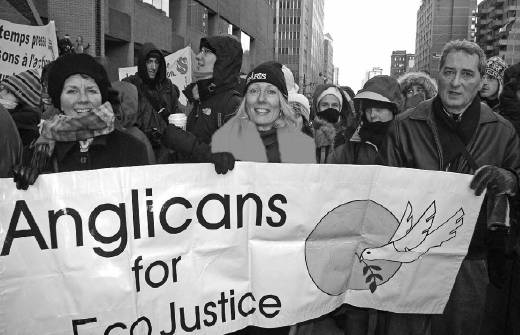
ANGLICANS from the Diocese of New Westminster were among the more than 8,000 delegates and accredited observers from 190 countries gathering in Montreal for the UN Conference on Climate Change, November 29 to December 9.
Pollution, particularly from energy-intensive wealthy industrialized countries like Canada, is warming the atmosphere. A warmer atmosphere is leading to major climate changes. The world's poorest and most vulnerable will suffer most from the negative consequences.
The Diocese of Montreal hosted an Environmental Justice workshop attended by more than 200 who affirmed their conviction that caring for life on earth is a spiritual imperative and that people and other species have the right to life unthreatened by human greed and destructiveness.
Workshop participants braved freezing temperatures to join an estimated 40,000 to march through the streets of downtown Montreal to protest the human activity responsible for climate changes and to call upon governments to take action.
An interfaith worship service was held at St. Joseph's Oratory. More than 1,000 individuals from a wide variety of faith traditions signed a spiritual declaration committing themselves to reducing the threat of climate change through actions in their own lives, pressure on governments and industry and standing in solidarity with those most affected by climate change.
The Diocese of New Westminster is one of four dioceses in the Anglican Church of Canada to have an active environmental unit looking at various faith-based responses to the threat of global warming.
New Westminster's environmental unit has sponsored a series of workshops to educate parishioners about the issues of climate change.
Twenty-six churches have undergone professional energy audits to identify low cost means of reducing energy consumption.
Further, a Green Parish Accreditation is being introduced - to give recognition to churches that demonstrate a commitment to sustainable environmental practices.