
Seeking environmental justice
BC Christian News, · Top Stories
 |
FOR DECADES, the focus of the ecology movement in the West has primarily been on threats to health, the survival of species and the devastation of ecosystems. Increasingly, however, environmentalists - some of them Christians - are couching ecological concerns in terms of social justice.
Simon Appolloni, a member of the Elliot Allen Institute for Ecology and Theology, contributed a piece on global warming to the December 25 issue of The Catholic Register.
Referring to a report which appeared in a recent issue of Nature journal, he wrote that it presented "compelling data that confirms countries in Africa and coastal countries along the Pacific and Indian Ocean are the most vulnerable to the lethal effects of global climate change."
Appolloni added: "Chillingly, the report . . . depicts rich nations as the greatest producers of the greenhouse gases that are causing our climate to get warmer, while the poorer nations, those least able to cope and least responsible for the greenhouse gases, bear the brunt of the effects . . . [which] can range from flooding, drought, heat waves and hurricanes to increases in deadly diseases such as malaria, yellow fever, dengue and cholera."
Similar concerns will be expressed at a conference titled 'Keeping Earth in Common: A Just Faith for a Whole World,' schedule February 24 - 25 at Vancouver's Regent College.
A joint initiative of Regent and A Rocha Canada, the event "will explore the biblical and theological connection between a suffering earth and suffering humanity while highlighting real world examples that demonstrate both mutual brokenness and mutual health."
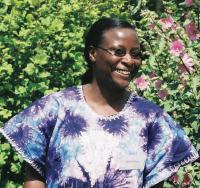
One of the plenary speakers, Stella Simiyu of A Rocha Kenya, has observed that, in Africa, "the rural poor depend directly on the natural resource base. This is where their pharmacy is, this is where the local supermarket is, this is where the Do-It-Yourself store is, this is in fact their fuel station, their power company, their water company. What would happen to you if these things were removed from your local neighbourhood? Therefore we cannot afford not to invest in environmental conservation, because this is how we enhance the ability of the rural poor to have options."
"Are we contributing to poverty in other parts of the world by our resource-heavy lifestyles?" asks Markku Kostamo, executive director of A Rocha Canada, adding: "It doesn't take much effort to make the connection between our lifestyle choices here and associated poverty and biodiversity loss elsewhere."
Citing a study on the 'Ecological Footprint of Nations,' Kostamo contends: "The average North American requires 30.8 acres of productive land to sustain his/her lifestyle compared to the world average of 7.1 acres. If the global average were to rise to the North American level, we would need four to five planets to survive! In light of these statistics, conservation gets framed in the larger context of our relationship with God, each other and the wider creation. It is, in essence, an issue of justice."
"The very inconvenient light of knowledge can shine all too easily upon the often murky and unequal relations that lie behind the prosperity of the relatively few in an increasingly poor and broken world," writes Peter Harris, director of A Rocha International, also a speaker at the conference.
He continues: "The connections between human choices and environmental distress have never been more apparent. The good science which lies behind such magisterial achievements as the Millennium Ecosystem Assessment has inevitably brought to light the connected processes that lead inexorably from the decisions made in wealthy societies, to the consequences of ecosystem impoverishment, and inevitably then to human suffering."
Citizens of the world's wealthier nations, he says, "can now understand much better the scope of all those choices to either impoverish or to enrich all of those human societies with whom we share God's good earth."
Finally, Harris exhorts: "We need to listen harder to those who are currently at the heart of the matter in the poorer world . . . [and] talk more clearly with those making the bigger decisions in the wealthy world."
Contact regent-edu/arocha or 1-800-663-8664.