
Tsotsi a gritty and compassionate take on redemption
BC Christian News, · Arts
 |
FORGET Best Picture. The real treasures to be found at this year's Oscars were tucked away in the Best Foreign Language Film category - and because, for publicity reasons, many foreign nominees are not released in North American theatres until after the Academy hands out its trophies, most of these movies are only now arriving at a theatre near you.
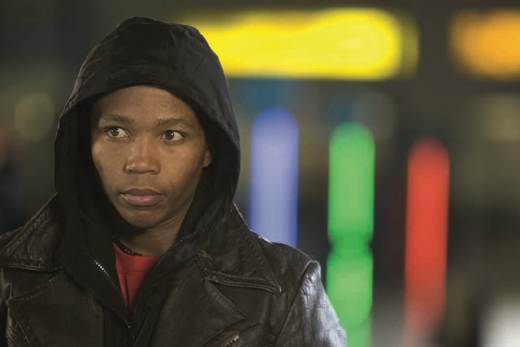
The film that took the prize was Tsotsi, a South African film, based on a novel by playwright Athol Fugard (Master Harold and the Boys), about a gangster who lives in the townships outside Johannesburg, and whose life takes an unexpected turn when he shoots a woman, steals her car - and then discovers that her infant son is still sitting in the back seat.
Tsotsi (Presley Chweneyagae), whose name means 'thug,' hides the baby in his home, but it soon becomes apparent that he has no idea how to look after a child; so he follows an unsuspecting mother to her place, and forces her to breast-feed the baby at gunpoint. The situation is just absurd enough to allow for a little humour, but the film never allows us to forget the violence, threatened or actual, that is part of Tsotsi's day-to-day life.
Tsotsi's path to redemption may seem somewhat foreordained - especially now that the movie has been honoured by the Academy, which tends to like foreign films about jaded grown-ups and the children who reawaken their humanity (think Kolya or Central Station). But it all works, thanks to the grittiness and compassion of Gavin Hood's direction.
More explicitly Christian themes come to the surface in Joyeux Noël, a French film about the famous incident during World War I, when soldiers on both sides of the trenches put down their weapons for one night and celebrated the birth of Christ on Christmas Eve.
Of course, once the soldiers have treated each other like people, rather than like cogs in the enemy's military machine - and once they have worshipped together at an impromptu mass led by a Scottish priest turned Red Cross worker - it is difficult to go back to killing each other. So, even though the truce was supposed to last 'just for tonight,' it comes as no surprise when the soldiers decide to extend the truce for just a little bit longer.
Alas, we know that the joy felt by these soldiers must end, as the war resumes its course and the authorities, military and ecclesiastical, accuse them of treason. It is also sobering to consider that a temporary peace was possible in that war because both sides shared a common religious heritage; such opportunities may not be so common in today's battles.
And that brings us to Paradise Now, which concerns two Palestinian suicide bombers. The film, which played in theatres late last year and is now on DVD, is primarily concerned with the role honour and shame play in motivating such 'martyrs.' It also offers a subversive, and at times even amusing, critique of the Palestinian culture that produces such terrorists.
The film's one major drawback is that it has no answer to religious violence, except for one character's secularist dismissal of religious beliefs in general. Some Muslims have argued against suicide bombing by noting, for example, that suicide is forbidden in the Koran - but such critiques of terrorism from within Islamic belief are, alas, absent from this film.
Two of the Academy nominees - Italy's Don't Tell and Germany's Sophie Scholl: The Final Days - had not been screened for local critics at press time. However, the latter film, which concerns a bold Christian woman who stood up to the Nazi government, will be shown twice at the Fifth Avenue theatre as part of the Vancouver Jewish Film Festival, April 2 and 3. Contact 604-488-4300 or vjff.org for show times and other details about the festival's programme.
* * *
Seems like everybody's making a Bible movie these days.
New Line Cinema has hired Keisha Castle-Hughes, the now-15-year-old star of Whale Rider, to play the Virgin Mary in Nativity. The film, based on a screenplay by Mike Rich (The Rookie) and directed by Catherine Hardwicke (Thirteen, Lords of Dogtown), will reportedly cover the two years before Christ's birth and reflect a "strong female perspective."
In addition, two new films about Jesus give his story an African, or African-American, spin. Son of Man, from South African director Mark Dornford-May (U-Carmen e-Khayelitsha), sets the life of Christ in the present day and underscores the gospel's political elements. The American film Colour of the Cross will also star black actors as Jesus, Mary, Joseph and Judas, while casting "white or Middle Eastern" actors in all the other roles.
Finally, there is Mary. The film, now playing in Europe, is directed by Abel Ferrara (Bad Lieutenant), the notorious bad boy whose visceral films are often haunted by Catholic guilt, and it stars Juliette Binoche as a movie star who plays Mary Magdalene and is deeply affected by her role. I wonder what the actors in all these other films would make of that?