
Mission fills Uganda's 'shocking' hospital admin gap
BC Christian News, · Island Insight
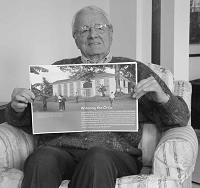
WHEN York University professor Carl Garry and his wife Loraine Spencer-Garry toured East African hospitals in the late 1980s, they were dismayed to find the cupboards literally bare - of equipment, of books, but most of all of medicine.
"It was shocking to us. There was not even an aspirin. I recall vividly in Tanzania a young boy brought in with cerebral malaria. The doctor told us he would probably go into shock the same evening and be gone by morning. They had no intravenous medication to give him." The boy did die that night.
The problem was not a shortage of doctors, nor a shortage of drugs. "There are plenty of organizations willing to give African hospitals drugs," says Garry.
"The problem is administration . . . No one is filling out the application forms for the drugs and other supplies. No one is making sure the drugs that do come are locked up and accounted for."
The couple were ideally trained to spot the problem and address it. Garry was still teaching hospital administration at the time, while Spencer-Garry is a researcher and consultant trained in library science. They began offering workshops on hospital administration. After retiring to Victoria in the early 1990s, they started offering a diploma program in hospital administration, in three-week intensive courses at a university in Uganda.
Driven on by the hunger of their graduates for more advanced training, and the need to establish a self-perpetuating institution with highly-trained African instructors, they began a degree course in administration five years ago which is nearly ready to graduate its second class. Four hundred students have earned their diplomas, and 35 their degrees.
In 1997, the couple set up the International Christian Medical Institute to fund their efforts. Its chief project is a new building for its admin college which it will share with Uganda Christian University in Kampala. It has already raised $144,000 towards its half share of the $500,000 total price.
"Uganda has an excellent medical school that turns out excellent doctors," says Spencer-Garry. "But they often have to administer hospitals as well as run the medical side, and they or the people who do administer are not trained."
Much of the instruction is in human resource management, which can be as mundane as simple scheduling of nurses' timetables, or the more intricate area of relations with organized labour. The students must take what they learn in terms of best practices and apply it as they can in Uganda's highly-tribalized culture.
Garry recalls one hospital worker relating at a workshop that she was a member of neither the Meru tribe that monopolized the key middle management positions nor the Scots Presbyterian tribe that ran the hospital, and so could not expect advancement.
"We tell them to hire and promote the best people," he says, "but they have a hard time resisting the pressure from their tribe or clan."
Counselling is another skill that is taught. Though not one associated with administration in Canada, there is no one else doing it, since it is not taught in medical school, says Spencer-Garry. "There are so many people who have lost their husbands or wives or children to AIDS or war. There is a big need for counsellors."
Here, too, there is a need for cultural sensitivity. "One of our counsellors we'd brought over used role-playing in class, with one student playing the counsellor and the other playing the client," she recalls.
"The instructor noticed the female counsellor wouldn't look the male client in the eye. The class explained that in their culture, to do so would have been seductive."
Accounting - both financial and administrative - has also been put in the syllabus, as has research. "Administrators need to be able to assess medical research and pass on to the medical staff what is worthwhile and relevant."
All ICMI students must conduct a research project. Though administrators aren't equipped to do clinical studies, they should be doing basic market research into their hospital's impact on its community.
ICMI has brought over 65 volunteers to teach or work at the school or in the hospitals, some from their own congregation, St. George's Anglican in Victoria. Many are recruited from among University of Victoria microbiology students, many of whom plan to go on to medical school.
"It looks pretty good on the application if you've already worked in a hospital in Uganda," says Spencer-Garry. Some of these students are Christians when they go over. Some who aren't when they go over, are when they come back.
Bible study is an important part of the syllabus and the Garrys are happy that their students find the schooling experience a spiritually uplifting one. Garry is already training his replacement as principal.
