
Victoria, vaudeville and Klondike fever
BC Christian News, · Island Insight
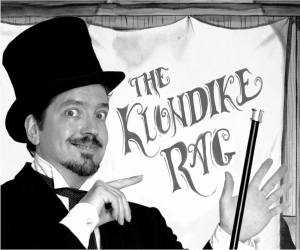 During the world-wide depression of the 1890s, the small-time 'Flim-Flam Brothers' are failing vaudevillians.
Then a headline appears in the Victoria Daily Colonist, trumpeting: GREAT MASSES OF GOLD. Thrilled, like thousands of others, the duo make the epic trek north to Dawson City - only to find all the gold claims staked.
An impresario is building the Palace Grande Theatre, and needs vaudeville acts. He has two questions:
Can the Flim-Flam Brothers play ragtime?
Is there a dancing girl in the show?
Such is the plotline of The Klondike Rag, my musical tribute to one of the most fascinating eras in B.C. history. For many reasons, Victoria is the perfect place to debut the show.
Vaudeville
Charlie Chaplin, Harry Houdini, the Marx Brothers, Judy Garland, Fred Astaire, George Burns and Gracie Allen, Jimmy Durante, Edger Bergen and Charlie McCarthy - the list is endless. Their common roots were vaudeville (or in the case of Chaplin, Music Hall, the English counterpart upon which vaudeville was modeled).
The popular entertainment during the latter half of the 19th century, vaudeville reached its pinnacle during the ragtime era. It was gradually supplanted by silent movies, talkies, radio - and, finally, television, where popular host Ed Sullivan broadcast the final echoes of that beloved phenomenon.
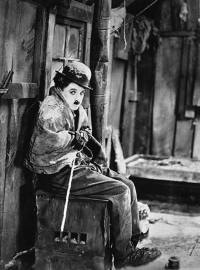
At its best, it was exhilarating, unpretentious entertainment which relied on any combination of wit, daring, ingenuity, dexterity, originality, novelty, showmanship, musicianship, one-upmanship or sheer panache.
Dancers, acrobats, comedy singers, mimics, dramatic actors, storytellers, mimes, magicians, strong men, ventriloquists, clowns and animal acts - upwards of 35 performers on one bill switched acts in rapid succession. W.C. Fields started as a juggler, Milton Berle a child actor - and even that grande dame of the theatre, Sarah Bernhardt, took to the popular vaudeville stage at the end of her career.
Performers were met with great affection by loyal audiences - returning year after year, to see well-loved routines often tailored for particular towns or cities. Appealing to people of all classes and cultures, vaudevillians forged a unique relationship with their audience.
The pot-pourri of entertainers guaranteed that "if you didn't like this act, you'll love the next one!" Taking their work seriously, but never taking themselves too seriously, their goal was to delight, move, amuse or enlighten their audience with a childlike playfulness and infinite creativity - those characteristics so attractive in our Creator.
In 1881, Tony Pastor pioneered this style of variety theatre in which ladies, gentlemen and children could attend without embarrassment. Unlike burlesque, which lured a more prurient interest, vaudeville was family oriented. Pastor had strict policies to keep the shows that way, and the performers themselves took great pride in maintaining that approach.
Pastor's vaudeville style proved so popular that over the decades, entire vaudeville circuits sprang up - enabling travelling entertainers to play from coast to coast.
The Orpheum circuit was one of the largest, with competitors like the Keith Circuit, the Western Vaudeville Circuit, and the Pantages theatre chain; the latter consisted of close to 120 theatres, owned and/or controlled by Alexander Pantages.
Victoria
Victoria's own McPherson Playhouse began as a Pantages theatre built for vaudevillians. Victoria had variety entertainment as early as the 1860s, when 'The Hanging Judge,' Matthew Baillie Begbie, converted two Hudson's Bay Company fur warehouses into the first Victoria theatre for local amateurs.
The Pantages chain eventually moved in; and by 1907, they owned the Savoy Theatre (which had moved from Government Street to Johnson Street) and renamed it the Rio.
By 1914, Victoria thriving whistle-stop on the vaudeville circuit, enticing renowned vaudevillians from across North America. Pantages' theatres attracted talent like Jack Benny - who was, no doubt, partly drawn to Victoria by Rogers Chocolates on Government Street, where he was known to indulge his sweet tooth.
Klondike fever
If not for the Klondike Gold Rush, Pantages' vaudeville enterprises would likely never have caught wing. He was a mere waiter in Dawson City, when he encountered Arizona Charlie Meadows - who toured with Buffalo Bill Cody's Wild West show. To feature his own sharp-shooting and various other acts, Meadows was building - from the lumber of two abandoned sternwheelers - the largest vaudeville house west of Chicago: the Palace Grande Theatre.
It was here that Pantages met a dancer who became his ticket to 'the big time.' She had traveled north as one of the vaudeville acts with the Savoy Theatrical Company, the largest vaudeville troupe ever to visit the Klondike. Their first gigs were at the Palace Grande, with promotional material which read:
The Savoy Theatrical Company Proudly Presents a Refined and Moral Entertainment Consisting of Amazing and Edifying Offerings in Thrilling Scenes from Our Astounding Repertoire, Interpreted by Matchless Artists of Our Internationally Acclaimed Company. Thrills and Fun For All. Elevating and Entertaining. Gentlemen, Please Be Seated!
Before heading north, the company assembled for rehearsals at the new Savoy Theatre, which had opened the year before on Victoria's Government Street: 173 dancers, singers, actors, actresses, jugglers, comedians, backup people and a huge ragtime orchestra. They landed at the Dawson wharf, in the spring of 1900, arriving on the first riverboat after the ice broke on the Yukon River.
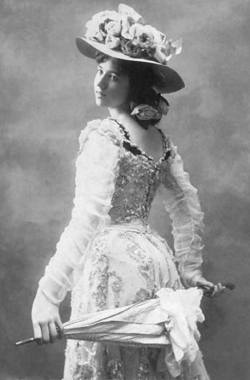
And who was this young dancer who so impressed Pantages that he persuaded her to form a partnership to produce vaudeville shows? Kate Rockwell, also known as 'Klondike Kate' - who became the most recognized entertainer associated with Dawson City. By showcasing Kate as the main attraction and scheduling various acts on the bill, Pantages quickly developed the impresario skills needed for his Pantages theatre chain - which brought big-time vaudeville to Victoria.
A personal note
In 1999, on the occasion of the 100th anniversary of the Palace Grande Theatre in Dawson City, I played piano as The Ragtime Kid. One of the highlights was a most famous tune, also birthed in 1899: Scott Joplin's 'Maple Leaf Rag.' These experiences inspired the creation of The Klondike Rag.
In the show, I'll be wearing a top hat worn by B.C.'s famous vaudevillian, Fran Dowie - who was the first Canadian to entertain troops in Europe after D-day.
Allen Desnoyers was co-founder of Vancouver's Pacific Theatre. The Klondike Rag, written by Desnoyers and featuring a cast of Christian actor/musicians, runs July 1 - September 4 at the Victoria Conference Centre. Info: klondikerag.com or 250-361-1067.
July 2006