
Cash's Cadillac an honest cry of grief
BC Christian News, · Arts
 |
• Rosanne Cash, Black Cadillac, Capitol , 2006
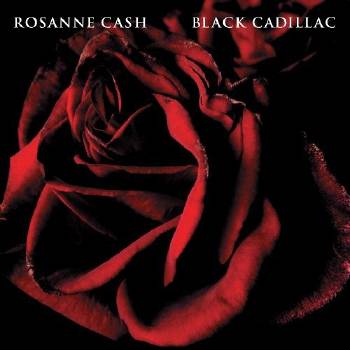 IN the 1980s, Rosanne Cash scored 11 number one singles on the country charts. She was a bono fide star, but her relationship with the industry was always an uneasy alliance. A natural pollination of country, pop and folk, her music just wouldn't fit the formula.
As the oldest daughter of Johnny Cash, she was exposed to country music throughout her formative years; but the fertile pop revolution of the 60s and 70s had a far more significant effect on her artistic development.
Black Cadillac, her 11th album, deals head-on with mortality and grief. The deaths of her mother, father and step-mother over a two year period forced her to confront mortality on a level rarely heard in popular music.
She's asking big questions, many that can't be answered. There's confusion, grief, anger - and finally, acceptance, as she attempts to come to terms with all that has transpired.
Near the end of his life, C.S. Lewis - the most influential Christian writer of the 20th century - recognized that basic theological truths offer little comfort when we're faced with the loss of those we love. His most personal work, A Grief Observed, was written in response to his wife's death.
After a lifetime spent defending the gospel, he wrote of God: "Go to him when your need is desperate, when all other help is in vain, and what do you find? A door slammed in your face and a sound of bolting and double bolting on the inside. After that, silence."
At one point he refers to God as 'The Cosmic Sadist,' and fears there will be no end to the anguish: "I am more afraid that we are really rats in a trap. Or, worse still, rats in a laboratory. Someone said, I believe, 'God always geometrizes.' Supposing the truth were 'God always vivisects?'"
Lewis allowed doubt, fear and anger to run their course. In the end, his faith was refined - and eventually restored to a deeper, more profound level.
Cash made the same choice, which is a testament to her strength of character. In documenting the experience, she - like Lewis - makes it universal.
The title track came shortly before stepmother June Carter Cash's death, and was a portent of what was to come: "One of us gets to go to heaven / One of us has to stay here in hell."
At the time, no one was aware Carter was sick. The black Cadillac is a personal metaphor: her mother would buy a new model Caddy every year, which her father would invariably wreck while high - a cycle which continued until they divorced. Traditionally, it's also the last car you ride in, on the way to the grave.
When she first wrote the song, she wasn't entirely sure what it meant, describing it as "a message from the unconscious." The lyric upset her - even moreso six weeks later, when June's unexpected death shook the entire family.
Cash claims 'World Without Sound' will cause consternation among some fans. The song states: "I wish I was a Christian, but I cannot believe / Because no one in the Bible craves my company." She notes: "I thought . . . that's gonna draw a line in the sand - but I don't care."
Like Lewis, she felt it more important to face the pain honestly, rather than trying to please others. Losing those we hold dear can bring about radical changes in perspective - including ripping through rules that were never supposed to be there in the first place.
The day after her father's funeral, she visited his grave. She was inspired to write 'God is in the Roses,' a calming alternative to the anger: "Every drop of rain that falls / Falls for those who mourn / And God is in the roses / And the thorns."
She questions what happens when those so close to us die. To say "they're in a better place" sounds trite and simplistic to her.
Speaking with a priest at the Church of St. Luke in the Fields in New York City shortly after Johnny's funeral, she asked where her father is now. To her surprise, the priest admitted he didn't know. His frank response was empowering, and Cash says that conversation marked the beginning of her return to faith.
A few months later, while attending a Christmas service at St. Luke, she was inspired by the choir's rendition of 'We Three Kings.' Believing we're all heading in the same direction, she used the lines "westward leading still proceeding" for 'The World Unseen,' a song of reflection and loss.
The disc ends with 'The Good Intent,' the name of the ship that brought her ancestors from Scotland to America. It tells of the vision which brought them here: "I could watch the world in smoke / There's nothing for me here / I've seen behind the darkened veil . . . / So I'll sail off on the Good Intent / to my true happy home."
After 71 seconds of silence - the age at which both of her parents died - it's over. In the end, the wisdom she leaves us with is simply this: "When it all falls apart, there is love."
This is not an argument for or against any particular philosophy; it's an honest cry from someone hurting.
If it's the responsibility of the artist to communicate, to make a connection, then she's succeeded on every level. A fitting eulogy for those who have passed, Black Cadillac stands alongside her best work.
August 2006