
Couple honoured for adoption work
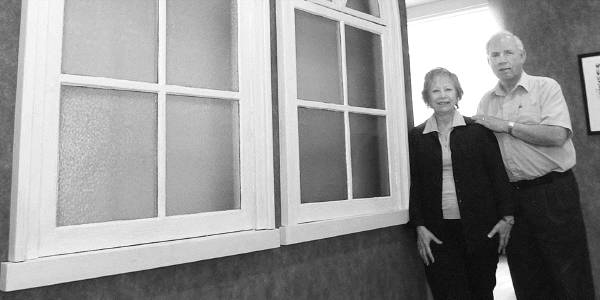 |
| Ann and Lorne Welwood of Hope Adoption Services. Photo by John Van Putten / Abbotsford News |
ANN AND LORNE Welwood have experienced adoption from many perspectives. Ann was 18 when she relinquished a son, with whom she was later reunited, and the couple are themselves adoptive parents.
Together, they were instrumental in reforming provincial adoption policies in the 1990s.
Now the pair - who run Hope Adoption Services in Abbotsford - have been officially recognized for their work. The Welwoods received the 2006 Helen Mark Excellence in Adoption Award from the Adoptive Families of B.C.
The honour was presented June 7 at the association's annual general meeting in Burnaby, where the award's namesake praised the couple.
"I've known Ann and Lorne for many years. They were key contributors to our new Adoption Act (in 1996). At the time, it was seen as the most progressive in North America," said Helen Mark. "The Welwoods were both right there making changes that have made a difference to children and families in this province."
Ann and Lorne, who were nominated for the award, said they were surprised to find out that they were the recipients.
"I was excited, especially since it's our 20th anniversary [of Hope Adoption Services], so it was kind of a plus," Ann said.
The couple have been passionate pioneers for open adoption, since Ann experienced the opposite approach 41 years ago. The trauma of the closed adoption left her with permanent emotional scars, she said.
A more open process - in which she would have had ongoing contact with her son and his adoptive parents - would have saved her years of turmoil, Ann said.
"I would have been a much healthier individual, and probably wouldn't have gone through depression and illness related to emotional and psychological trauma," she said.
She was 18 and living in Prince George when she got pregnant. Lorne, who was not the father, was a friend at the time.
Ann said societal attitudes about teen pregnancy and single parenthood led her to believe she had no choice other than adoption. Her parents sent her to Vancouver for the duration of her pregnancy, and she gave birth to her son there.
Hospital staff suggested it would be traumatic for her to see her baby, but she insisted on spending some time with him. She has vivid memories of holding her newborn and praying for strength to let him go. As was the norm in 1964, Ann was given no details on her son's adoption. She was encouraged by family to move on with her life and not dwell on what had happened.
Meanwhile, Lorne had also relocated to Vancouver to attend university, later earning his law degree. He offered support and encouragement to Ann during this difficult time. Their friendship blossomed into romance, and the pair were married about a year after the baby's birth.
They later had a daughter of their own and, after experiencing secondary infertility, adopted another girl.
Through the years, Ann thought often of her son, and was tortured by his absence.
"I think you shut down part of who you are. It's like an emotional amputation. It affects every aspect of your life," she said.
By the time her son was approaching 19, Ann decided to try to find him. She then had the difficult task of informing her daughters - 16 and 14 at the time - that they had a brother they had never met.
Ann then questioned her dad, who had helped arrange the private adoption through their church minister, and was provided with enough clues to track down the family.
The adoptive parents, at first, wanted nothing to do with a reunion, fearing that Ann and Lorne would try to take over their roles. Much talking and reassurance followed, and Ann was finally reunited with her son - not long before his 19th birthday.
It didn't take long for the two moms to bond, and the families still keep contact 22 years later.
The reunion led to Ann, the adoptive mom and the son speaking publicly about their experience. In turn, Ann was invited to join a counselling agency - which, in part, worked with people going through the adoption process.
Two years later, a restructuring resulted in Ann and Lorne forming a separate agency dealing strictly with adoption. This was the start of Hope Adoption Services in 1986.
At that time, Hope worked primarily with pregnant women, providing information and assistance with their options. Often, that included arrangements involving private adoptions.
By the mid-1990s, there was a shift, as the NDP government of the day considered major changes to adoption laws. One possibility was that all adoption procedures would be government-operated, eliminating the need for agencies such as Hope.
Lorne said this was a difficult period, as the agency was forced to stop taking applications and halt all educational programs.
"We just about closed our doors as our revenue stopped," he said.
But it was about more than money; they were concerned about the families involved in adoption.
The Welwoods became prominent activists for changes that would see more openness in adoption and put the control back in the hands of the people most affected. They participated in forums, hearings and round-table discussions.
In 1996, they got their wish. The new Adoption Act provided a system that regulated private adoptions, but also gave people options. It's a philosophy the Welwoods have always practiced, and say they will continue to follow.
They want people to be able to make informed decisions and make the choices that best suit them. When adoption is that choice, they want to provide the needed support and to encourage an open process, which they feel is best for the child.
"Let's do it in the healthiest way possible," Ann said.
Hope is now one of six agencies in B.C. that are licensed to provide domestic and international adoption services. It also provides counselling, support groups and education programs.
- Courtesy of Abbotsford News.
August 2006