
Taylor's Second Chance an 'idle threat' come true
BC Christian News, · Arts
 |
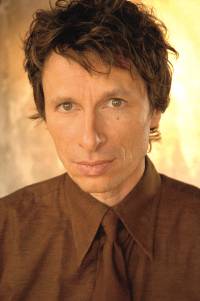
After a brief spell as head of the Squint music label in the late 1990s - during which he produced Sixpence None the Richer's hit single 'Kiss Me' - Taylor turned his attention to filmmaking.
The result is The Second Chance, starring Michael W. Smith as the popular music minister of a large, comfy suburban megachurch, and jeff obafemi carr as an inner-city pastor with a large chip on his shoulder. The film is now out on DVD, and I spoke with Taylor about it over the phone. Here's a taste of our chat; the full transcript is available at my blog.
BC Christian News: You've been talking about making a feature-length film for quite a while, and now it's actually happened.
Steve Taylor: That's right. They were mostly idle threats, but it finally came true.
BCCN: What was it that made everything coalesce at this point?
ST: Well, I had a couple of false starts. I actually had money to do a project that I'd done a treatment for, called Saint Gimp; but I kind of put it on the back-burner when we did the first table reading, where you get actors around the dining-room table and have them read it back to you. And it just was obvious that this was not a movie that was ready to be shot.
So instead of trying to go in and do a massive overhaul, I thought, "Maybe I should do something on a subject that I know a little more about." I thought that most Hollywood depictions of church life and pastors and those settings usually felt to me like they were made by people who don't go to church.
And so I thought it would be interesting to try something set in that world, make it redemptive, but also make it realistic and try to make characters where there weren't any easy good guys and bad guys, or kind of where everybody has their reasons.
BCCN: In the past, you had to wrestle with that whole question of whether you were in the 'Christian' music genre, as it were, or whether you were not going to be so confined by that label. Making a film, did you wrestle with those issues as well? Because The Second Chance does seem like a very 'Christian' film.
ST: Oh, I agree. I did wrestle with that, which is probably why that was originally not my intent, to do a movie like this first. It ended up being a combination of things.
I was simultaneously working on a comedy - and in some ways I would have preferred to do the comedy first, because it was going to be a movie played strictly for laughs - but the Second Chance screenplay ended up being done first. In retrospect, it's probably better that way, because I think there is a little more margin for error, when you're doing a drama, than when you're doing a comedy.
And really, once I got into this movie, particularly with the issues of racial reconciliation and what's the nature of service, it felt like the only way to make this movie work was to make it a movie primarily for fellow Christians.
BCCN: So it's safe to call this a 'Christian film,' then?
ST: Well, the only reason I haven't called it that is because it puts me in such bad company. It's like it makes people think of end-times dramas and their sequels.
BCCN: You say your next film will be a comedy, and it will be played strictly for laughs. Very few, if any, of your songs were funny just for the sake of being funny; most of them were actually expressing serious points. So do you think you could make a comedy that didn't have some of those other elements in it?
ST: Making a movie is usually a three- to five-year investment, so I can't imagine working that hard on something for no other reason than to make people laugh - but on the other hand, I just love making people laugh!
When we were showing The Second Chance - and we did a lot of screenings - even though I'd seen it a zillion times, I'd always go back and pop my head in to make sure that the laughs were working. And I'm not sure if that's good or bad, but that's just how it was. Whether people cried or not, that was fine, but I wanted to make sure they were laughing at the right spots!
August 2006