
Changing of the guard at Oaklands Chapel
BC Christian News, · Island Insight
Outgoing: Dennis Scott
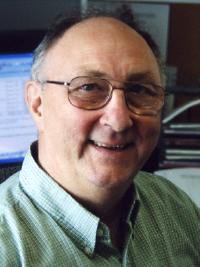 DENNIS SCOTT is 65, and he has pastored Oaklands Chapel for 25 years - which sounds like a good time to take a bow and make an exit. But those impressive figures are not the reason for his retirement.
"The church has grown as far as I can take it", he says. "There is tremendous potential here that can be realized by fresh leadership and greater administrative ability than I have."
It is not as if the church has stagnated under his leadership. Recently a major change was instituted when the weekly communion service was combined with the regular preaching service, which will make it possible to have two comprehensive services on Sunday morning instead of one. That will probably happen soon, as the present service is packed to overflowing into the foyer.
Scott's appointment as the first full-time, salaried staff man at Oaklands, constituted a major departure from the Brethren tradition of not having paid staff. "When I first came here, if anyone used the word 'pastor,' he might have been struck down by lightning," Scott recalls.
This tradition flowed from the group's emphasis on 'the priesthood of all believers,' which was a reaction against the division of Christians into professional clergy and the laity. Among the Brethren it was clear: every believer was needed to exercise his spiritual gift - preaching included.
Scott's previous career with the Scripture Union had brought him in contact with practically all other denominations, and shown him the strength of their emphases. He recognized that some Brethren traditions were hindrances to new growth.
"I had gotten a width of understanding of the church as a whole," he says. "I tried to open some doors and windows to other ways of doing things that were just as godly."
Changes included opening up women's ministry - moving away from head coverings, and enabling women to become deacons; openness to new music styles; and a wider understanding of how we live our lives in relation to the Bible.
"I am not a dynamic leader, not a super-administrator, not an incredibly charismatic person," he says. "Leadership to me has been a team effort, and I've worked hard not to be seen as the kingpin, the top dog. I have a team of men, who work with me as joint elders. Sometimes decisions are not made as quickly as they might be, but we listen to each other, balance one another, hear the voice of God together."
What about the future? "Though I am leaving as pastor, there are lots of things I can do in the church," he says. "I like working with the seniors, there is more I can do with Camp Imadene, and I hope to have opportunities to speak where people invite me, for my passion is still to preach the Word of God. I have always been a good teller of children's stories, and I want to write some of them down in a book."
Scott has been respected and loved by the Oaklands people, and has an excellent reputation among evangelicals.
"I am too young to retire," he says, and no doubt all who know him will be glad to hear him say that.
Incoming: Ward Gasque
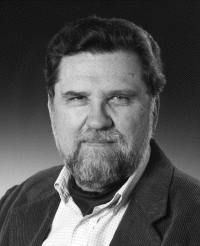 What is an internationally known career New Testament scholar like Ward Gasque (specializing in the writings of Paul and the book of Acts, yet!) doing taking up an interim pastorate in a Victoria Brethren assembly? Good question.
For starters, biblical teaching and preaching have always been highly valued at Oaklands, and Gasque is sure to be appreciated by the congregation.
What is more, as the first registrar of Regent College in Vancouver and then professor of biblical studies, he always treated his students in a pastoral way. Finally, shortly before he came to Victoria, Gasque did a year's interim pastorate at Granville Chapel in Vancouver. "It went well," he says. "I like people and relationships. I was blessed by it and the people seemed to be blessed. So I was asked to do it again, and here I am!"
What does he hope to achieve while he is here? "To steady the boat, to prevent decline in the interim period," Gasque says.
"Researchers say most transitions between pastors go poorly. If the outgoing pastor has been very successful, like Dennis here, it is hard to follow him because the people want his successor to be just like him.
"On the other hand, if he has not been a success, the people are anxious to hire somebody, and often they do it too quickly, without reviewing the church's history and vision. But at Oaklands they have made careful preparation; there is a plan, and the elders are giving leadership."
Gasque knows the general situation of evangelical churches in North America well, and especially that of the Brethren movement (also called Plymouth Brethren). After all, though Regent College is transdenominational, it was founded by Brethren. Currently, Gasque says, that denomination "is fracturing."
He adds: "Some of the churches are becoming more sectarian, trying to preserve an imagined past. If you do that, you won't serve the current generation, but a past generation that is dying out. There are also assemblies that are much broader, that are reaching out and growing - like Lambrick Park. They tend eventually to end up as independent churches and lose their Brethren roots. Many of the people in such churches are recent converts and have only a vague notion of their Brethren history."
Nowadays, he says, the Brethren "are worldwide. In some parts of the world they are thriving. There are many more Brethren in the so-called mission fields than there are in Canada."
Island churches wish Oaklands well in its quest for a new permanent pastor. At the same time, they may be excused for hoping the process will take some time.
That way, the rest of the church will perhaps share in the benefit of having a scholar of the stature of Ward Gasque in town.
October 2006