
Treatments of faith a mixed bag at Film Festival
BC Christian News, · Arts
 |
MAYBE it's due to my special interest in films based on the life of Christ, but it seems there are quite a few faith-related movies about the African continent and its woes at the Vancouver International Film Festival this year - and Son of Man, a modernization of the gospels produced by South Africans, is just the tip of the iceberg.
Some of these films get by without making any direct reference to religious faith. A Sunday in Kigali (Oct 1, 3), the latest film about the Rwandan genocide, is mainly concerned with a romance between a Quebecois journalist and a Tutsi woman he meets while researching a story on the HIV epidemic. Catch a Fire (Oct 3, 5) shows how the cycle of violence between white authorities and black saboteurs in 1980s South Africa turned a formerly apolitical man into a militant foe of apartheid.
When religion does turn up, it is often part of the problem, more than the solution. The Canadian documentary Uganda Rising (Oct 10, 11) concerns the atrocities committed by the so-called Lord's Resistance Army. His Big White Self (Sep 29, Oct 2) takes a look at what has become of the South African white supremacists whom director Nick Broomfield encountered in one of his earlier films; along the way, they turn to the Bible to support their racism and their noxious self-righteousness.
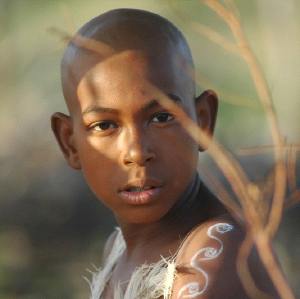
We can be thankful, then, that a film like Son of Man (Oct 7, 10) has come along to reclaim the story of Jesus as a force for good in a troubled world. In this film, the angel Gabriel visits the Virgin Mary after she runs into a classroom full of slaughtered children to hide from Herod's troops; when she goes on to sing the Magnificat, the bleak, disturbing setting gives her song of liberation an unexpected potency.
In addition, some of the apostles are former rebels who are reluctant to give up their guns - but Jesus insists that non-violence is the only way to proceed. Son of Man may be more political than spiritual in the end, but it does acknowledge that human dignity stems from the fact that we are all made in God's image.
Turning to other continents, Requiem (Oct 1, 7, 8) is another must-see, for Christian cinephiles. This German film is loosely based on the same historical events which inspired The Exorcism of Emily Rose; but where that movie emphasized Hollywood horror effects, this film is more concerned with naturalistic drama.
Is the epileptic university student at the heart of this story really possessed, or is that only an idea that has been planted in her mind by her family and their priests? We experience her story from the outside - from the point of view of her family and friends, some of whom are very skeptical of the priests' claims - so it is impossible to say for sure. But the film does an excellent job of putting us in the position of those who have to answer this question for themselves.
Other films worth catching include two documentaries: Sound of the Soul: The Fez Festival of World Sacred Music (Sep 29, 30, Oct 8), which includes performances by Muslim, Jewish and Christian musicians; and Into Great Silence (Oct 1, 9, 11), a mostly silent documentation of the prayers, services and chores performed by the monks of the Grande Chartreuse monastery in the French Alps.
The festival runs until October 13, and as it unfolds, I'll say more about these films, and others, at my blog. Contact (604) 683-3456 or viff.org for showtimes.
* * *
Five years ago, Inuit filmmaker Zacharias Kunuk had something of a hit, at least by Canadian standards, with Atanarjuat: The Fast Runner. Much was made of the story's roots in oral tradition, and how the film would help to revive ancient folklore and traditions which were lost when the Christian missionaries came.
However, some critics noted that the film's ending struck a note of forgiveness and pacifism which is pretty rare in pagan narratives; think of the climax to Homer's Odyssey. When pressed on this point by a writer for The American Prospect, Kunuk admitted that he had ditched the violent ending of the original myth, and that the new ending was "probably" traceable to the influence of those same missionaries.
I mention all this because Kunuk's newest film, The Journals of Knud Rasmussen, is about a point in time, less than a century ago, when the Inuit were increasingly turning away from paganism to Christianity. This transformation is depicted as a sad and profound loss, and in some ways it no doubt was; but I wonder if there could have been a more nuanced acknowledgement of what was gained.
* * *
Has it really been 25 years since Raiders of the Lost Ark came out? Has it really been a quarter-century since my Sunday school teacher took me and several other guys to see a fun, gross, spooky, exciting new movie about the Ark of the Covenant?
Indeed it has. Now, the film is returning to the Vancity Theatre October 20 - 25, on a double bill with Monty Python and the Holy Grail. Contact (604) 683-3456 or vifc.org.
October 2006