
Christmas hits the big screen
IN 1961, Metro-Goldwyn-Mayer produced King of Kings, the first major Hollywood film about the life of Christ since the silent era. The Virgin Mary was played by Siobhan McKenna, a respected Irish actress in her late 30s, and the villainous Herod the Great was described by the narrator as "an Arab of the Bedouin tribe."
Nearly half a century later, things have flipped around. In The Nativity Story, Irish actor Ciarán Hinds plays the paranoid and menacing King Herod, while many of the heroes and their kin are played by actors who hail from Muslim territories.
Mary's mother Anna (Hiam Abbass, who was born in modern-day Nazareth) and Joseph's best friend Benjamin (Paradise Now's Kais Nashif) are played by Palestinians; Mary's father Joachim (Crash's Shaun Toub) and her cousin Elizabeth (Shohreh Aghdashloo) are played by Iranians; and the angel Gabriel is played by Star Trek: Deep Space Nine's Alexander Siddig, who was born in Sudan.
Mary herself is played by Keisha Castle-Hughes, a part-Maori New Zealander who has appeared as a Middle Easterner at least once before; two years ago, she played an Arab-American in the music video for Prince's 'Cinnamon Girl.'
At 16, Castle-Hughes is also probably the youngest actress to ever play Mary on the big screen - and, given that girls married young in the ancient world, the film even suggests that she might have stayed unattached a little longer than most. - PTC
Nativity Story retold in contemporary music
YOU CALL this a Christmas CD? There's no sign of 'Jingle Bells,' 'Winter Wonderland' or 'White Christmas.' So we'll have to somehow make do with the likes of 'O Come, O Come Emmanuel,' 'The First Noel,' 'Breath of Heaven (Mary's Song),' 'O Holy Night' and 'Mary did You Know?'
While the cynic might dismiss this as a barefaced marketing tool for the movie, The Nativity Story: Sacred Songs (Warners) features a tasteful selection of Bible-centred material by quality artists such as Amy Grant, Point of Grace, LeAnn Rimes, Kenny Rogers, Jaci Valasquez and Barlowgirl. All in all, it's a good reinforcement for the film's message.
It should be noted that several retailers are erroneously referring to this release as a 'soundtrack.' The CD of the actual musical score for the film, by Mychael Danna, is available from New Line Records. - David F. Dawes
Holy family relations
THE question of Mary's relationship to Jesus is inevitably tied to the question of his 'brothers' and 'sisters'; and the three major Christian traditions - Orthodox, Catholic and Protestant - have understood this in different ways.
The dominant Orthodox tradition is that Joseph was a widower who had children by a previous marriage, and who was more of a guardian to Mary than a lover; the 'brothers' and 'sisters' of Jesus were thus the step-siblings of Jesus.
This tradition goes back at least to the Protoevangelion of James, an apocryphal gospel commonly dated to the mid-2nd century. It is also the oldest text which says Mary's parents were called Joachim and Anna; these are the names they have in The Nativity Story and several other movies, such as Franco Zeffirelli's Jesus of Nazareth (1977).
However, the tradition that Joseph was a widower has almost never been depicted onscreen. The silent version of Ben-Hur (1925), which depicts Joseph as a weary old man and Mary as an 18-year-old woman, may be a rare exception.
The dominant Catholic tradition, going back at least to the writings of St. Jerome (c. AD 383), is that the 'brothers' and 'sisters' of Jesus were actually his cousins - not the children of Joseph, but rather the children of other relatives.
And while some prominent Protestants - such as Luther, Calvin, Zwingli and Wesley - have believed in the perpetual virginity of Mary, the dominant Protestant tradition is that Mary had other children by Joseph after the birth of Jesus; the brothers and sisters of Jesus were thus his half-siblings.
This, too, has almost never been depicted onscreen. Most films have taken at least an implicitly Catholic approach; and some, like King of Kings (1961) and The Passion of the Christ (2004), have portrayed Mary explicitly as an intercessor, or as one who shares a special mystical bond with Jesus.
The Nativity Story arguably reflects a more Protestant sensibility; the angel Gabriel greets Mary as "favoured one," not as "full of grace"; and the Magnificat, which is now heard in a closing voice-over, was almost left out altogether until a Catholic nun suggested that it be included somewhere. But the film is careful to depict the marriage between Mary and Joseph in a way that does not offend Catholic beliefs. - PTC
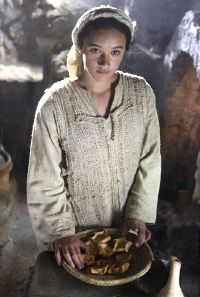 LOS ANGELES - It has been nearly three years since The Passion of the Christ proved there was an audience for biblical movies with a strong Christian theme.
Now, Hollywood is finally beginning to catch up - and what better way to follow a film about the death of Jesus than to make a film about his birth?
The Nativity Story, which comes to theatres December 1, is directed by Catherine Hardwicke, a former production designer who made her directorial debut three years ago on Thirteen, an Oscar-nominated, R-rated film about the troubled relationship between a teenage girl and her single mother.
Hardwicke followed this with Lords of Dogtown, a dynamic look at several legendary skateboarders in the 1970s.
Sex, drugs and rock'n'roll were all prominent features of Hardwicke's first two films, so it might seem like a stretch that she would then go on to tackle a rather pious account of the virginal conception of Christ.
But the film does star 16 year old New Zealander Keisha Castle-Hughes, who became the youngest best-actress Oscar nominee two years ago for her performance in Whale Rider; and Hardwicke says the new film actually fits quite nicely with her previous youth-oriented movies.
"This movie is about the most famous teenager in history," says Hardwicke to a handful of journalists at the Four Seasons hotel in Beverly Hills.
The Virgin Mary, she says, "had maybe the biggest obstacles that she had to face - and the most extraordinary challenges. So in a way you could say [this film is] part of my teen trilogy."
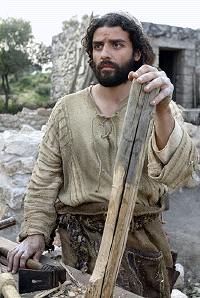 Hardwicke says she was intrigued by the opportunity the film gave her to get behind the familiar icons, and to portray Mary and Joseph - here depicted as a man in his mid-20s - as ordinary people, albeit people who lived within a very different culture from ours. For example, Mary's betrothal to Joseph is imposed on her by her parents; and Mary, who feels no love for Joseph, doesn't know how to respond. And then the townsfolk are scandalized when they learn Mary is pregnant.
"Two thousand years ago, how similar is that to teenage life now?" asks Hardwicke. "I mean, there are still struggles with the parents, but of course Mary had this extraordinary situation - being told that she would bear the Son of God, and then having people looking down on her, not believing her, [and treating her like an] outcast. How did she find faith in herself and inner strength to overcome this?
"So I felt there was some kind of continuity, and I tried to do similar things, to really take you back to Nazareth, and to take you back into real-life, real-person, real situations that you could relate to. If you're a guy, how would you feel if your fiancée that you love so dearly comes back home and she's pregnant, and you know you're not the father, and she says it's going to be the Son of God?
"I mean," she adds with a laugh, "that's a tough one for any man to get his head around, y'know?"
Whereas Mel Gibson's movie was very masculine, Hardwicke's is more feminine; The Passion of the Christ is full of scenes in which men beat up other men, but The Nativity Story takes time out to show Mary and her kinswoman Elizabeth, mother of John the Baptist, feeling the movements of the babies in each other's wombs. "That's kind of girly, huh?" Hardwicke laughs. "That's kind of the chick flick part of it."
She says she wanted to be as true to the material as she could, and not get too distracted by modern debates over the place of women in religion - but if this part of the gospel story happens to cast women in a positive light, then so much the better.
"Of course, Mary has inspired women all over the world for 2,000 or more years," says Hardwicke, "so I think that, yes, I wanted to portray them with strength and dignity and beauty, and continue inspiring people by these women."
Shohreh Aghdashloo, the Iranian actress who plays Elizabeth, says she modelled her own performance after a woman in her own life whom she had found very inspiring - namely her grandmother - but she says she did this unconsciously, at first.
"When I was doing this research [into the character of Elizabeth], I also kept writing, creating stories about her background," she says. "I assume that she's coming from a very good tribe, and she loves Zechariah and they had been married; and I usually write and try to come up with adjectives, to try to portray my character."
Aghdashloo, who was nominated for an Oscar for her performance as Ben Kingsley's wife in House of Sand and Fog, says she found herself writing words like "selfless," "giving," "kind," "generous" and "with a heart full of love for humanity" - and "all of a sudden it dawned on me. 'Wait a minute, my grandmother was like this.'"
Aghdashloo, who was raised Muslim, calls herself "a student of all religions" and says she was influenced in this by her grandmother, who studied the Torah and kept a copy of the Bible in Farsi. So she tried to honour both her grandmother and the biblical Elizabeth by "combining" the two women in her performance.
The film's biggest discovery is Oscar Isaac, the Guatemala-born, Miami-raised actor who plays Joseph. He says the screenplay - by Mike Rich (The Rookie), a practicing Christian himself - was so "reverential" that the key to his performance was to make Joseph as human as possible, "to make him flesh and blood."
Isaac notes that Joseph is drawn to Mary because of her virtue, and out of a love that goes deeper than what we see in most films. He also notes that Joseph continues to wrestle with his emotions - including his initial feeling of betrayal when he learns that Mary is pregnant - long after he has made the decision to do God's will.
"It was very difficult for me to stay in the room, you know," he says. "In rehearsal, I would go out and have to kick things, and I had to basically find out why does he stay. And again, the idea of love - you can say that's a love that comes from God. That's that Corinthians love, that seeks not itself in return; it's meek, it's humble. As a young man, what I had to connect with, was that feeling of love for someone."
Isaac insists there is nothing "irreverential" about his portrayal of Joseph's spiritual struggle; if anything, he says it makes the character's strengths stand out all the more. "I think that just shows his power more, that he was able to feel everything that we feel, but overcome it - and I don't think I could!"
Isaac says he grew up in a charismatic, nondenominational Christian home and has since "kind of gone through my own journey, much as Joseph has, figuring out if you're hearing God correctly." But he says his family is rooting for him and this film.
"My dad said that if he went to church and saw my picture with candles around it, he wouldn't be too happy," says Isaac with a laugh. "It would freak him out a little bit. No - he's so excited. They think it has meaning, that this is my first film."
December 2006