
U.S. election affects Christians on both sides of the border
BC Christian News, · Top Stories
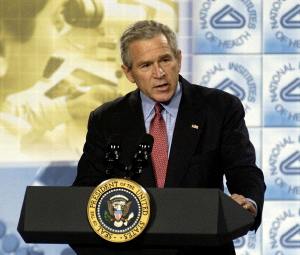
AS AMERICA'S Democrats celebrate their December 7 victory in both the Senate and the House of Representatives, Christians are reflecting on the new U.S. political landscape.
Even though the Republican Party has been closely associated with the 'religious right' in recent decades, many observers suggest gains made by Democrats in the midterm elections do not necessarily indicate a decline in Christian influence. Nor do those results necessarily have direct application to Canada.
"U.S. evangelical Christians have taken a setback," said Canadian political scientist John Redekop. But he added 2006 "has been a good year for Christian conservatives in Canada." Redekop, who is a member of the Mennonite Brethren denomination, pointed out that a good number of evangelicals - representing various parties - were elected to the House of Commons in the January election, and that some have prominent roles in Prime Minister Stephen Harper's cabinet.
Iraq
A survey conducted by Beliefnet revealed the Iraq War was the most important issue for voters. The war was also the greatest concern for evangelicals, with 22.5 percent citing it as the key issue - compared to 16 percent who cited abortion and 10.7 percent who cited homosexuality.
More than 74 percent of those who cited the war as the most important issue also said they disagreed with the approach which Republican president George W. Bush had taken to the war.
Some observers have suggested that, just as opposition to the war in Iraq hurt the Republicans, so opposition to the war in Afghanistan may hurt the Conservatives in the next Canadian election.
Liberal MP John McKay (Scarborough-Guildwood), who is a Baptist, said the situations are not parallel - because, in his view, the Afghanistan war is a legitimate response to terrorism, while the reasons for the Iraq war were more dubious.
However, New Democrat MP Joe Comartin (Windsor-Tecumseh), a Catholic, suggested the most important thing was not the war itself - but the fact that Bush had lost touch with voters, who no longer trusted him.
Corruption
Polls also reveal the second most important issue for voters was corruption, particularly a number of financial and sexual scandals involving prominent Republican leaders, and also some evangelical leaders.
Redekop noted the instance of a bridge being built to an uninhabited island as an extreme example of Republican pork barreling and mismanagement. He said of the election loss: "The Republicans largely did it to themselves - and evangelical Christians were part of that."
According to the Beliefnet survey, corruption was the second most important issue for evangelicals. Some observers have said this indicates voters used the election as an opportunity to apply morality to political practice.
Moral issues
In the past, the religious right in the U.S. has often focused on moral or social issues such as abortion and same-sex marriage.
However, with the scandal over Republican congressman Mark Foley offering sex to congressional page boys, the Republicans were no longer seen as the exclusive defenders of marriage. In fact, many of the newly elected Democrats are opposed to both abortion and gay marriage. Thus, the Democratic victory does not represent a disavowal of Christian values - but rather a repudiation of Republicans as defenders of those values.
In this election, the Republican share of support from those who attend church weekly dropped from 58 to 51 percent. The Beliefnet survey reveals that, contrary to earlier expectations, half of American evangelicals now do not believe Bush's Christian faith has made him a better president. Other observers suggest the results may show that U.S. evangelicals are now considering a wider range of issues when deciding how to vote.
Redekop cautioned, however, that while many of the newly elected Democrats may have social or moral views acceptable to Christians, the Democratic leadership is far more secular. As a result, he said he expects it will be more difficult to pass legislation opposed to same-sex marriage and to appoint conservative Christians as judges. He also suggested this will have a "spillover effect" on public opinion in Canada because of the dominance of the American media here.
Political alignment
John McKay said the U.S. election calls into question the decision of U.S. fundamentalists to align themselves so closely to the Republican Party: "If you go up with them, you will go down with them too."
McKay noted there has been less of a tendency for conservative Christians in Canada to align themselves with a particular political party. His home church has members who vote Liberal, Conservative and NDP, and some who show little interest in politics.
Doug Cryer, director of public policy for the Evangelical Fellowship of Canada (EFC), said he agrees. The Conservatives usually get about half the evangelical vote, with the Liberals and NDP splitting the other half.
However, that changed in the January election, when an Ipsos Reid survey showed support for the Conservatives from Protestants who attend church weekly rose to 64 percent from 51 percent in 2004. Support for the Conservatives among Quebec Catholics who attend church weekly also jumped dramatically, while support for the Liberals among committed Quebec Catholics dropped from 56 percent to 29 percent. Ipsos Reid explained the change on the basis of two issues: gay marriage, and Liberal corruption.
In this case, the issues that split the conservative Christian vote in the U.S. between Republicans and Democrats - moral issues and corruption - convinced Canadian evangelicals to unite behind one party.
Cryer said it is a healthy thing that Canadian Christians don't have the affinity for one particular party that American Christians do. He said the EFC encourages Christians to not focus on party affiliation but to get to support "the candidate who best represents their views."
Comartin suggested the U.S. religious right may have been dissatisfied with Bush's ability to deliver on issues such as gay marriage and abortion, and that this cost Republicans some of their core vote. He said the Conservatives face the same dilemma of satisfying their core social conservative voters without alienating others.
Democracy
Conservative MP Russ Hiebert (South Surrey-White Rock-Cloverdale), affiliated with an Alliance church, said the U.S. election will have little influence on Canada, since Canadians expect their governments to act "in the best interest of Canada, regardless of what other countries do."
Hiebert also said "the House of Commons reflects the variety of perspectives in Canadian society - and that's a good thing."
Redekop agrees. He said the 2006 U.S.election is "not a realigning election. The American electorate didn't turn against [the Republicans] due to a change in values but over issues of policy and corruption."
The larger issue is long-term trends. All of the experts consulted stressed that Canada is different from the U.S.
Evangelicals have made up a considerably larger percentage of the population in the U.S. than in Canada, but church attendance in general and evangelical church membership in particular are stagnating or even declining in the U.S.
In Canada, while mainline church membership has been declining quite drastically, evangelical churches have been steadily growing for the last few decades.
McKay said that just because a certain party is elected, "it wouldn't mean that there is an anti-Christian trend." In this sense, he said, the competition between political parties is less significant than the "larger conflict between secular and faith-based ideologies."
December 2006