
Nigerians grateful for Friendship
BC Christian News, · Island Insight
FRIENDSHIP Baptist Church is living up to its name.
The Victoria congregation may not be a big church, but it is the main supporter of the biggest orphanage in Nigeria.
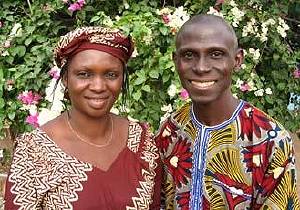
Dr. Spencer Stadler, the church's senior minister, is unreservedly committed to this work. He explains, "I realize that there are poor people in Victoria as well, but we have a special responsibility and call to help the poorest of the poor - that's what these people are."
Stadler aims to further increase the support to more than half of the orphanage's operating expenses by 2010. For an establishment involving 300 people, orphans and staff included, that is a big ambition indeed - an ambition that can only be fueled by faith.
The whole church shares this commitment. Recently it raised $15,000 for a truck, and last year a similar amount for food.
The church's seniors have adopted a specific project at the orphanage (which is named Ministry Of Mercy, or MOM). The Sunday school has undertaken to pay for formula for the babies.
Not only that, but Stadler and four other church leaders are travelling to Nigeria this spring to help where they can - and, he says, "to get a first-hand 'feel' for the situation. What are they achieving? What are the problems and the needs?"
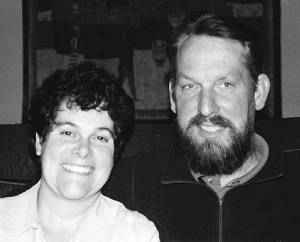
What sparked this consuming interest? "That was the work of Paul and Pamela Welle," Stadler says. "They had spent a year there and, in a very honest way, told us about their experiences. That is how we caught the vision, too."
BCCN went to get the Welles' story first-hand.
The couple recalls how, seven years ago, they heard about MOM - and somehow felt moved by its desperate need for running water and some basic construction, to house its burgeoning population. As Paul is good at engineering and construction, the couple agreed they should do something about the need. So they took their four children and spent a year at the orphanage.
Welle explains that though MOM was started by missionaries, it was soon taken over by a Nigerian, Daniel Edeh. Edeh was the pastor of a big church, but when the missionaries could no longer cope with the children, he resigned his pastorate, made his family's property available to the orphanage and took on its management. He and his wife Esther have run it now since 1992, and under their care it has grown from seven needy children to its present size of 300.
MOM is called an orphanage, but only half the children are true orphans. The others have been rejected by their society because they are albinos, or born with cleft palates or club feet. Some were crippled by polio which made them economically useless. Still others were born to a mother who died in childbirth - a fairly common occurrence in Nigeria - and the father could not afford formula to feed it, so he took the baby to MOM.
And not only the children receive care; the care givers also benefit. The children are grouped in clusters of up to 10, and looked after as a family by 'aunties.' These aunties are unmarried women or widows, who have no husbands to look after them. Others are 'rejects' themselves, like the children, because they are albinos or have epilepsy - which is regarded as a demonic manifestation but can easily be controlled with medication.
Health care is provided by two medical workers who have had two years of training and can handle the most common problems. An American nurse from another mission does consultations and also nurses critically ill babies back to health - by herself!
MOM has teachers on staff and educates the children at least to grade 7. There is no high school in the village, but 30 bright students attend a boarding high school some distance away - a big expense.
MOM's pride and joy are 20 orphans they took in, cared for and schooled, and who now have post-secondary degrees. In a developing country, such a thing is truly remarkable.
The Welles have the highest regard not only for Daniel Edeh's ability, but also his integrity. Naturally MOM's rapid growth has brought plenty of strains, and Edeh's Christian character was able to overcome them, but at the moment of writing he is undergoing perhaps the severest test of his career because three murders have occurred, either on the orphanage grounds or of people connected with it.
These horrible events constitute a severe security threat. The police are unable to help; and the situation has discouraged Edeh profoundly.
Over the years, Paul Welle has gone back twice, alone and for a few weeks only, to help Edeh with building projects, and to discuss the work with him.
As a non-Nigerian, he has perspectives that have been a big help, and Edeh has learned to trust him. That is why he feels it is essential to go once more, to help MOM through the present crisis. His wife Pamela will not join him - the children need her at home.
How does she feel about it? "I agree Paul needs to go," she says, "but I cannot say I like it. It will be lonely without him, but it is also a worry. Nigeria is a dangerous country, and I cannot take his physical safety for granted. I will be doing a lot of praying."
Does this remarkable work interest you? It does need further finances - but it needs prayer even more just now. Find out more at ministryofmercy.org.
February 2007