
Pickton trial: one victim's faith
BC Christian News, · Top Stories
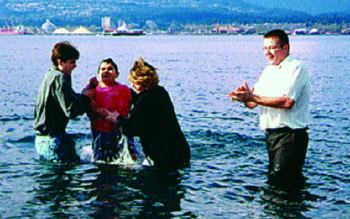
VANCOUVER is in the midst of a high profile court case, after the largest serial killer investigation in Canadian history.
The trial of Robert William Pickton, for the murders of six women, began January 22 in New Westminster Supreme Court.
The first charge laid against Pickton was for the murder of Sereena Abotsway, and BCCN takes this opportunity to look back at a less publicized aspect of her life.
Born on August 20, 1971, she went missing August 1, 2001. She was described as an outgoing woman with a roaring laugh and warm smile. But Sereena's life was undoubtedly troubled; among other problems, she was diagnosed with Fetal Alcohol Syndrome.
Despite - or perhaps because of - her rough circumstances, she was a regular at the Street Church, at Main and Hastings in the heart of Vancouver's Downtown Eastside.
She began attending from the church's beginning in the mid-90s, and was baptised in 1998 by pastors Randy and Cheryl Barnetson.
Sereena was "a big part" of the church, Cheryl recalled when she spoke to BCCN's Meg Johnstone in 2002.
"If someone was on drugs or drinking and was causing a disruption, she would always be the one to get up and talk to that person."
Cheryl remembered one incident that was typical of Sereena's response to others.
"There was this guy at the back of our church. He was in the worst shape I'd ever seen anyone in. We've had people OD, throw up, and have epileptic seizures in our church. It's a constant 911 situation every night," she said.
"This guy had a seizure, and defecated and urinated in his pants. He was high, and didn't realize what had happened. He was coughing, and there was phlegm hanging down off his face. He was taking off his shoes and scratching his feet. You could see bumps and we thought maybe he had scabies. We couldn't get too close to him because we thought maybe he had TB. I called 911.
"When the ambulance guys came, they were appalled. They asked him to get himself up and to the ambulance. He said he needed his shoes. I was standing next to the ambulance guys, and I overheard one say, 'I'm not going to put his shoes on.' I was thinking that it was going to fall to me, when Sereena jumped in and said 'I'll help you.'
"She knelt beside him and wiped his face off, and put his socks and shoes on. She didn't care about the smell, what he had done. She helped him to the ambulance. When she came back, I was smiling at her, so amazed at her graciousness . . . She just shrugged it off. That's what she was like."
February 2007