
'A wretch like me' . . .
BC Christian News, · Top Stories
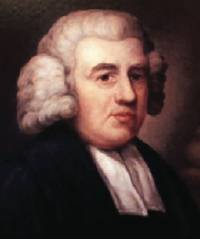
John Newton , the author of 'Amazing Grace,' was also a mentor to abolitionist William Wilberforce. A one-time slave ship captain, he eventually became an Anglican minister.
In 'Thoughts upon the African Slave Trade,' Newton wrote:
 |
TWith our ships, the great object is to be full . . . The cargo of a vessel of a hundred tons, or little more, is calculated to purchase from 220 to 250 slaves.
Their lodging-rooms below the deck, which are three (for the men, the boys, and the women), besides a place for the sick, are sometimes more than five feet high, and sometimes less; and this height is divided towards the middle, for the slaves lie in two rows, one above the other, on each side of the ship, close to each other, like books upon a shelf.
I have known them so close that the shelf would not, easily, contain one more. And I have known a white man sent down, among the men, to lay them in these rows to the greatest advantage, so that as little space as possible might be lost.
Let it be observed, that the poor creatures, thus cramped for want of room, are likewise in irons, for the most part both hands and feet, and two together, which makes it difficult for them to turn or move, to attempt either to rise or to lie down, without hurting themselves, or each other . . . Dire is the tossing, deep the groans.
The heat and smell of these rooms, when the weather will not admit of the slaves being brought upon deck, and of having their rooms cleaned every day, would be almost insupportable to a person not accustomed to them.
If the slaves and their rooms can be constantly aired, and they are not detained too long on board, perhaps there are not many who die; but the contrary is often their lot.
They are kept down, by the weather, to breathe a hot and corrupted air, sometimes for a week: this added to the galling of their irons, and the despondency which seizes their spirits when thus confined, soon becomes fatal.
And every morning, perhaps, more instances than one are found, of the living and the dead, like the captives of Mezentius, fastened together.
Epidemical fevers and fluxes, which fill the ship with noisome and noxious effluvia, often break out, and infect the seamen likewise, and thus the oppressors, and the oppressed, fall by the same stroke.
I believe nearly one-half of the slaves on board have, sometimes, died; and that the loss of a third part, in these circumstances, is not unusual.
The ship, in which I was mate, left the coast with 218 slaves on board; and though we were not much affected by epidemical disorders, I find by my journal of that voyage (now before me), that we buried 62 on our passage to South Carolina, exclusive of those which died before we left the coast, of which I have no account.
February 2007