
Caring for Burmese refugees
BC Christian News, · Top Stories
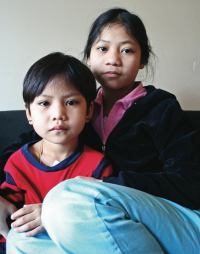
LAST FALL, the first of more than 800 Burmese refugees began to arrive in Canada. They were settled in 10 communities, from Vancouver to Charlottetown. And now a second wave of these mostly Christian refugees is expected to arrive in the near future.
The refugees, who are from the Karen ethnic group, have been 'warehoused' at the Mae La Oon camp in the Mae Hong Son province in northern Thailand. They fled across the border into Thailand in 1995 after a major offensive by the Burmese government army against the Karen National Union (KNU).
The Canadian government announced last June that it would accept 810 refugees, due to the conditions these displaced people were facing in Thailand.
According to a press release issued at the time by Citizenship and Immigration Canada, "the camp is extremely overcrowded. Refugee dwellings are built on steep hillsides that are susceptible to landslides. The lack of appropriate sanitation and water facilities for a population of 14,000 creates a situation where serious public health risks are endemic, and where other social problems associated with such conditions are reaching alarming levels. It is because of the worsening conditions in Mae La Oon that the UNHCR has pushed for group resettlement from Thailand as a matter of priority."
Over 100 of the refugees came to the Vancouver area. Although they have been in Canada for three months, they have faced immense challenges adjusting to urban Canadian society, according to Lisa Sadler, one of several Christian volunteers who have been assisting them.
"The Karen have struggled to learn what Canadians take for granted: using electricity, dialing phone numbers, cashing cheques and traveling on public transport," Sadler said.
Upon arrival in Canada, the government set the Karen up in family groupings, in Surrey apartments. "A small number of Christians from various Langley churches - including both Roman Catholic and Baptist - have come together to help with the many needs," Sadler said.
She emphasized the spiritual hardiness of the refugees, extolling the "hope and strength [of] their Christian faith - in spite of their suffering, both in their native Burma and in the Thai refugee camps." The resettled Karen are presently seeking churches which hold services in their language.
Sadler added: "A few of the local Christian volunteers have given up work commitments to help the refugees full-time, and hope to find the resources and tools necessary to help the Karen - so that they are able to carry on when their government support ends in November of this year."
She said she and the other volunteers hope that through friendship and support they can help the Karen with language skills, along with helping the children integrate into schools.
"I came for the opportunity to receive a better education," said Dahda, a 17 year old refugee, when asked why she and her family wanted to come to Canada. She said life in the refugee camp was difficult for her family and especially her mother, and they hope life in Canada will hold more promise for them.
Contact: kareninitiative@gmail.com.
April 2007