
Easter story receives varied treatments
BC Christian News, · Arts
Eugene Peterson: Living the Resurrection, Navpress, 2006
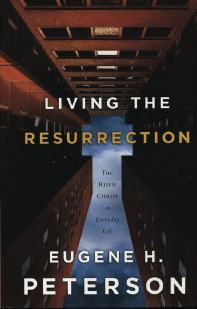 Subtitled 'The risen Christ in everyday life,' Living the Resurrection treats the reader to bitesized meditations from this professor emeritus of Regent College.
Best known as author of The Message, Peterson takes us back to view the events surrounding the resurrection through the eyes of the biblical witnesses.
As with his other writings Peterson aims at spiritual formation, not merely knowledge; he states, "the resurrection of Jesus is the action at the core of all Christian spiritual formation."
Believers who may feel they have "heard it all before" are challenged by Peterson to new ways of appreciating the timeless profundity of the gospel.
Peterson states, "What I want to do is recover our resurrection centre and embrace the formation traditions that develop out of it. He goes on to describe an in-depth study of the impact of the resurrection: "I will name this 'the deconstruction of resurrection."
This book is highly recommended.
Herbert O'Driscoll: Four Days in Spring, Path Books, 2007
 Victoria's Herbert O'Driscoll, a former Anglican Cathedral Dean at Christ Church Cathedral Vancouver, reflects on the final days around Easter in Jesus' life.
O'Driscoll, well known as an author of devotional books, views Jesus primarily from a human point of view.
This book does not seek theological depth when addressing the cross; nonetheless O'Driscoll brings insights and poignant applications to our lives.
Chris Seay & David Capes: The Last Eyewitness - the final week, World, 2006
Coming from the 'Emerging Church' movement, with leading exponent Brian McLaren as a main contributor, readers will likely expect something different in The Last Eyewitness's approach to Easter.
The book not only comes from the perspective of John ("the last living disciple"), but it is written in John's voice: "Jesus had this group of guys. He called us 'the twelve.'"
Some may find this literary device troublesome at a number of levels.
Although the authors are at pains to explain what is scripture and what is not, Christians who uphold the primacy of the Bible may be left wondering if this runs the danger or adding to (or taking away from) scripture.
In addition, when the scriptures are quoted, it is not clear as to what translation is used. This retelling of scripture comes from 'The Voice,' described as "a scripture project to rediscover the story of the Bible."
That the Emerging Church movement is trying to contextualize the scripture's message to our culture is worthy; what is in question is whether this treatment of scripture compromises its message.
Gary Kinnaman: Experiencing the Power of the Cross - how it changes everything, Bethany House, 2005
Kinnaman is senior pastor of Word of Grace Church in Mesa, Arizona. This substantial treatment of the cross has both theological depth and practical application.
Although his message is not new, he draws from contemporary events such as The Matrix, Columbine and Enron to illustrate the need for, and the power of, the cross.
One chapter, 'The Passion Reloaded' features more blood than a Mel Gibson film.
For someone seeking an accessible way to plumb the depths of the atonement, Kinnaman delivers. His teaching, like that of most effective contemporary preachers, commences with an engaging life story that illustrates the truth to come.
Also included are seven weeks of Lenten and Easter readings.
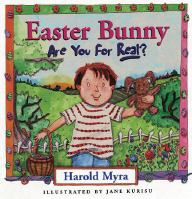
Harold Myra: Easter Bunny - are you for real?, Tommy Nelson, 1979/2005
Written by Harold Myra, chief executive officer of Christianity Today International, this little cardboard children's book is made delightful by Jane Kurisu's innocent illustrations. Myra's message however - even taking into account it's simple and limited scope - is commendable but dull.
What are we teaching our children with such dialogue as:"'Is it okay to hide eggs?' asked Todd. 'Sure,' dad answered, 'as long as we remember that Jesus is the reason for Easter.'"
April 2007