
The Greatest Story, endlessly reinterpreted on film
BC Christian News, · Arts
The Greatest Story has been told in myriad ways, ranging from stunning to appalling. Here's an Easter overview.
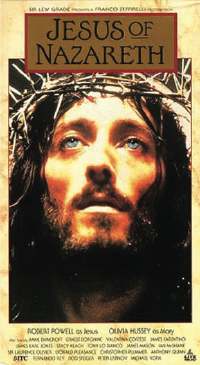 Jesus of Nazareth (1977) Franco Zeffirelli's epic mini-series is far and away the most comprehensive and satisfying version of The Story. Robert Powell brings great depth and sensitivity to the title role, presenting a multi-faceted, charismatic persona. The script takes artistic license with its interpretation of Judas' motives, but does so in a way that adds complexity without compromising the essentials. Acting, cinematography, writing and direction all conspire to create magnificent film.
The Passion of the Christ (2004) Well, ya gotta love a filmmaker who would spend his own millions to make his dream movie in Aramaic - without subtitles. That was evidently Mad Mel's original plan; thankfully, Gibson changed his mind about the subtitles. Quirks aside, this is - hands down - the most emotionally wrenching Christ movie ever made. And not just because of the ultra violence. The combination of great performances, stunning cinematography, faithfulness to scripture and outstanding direction make this a film for the ages.
The Gospel According to St. Matthew (1964) Despite his reputation as a Marxist atheist, Pier Paolo Pasolini's film is remarkably reverent. Enrique Irazoqui plays Jesus as a fiery preacher. The stark documentary style, often using handheld camera, effectively places the viewer among the actors. The music combines Bach chorales with old blues recordings; Odetta's 'Sometimes I Feel like a Motherless Child,' heard when the Magi honour the infant Jesus, is especially poignant. Artistically, this is the most outstanding of all these films.
 The King of Kings (1926) Aside from a silly romantic subplot involving Judas and Mary Magdalene, this is an intelligent, creative adaptation. Satan's temptation occurs after the people proclaim Jesus king; when the adulteress is about to be stoned, Jesus writes the sins of the onlookers on the ground; the black and white images are effectively enhanced by the use of technicolor in the resurrection scene. Cecil B. DeMille's crowning achievement, and one of the finest films of the silent era.
The Visual Bible: Matthew (1995) Bruce Marchiano is marvelous as an affectionate, joyful Jesus; and he is riveting in his denunciation of the Pharisees, progressing from indignation to sorrow. Slow motion is used in unexpected ways, as in a scene involving the Pharisees admonishing the disciples. Sound is used creatively: as Jesus sits alone awaiting his last supper, the counting of Judas' money is heard. A wonderful film, conveying the story with freshness and passion.
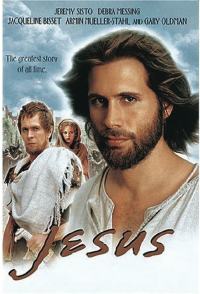 Jesus (2000) This version presents an earthy saviour, with a romantic interest; this is done tastefully, and becomes poignant when Jesus breaks off the relationship. The most daring scene comes in Gethsemane. Satan appears (sporting one of cinema's all-time bad haircuts), and shows visions of Christians misrepresenting everything Jesus stands for. This does nothing to diminish an essentially biblical perspective.
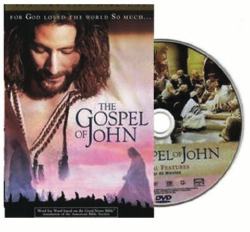
The Gospel of John (2003) Beautifully narrated by Christopher Plummer, this film presents Henry Ian Cusick in a solid performance of some of the more challenging scriptural passages about Christ's deity. The most inventive section comes in the depiction of chapters 14 to 17. As Jesus' most extraordinary discourse unfolds, the script shows him talking at different locations, and incorporates flash-forwards into the future lives of some disciples. Overall, a fine adaptation.
Jesus Christ, Superstar (1973) Scriptwriter Tim Rice's portrait of Christ is just as shallow as his lyrics. This Jesus is a whiny tin saviour who petulantly agrees to martyrdom, just to prove a point to a God whose will he doesn't comprehend. Judas is the voice of reason, righteously resisting the 30 pieces of silver. Director Norman Jewison uses desperately flashy gimmickry to hide a hollow, bankrupt enterprise.
The Miracle Maker (2000) An animated Jesus? Potentially an inane disaster, this film is actually a delight. It is also theologically astute, and is one of the few films to depict the demonic possession of Mary Magdalene; the latter sequence is bravura film-making by any standards. This is a very imaginative production, as good as any live-action version.
-
April 2007