
Spirituality under the surface of jazz
Of all the popular music forms, jazz is one of the very few that – on the surface, at least – evinces little overtly Christian content. Take a closer look, and it quickly becomes clear there’s a deep spirituality inherent within the music itself.
The roots of jazz are in ragtime, blues, gospel, and the black spirituals of the late 1800s; and while the genre has gone through countless transformations over the last century, for the most part it’s possible to find traces of each of those forms in every era.
There’s a longstanding, ongoing relationship between gospel and jazz. Many of the music’s pioneers recorded spirit-infused music.
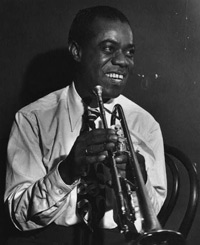
His earliest efforts were originally released on individual 78s, but Hallelujah! Gospel 1930-1941 manages to collect 17 together on one CD.
With the advent of the LP record, he began releasing full-length efforts, including 1957’s Louis and the Angels, followed a year later by Louis and the Good Book.
His final album, Louis Armstrong and His Friends, had Father Norman O’Conner, known as ‘The Jazz Priest,’ singing along on ‘We Shall Overcome.’ The album includes a version of the posthumous hit, ‘What A Wonderful World,’ during which Armstrong addresses the younger generation; “See what a wonderful world it would be if only we’d give it a chance…love, baby, love. That’s the secret…”
The inclusion of ‘The Creator Has A Master Plan,’ by Pharaoh Sanders, a leading light in the radical New Jazz scene, was a rare example of bridging the sometimes contentious gap between the two camps.
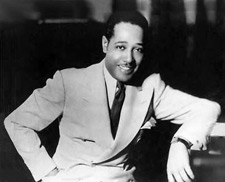
He revisited the almost hour-long piece repeatedly throughout his career, and in 1958 recorded a version with gospel legend Mahalia Jackson singing.
Ellington – who once described himself humorously as a ‘messenger boy from God’ - was a longtime churchgoer who studied scripture his entire life. He frequently employed the language of faith in his compositions, and decried denominational differences, lamenting “Catholics against Protestants against Jews – and all of them against the Negro.”
Twenty years after Black, Brown, and Beige, Ellington began performing what he described as “the most important thing I’ve done”: a series of Biblically-based Sacred Concerts.
The endeavor was viewed by many as a creative resurgence. One piece from the first concert; ‘In the Beginning, God’ won a Grammy for best original jazz composition in 1966. The final Sacred Concert, entitled ‘The Majesty of God,’ was held in 1973, only seven months before his death.
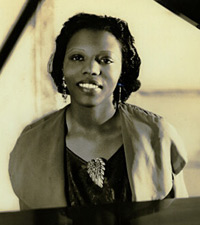
She composed sacred works for orchestras, including three masses, a cantata, and a number of hymns. 1963’s Black Christ in the Andes - a suite dedicated to the 16th century Afro-Peruvian Priest St. Martin de Porres that incorporated jazz, gospel and blues - was typical of her work from the era. In a Time Magazine profile the following year, Williams spoke of praying through her fingers when she played.
Many recorded music directly associated with the gospel message. For some innovators – like Dave Brubeck and big band leader Stan Kenton, it was – not surprisingly - ambitious, multi-part works; Kenton released a double LP based on the Beatitudes, and Brubeck composed Truth Is Fallen, a Cantata based on Isaiah, in 1972.
During the swing era, ‘I Hope Gabriel Likes My Music’ was a popular hit, covered by big bands of the day, including Armstrong, Paul Whiteman and Gene Krupa. Krupa – by far the most popular drummer of his day - became active in the church near the end of his life.
Others chose more traditional material. While the songs might be familiar, opportunities for improvisation ensure there’s room for personal expression even on the most well-known numbers.
Horace Silver owed much of his hard bop sound to gospel music. One of his earliest, and most popular tunes was ‘The Preacher,’ from 1955. Thelonious Monk – one of the most unique voices in jazz - opened Monk’s Music with a respectful rendition of the hymn ‘Abide With Me’ two years later.
Bebop pianist Hampton Hawes and guitarist Grant Green both grew up playing in the church (Hawes’ father was a minister in the Presbyterian Church) and each struggled with drug addiction throughout their lives.
Green performed gospel and spirituals for Sunday Mornin’ in 1962, his first year as a recording artist, and again on Feelin’ the Spirit the following year.
Hawes recorded The Sermon, a deeply reverential treatment of old time spirituals on the eve of a 1958 heroin-related jail sentence. Due to his incarceration, the album laid in the vaults. He was pardoned by President Kennedy five years later, but his label wanted new product by then. The Sermon finally saw release in 1987, ten years after Hawes’ death.
Charles Mingus and Ornette Coleman were also influenced by backgrounds in the church; Coleman claimed his formative years spent playing in the Spiritual Churches of New Orleans informed everything that came after, and the Mingus connection is most apparent in compositions like 1960’s ‘Wednesday Night Prayer Meeting,’ which comes across like a particularly rambunctious service, and ‘Prayer for Passive Resistance’ which focused on the civil rights struggle with an awareness that there was more going on than met the eye.
The sixties saw a cultural sea change that included an unprecedented openness to spiritual matters. That shift – which lasted well into the seventies - was reflected in the jazz community.
During the first three years of the decade, trumpeter Donald Byrd released ‘Pentecostal Feeling,’ ‘Amen,’ and ‘Christo Redentor’ - also known as ‘Christo Redemptor.’ Duke Pearson - the latter song’s composer – is featured alongside Byrd, Lou Donaldson, Hank Mobley and others on The Blue Testament - Blue Note Plays the Good Book, a British anthology that offers ample evidence gospel’s role in jazz during the era.
The adventurous free jazz movement of the 1960s placed a great amount of import on spiritual matters.
John Coltrane and Albert Ayler each followed rigid spiritual paths that incorporated Christian and Eastern elements, and owed much of their sound and approach to lessons learned in the church.
Ayler’s discography is full of titles like ‘Light in the Darkness,’ ‘Spiritual Rebirth,’ and ‘Omega is the Alpha.’ On the mammoth Holy Ghost (Revenant Records) - a nine-disc collection of rarities - he speaks of coming days; “Thus through Jesus Christ we will all be saved through the Holy Father, the Infinite Spirit, the Creator of all. Blessed is all who believe in the Lord…and we all know that Jesus is coming again, so fear ye not, the great sacrifice is yet to come.”
John Coltrane’s most highly regarded work, 1964’s A Love Supreme, was a four-part spiritual opus (Acknowledgement /Resolution/Pursuance/Psalm) composed as a gift to God. The album included a note to the listener that began; “All Praise Be To God To Whom All Praise In Due. Let us pursue Him in the righteous path. Yes, it is true; ‘seek and ye shall find.’ Only through Him can we know the most wondrous bequeathal.”
Coltrane’s impact on subsequent generations was profound; there’s even a Saint John Coltrane Church located in San Francisco. Since his death over forty year ago, no one has come close to impacting the scene so profoundly.
After first making a name for himself performing alongside Coltrane, Pharaoh Sanders went on to produce a number of spiritually-inspired epics himself, including ‘Let Us Go Into the House of the Lord,’ ‘Selflessness,’ and ‘The Creator Has A Master Plan,’ which clocked in at over half an hour.
Soul Jazz took much of it’s sound from gospel, and was far more popular with the public. Cannonbal Adderley enjoyed hits with ‘Work Song,’ ‘Country Preacher,’ and a cover of the Staple Singers’ ‘Why Am I Treated So Bad,’ while Ramsey Lewis had a top forty hit with ‘Wade in the Water.’
Multi-instrumentalist Rahsaan Roland Kirk performed an intense version of ‘Old Rugged Cross’ 1971, the same year Stanley Turrentine recorded the traditional gospel tune ‘I Told Jesus.’
Another of the leading lights from the new jazz scene, sax player Archie Shepp teamed with pianist Horace Parlan in 1977 to record Goin' Home, a collection of spirituals and black folk songs.
The seventies brought about the fusion movement, mixing high energy rock with jazz chops. Many of the groups, including Mahavishnu Orchestra, Return To Forever and Santana – were very direct in promoting spiritual agendas, although in almost every case the religions espoused – Scientology, Eastern Mysticism, Chanting - rejected traditional Christian doctrine.
Reflecting the cultural climate once again, by the eighties jazz had become more conservative. Fewer musicians were incorporating direct spiritual references, although there were some notable exceptions.
In 1984 Oscar Peterson composed the Easter Suite, an eight-movement of Christ’s last days, and Charlie Haden and Hank Jones teamed up for Steal Away, an album of spirituals, hymns and folk songs in 1995.
A handful of younger players are keeping the tradition alive; in the last decade, pianist Cyrus Chestnut – whose gospel background in evident in all of his playing - released Blessed Quietness: A Collection of Hymns, Spirituals and Carols and saxophonist Kirk Whalum – who grew up playing in his father’s church choir - has released a number of albums reflecting his faith, including two volumes of The Gospel According to Jazz. Branford Marsalis has reached back to John Coltrane, and recorded A Love Supreme, on two separate occasions.
More Jazz: Reviews of recent discs and dvds
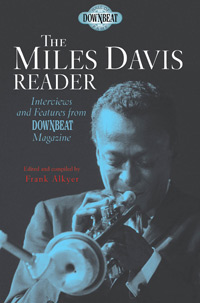 The Miles Davis Reader: Interviews and Features from Downbeat Magazine, edited by Frank Alkyer, Hal Leonard
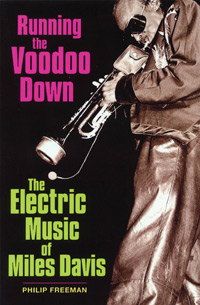
Running the Voodoo Down: The Electric Music of Miles Davis, by Philip Freeman, Backbeat Books
Dark Magus: The Jekyll and Hyde Life of Miles Davis, by Gregory Davis and Les Sussman, Backbeat Books
Miles Davis: The Complete On The Corner, Columbia/Legacy
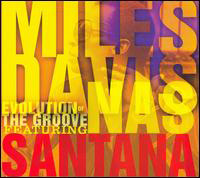
Miles Davis: Evolution of the Groove, Columbia/Legacy
Over the course of his career, Miles Davis changed the face of jazz repeatedly. From post-war bebop right up to his death in 1991, he was at the forefront of a number of movements. In many cases, it’s not so much that the music he produced was ahead of it’s time, as it was simply timeless. Bop, ballad, or the funk-drenched groove, Miles was the master of them all.
That he lived large – and hard - is indisputable. Without a doubt he played up his almost mythical status, yet in the end, we’re left with the music, and as testament to his talent, it continues to shine bright.
Davis-related books and CDs continue to fill shelves, with some recent, stellar examples.
By any measure the Sony/Legacy metal box series – which documents his years with Columbia Records - is a phenomenal undertaking. Every set in this comprehensive series includes essential music, essays, sessionographies and more.
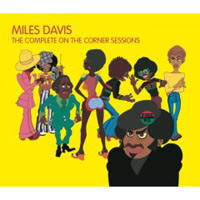 The Complete On The Corner is the last of nine box sets. It’s certainly one of his more controversial releases; when it was first released in 1972, On The Corner was greeted with confusion, and many cases, outright hostility; especially from the jazz community. Sitar and Tablas groove alongside funky electric bass, wah wah guitar and trumpet, predating trance, world music, and drum ‘n bass by decades.
Sessions began with many of the musicians mystified; unsure of what was going on and where Miles was headed with this dense new sound. A few players from previous bands were back - including Chick Corea and John McLaughlin - yet more than ever before, Miles had discarded his past. Instead, the primary influences were German composer Karlheinz Stockhausen and the funk of James Brown and Sly Stone.
Tracks were assembled in piecemeal fashion, with severe edits, loops and more – in many cases, techniques that would show up years later in hip-hop - long after the musicians went home. Long-time producer Teo Macero was vital to the finished product. Splicing and manipulating tape as far back as In A Silent Way, by now his innovative methods were as identifiable as Miles’ own playing.
The box contains six discs, and spans 16 recording sessions, which produced On The Corner, plus Big Fun and Get Up With It two years later, along with more than two hours of previously unreleased music. Easily one of the highlights of the year. Evolution of a Groove is a five-track EP of remixes, sampling from a variety of performances spanning 1959–1972. The disc is aimed at making Davis’ music more appealing to contemporary tastes; but it’s hard to make this more revolutionary that it already is – sure, one track adds a rapper, yet Miles already did that himself, on his final album, 1991’s Doo Bop. The source material is incredibly resilient, and manages to come across as strong as ever even in this context. It works well enough as a pleasant diversion, but is hardly essential listening.
 The Miles Davis Reader collects sixty years of coverage from Downbeat Magazine on Miles, including features going all the way back to 1950, when he was a sideman with Charlie Parker. Surprisingly, Miles defends Dixieland music in his first-ever interview with the magazine - and again five years later in one of the magazine’s famous blindfold tests. 1955 also brought news of Miles being in the midst of a comeback – the first of many.
The inclusion of then-current reviews and feature articles shows exactly how each album was received, without revisionist history. Tellingly, On the Corner was given only two stars; the reviewer criticizing the lack of soloing and questioning whether the elongated grooves were nothing more than ‘repetitious boredom.’ Three months earlier, the magazine had awarded a collection of Miles’ work from ‘49-‘50 five stars.
Set up chronologically, Richard Cook’s It’s About Time offers insight and historical perspective as he examines every release – including bootlegs - in Miles’ vast catalogue. Forgotten gems are uncovered, and he isn’t afraid to point out the discs that didn’t work, and why. One fascinating example; the terms of Miles’ mid-eighties contract with Warner Brothers goes a long way to explaining the lackluster albums that resulted.
 It’s About Time was Cook’s final work before his untimely passing last year – he was the co-author of the massive Penguin Guide to Jazz Recordings, as well as his own Jazz Encyclopedia, and his knowledge and enthusiasm will be missed.
Running the Voodoo Down sticks with the electric phase, from Bitches Brew on. Author Freeman admits his musical diet consisted of metal and rap when he first discovered Davis’ music in the late 80’s. Not surprisingly, it was On The Corner that got him hooked. Owing to a distinct lack or historical context – Freeman references acts like Skinny Puppy, Bad Brains and Tom Waits as often as jazz players – there’s an entirely new perspective throughout much of the book. For fans of Miles’ electric phase, it’s an enjoyable – and, at times illuminating - read.
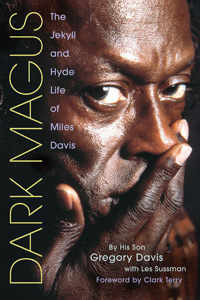 While the other books here are primarily concerned with the music, Dark Magus barely touches on it. Gregory Davis – Miles’ son - promises in the introduction to bring no sour grapes and a minimum of emotional baggage. That’s debatable – much time spent on why Gregory was cut out of his father’s will - but some family history is interesting; Miles’ father distrust of white folk bordered on psychotic. It interesting to learn more about his relationships with Charlie Parker, Dizzy Gillespie and John Coltrane, but there’s little in the way of fresh insight. And, for all his gripes, as far as negative portraits, Miles’ notoriously unreliable autobiography is still by far the harshest.
John McLaughlin, The Essential John McLaughlin, Columbia/Legacy
John McLaughlin, Jaco Pastorius, Tony Williams - Trio of Doom, Columbia/Legacy
Mahavishnu Orchestra; Live In Monteaux, 1974/1984, Eagle Eye Media
J
aco Pastorius, The Essential Jaco Pastorius, Columbia/Legacy
Easily the most renowned guitarist from the fusion era, John McLaughlin first caught notice in America in 1969, when former Miles Davis drummer Tony Williams brought him over from his native England to play in the nascent Tony Williams Lifetime. Davis spotted McLaughlin at Lifetime’s debut performance, and quickly drafted him on a number of sessions, including In a Silent Way and Bitches Brew.
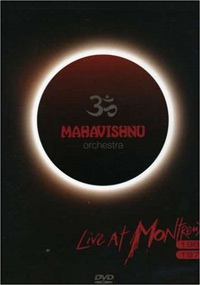 Two years later, McLaughlin formed Mahavishnu Orchestra. The group’s sound - intense, high energy riff-rock coupled with virtuoso jazz chops and Indian rhythms – was like nothing heard before. Their debut, Inner Mounting Flame was an instant hit. After a second studio album, the original band imploded in 1973.
McLaughlin formed a new, expanded version of the group, including Jean Luc Ponty on violin, fellow Sri Chinmoy disciple Narada Michael Walden on drums, and Gail Moran on piano and vocals. While the group may have been more in tune spiritually, the volatility was missed.
After three albums with the new Mahavishnu Orchestra, he formed Shakti in 1975, an all-acoustic group featuring his guitar alongside tablas, ghatam and violin.
He’s continued with a wide range of projects – both electric and acoustic - ever since.
The Essential John McLaughlin offers a generous two-disc sample of material from every era of his career, going back as far as 1963, with Graham Bond – with a pre-Cream rhythm section of Ginger Baker and Jack Bruce - and covers work with Miles, Tony Williams Lifetime, Carlos Santana – dueting on Coltrane’s ‘A Love Supreme’ - as well as solo albums and both versions of Mahavishnu Orchestra.
Film of the original Mahavishnu Orchestra lineup is thrilling, but elusive - nothing has been released officially at this point. A DVD of the second version of the band in performance is frustrating; only three of the tracks include video, although they clock in at well over an hour, with the rest only available in audio. Too often the group meanders on at length, never really getting anywhere. Fellow adherents of Sri Chinmoy – easily identified by their all-white outfits and blissed-out smiles – give the performance an at times unintended humor – something akin to a Saturday Night Live skit lampooning the wacky cults of the seventies.
A second disc featuring a 1984 incarnation – billed as Mahvishnu – is quite different. Saxophone replaces violin, and McLaughlin spends most of his time on the ill-advised guitar-synthesizer. On it’s own merits, it’s quite enjoyable, but outside the name, there’s very little in common with what had come before.
In 1979 McLaughlin performed a one-off gig with Jaco Pastorius and Tony Williams billed as the Trio of Doom for Havana Jam, a festival held in Cuba. It was memorable due to all the wrong reasons; Pastorius’ unpredictable behavior kicked in that day, and his playing at times was far removed from what the other two were doing. The live recording was shelved, and instead the trio went into the studio the following week to record tracks for the festival’s two subsequent ‘live’ albums, with dubbed audience noises added.
Of the five tracks recorded in the studio, only three ended up being used. Now, for the first time, all five tracks - plus the complete live performance - are compiled.
There’s a massive amount of power, and a few impressive moments – chiefly, Williams drumming - but for the most part, the performances are simply unfocused. A sad reminder of what could have been.
Over the course of his remarkable, comet-like career, Pastorius – who audaciously dubbed himself ‘The World’s Greatest Bass Player’ – changed the way bass guitar was perceived.
From the moment his self-titled debut album was released in 1976, through his years with Weather Report, he simply had no peer. Playing fretless electric bass, his was an entirely new voice, likened to a Jimi Hendrix of the instrument.
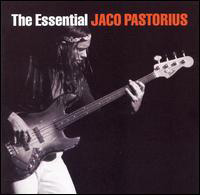 Sadly, he battled mental illness and substance abuse. Within a decade of his debut he was homeless and rapidly deteriorating. By the time he died – after a beating by a nightclub bouncer in 1987 – he no longer owned an instrument. He was 35 years old.
The Essential Jaco Pastorius brings together 27 tracks, including solo work – all but one track off from his debut - notable guest appearances with Joni Mitchell, Herbie Hancock and others, along with ten tracks from Weather Report. Together they make a solid argument for his boasts. More than twenty years after Jaco’s passing, no one has come close to taking his mantle.
If you were to assemble a who’s who of jazz players from the last forty years, chances are good guitarist Larry Coryell has played or shared the stage with the majority of them. He’s certainly the only musician who can boast of playing with Miles Davis, Jimi Hendrix, Dizzy Gillespie and Stéphane Grappelli.
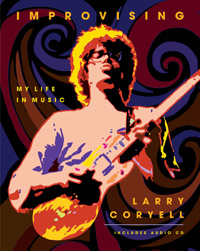 In Improvising: My Life in Music (Backbeat Books), Coryell documents forty years as a highly sought-after leader and sideman, with a discography that runs into the hundreds of albums. He also recounts his struggle and eventual victory over alcoholism and heroin, finds peace practicing Nichiren Buddhism, and survives a couple of nasty divorces.
Speaking from his home in Florida, I found Larry to be sincere, forthright and most of all, passionate about his belief in the divine nature of all paths.
When he first began playing guitar in his teens, Coryell was equally enamored with rock ‘n’ roll and jazz; “I was very open-minded. The way I grew up - in a rural area of the state of Washington - just anything that was interesting music was appealing to me, and I didn’t compartmentalize at that time.” It was the sixties - perhaps the only era in which such widely divergent forms would be readily accepted.
He played standards in jazz combos and cover tunes with rock bands - even backing up stars like Roy Orbison and Bobby Vee – before dropping out of journalism school and moving to New York City in 1965.
The music scene was thriving. Jamming every chance he got in Greenwich Village nightclubs, Coryell became enamored with free jazz, an energized, radical sound that made everything before it – even bebop - sound antiquated.
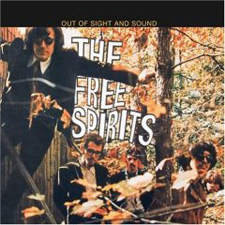 The following year he recorded Out of Sight and Sound - the album was credited to the Free Spirits, but for all intent was a solo record - he composed, sang and played guitar throughout. Combining the rhythmic approach of rock with free jazz, titles like ‘Bad News Cat,’ ‘Cosmic Daddy Dancer,’ and ‘I’m Gonna Be Free’ – with Coryell on sitar - could only have originated during the era.
Stuart Nicholson’s Jazz-Rock: A History lists Out of Sight along with Gary Burton’s 1967 release Duster – Coryell was the guitarist on that album as well - as “the first recordings that suggested an artistically and aesthetically satisfying synthesis of jazz and rock was possible.”
Almost overnight, he had become a force to be reckoned with. The New Yorker called him “the most inventive and original guitarist since Charlie Christian,” and the East Village Other labeled him “The most adventurous, daring and exciting guitarist playing rock or jazz…” His future looked assured as he worked alongside the very best in both worlds; jazz heavyweights, including Charles Mingus, Sonny Rollins, and Pharoah Sanders - and rock legends like Eric Clapton and Jimi Hendrix.
The sound he helped birth – “the pioneer” according to All Music Guide - achieved widespread recognition when Miles Davis released 1970’s Bitches Brew. It’s unarguably a brilliant, landmark album, but the fact it’s mistakenly credited as the first to incorporate both forms does a disservice to Coryell’s pioneering efforts.
The movement would explode commercially in the mid-seventies, with Weather Report, Return to Forever, Herbie Hancock’s Head Hunters and the Mahavishnu Orchestra all drawing sizable audiences, including a significant contingent of rock fans. By then, Coryell was helming his own group; The Eleventh House.
Fusion was arguably the last substantial movement of note in jazz. For the most part, that willingness to try something knew - to take chances - is long gone. Nowadays, neo-traditionalism sells. Players attempt to emulate – or, as Larry puts it; “Plagiarize; albeit, plagiarize well” - the giants of yesteryear.
He’s not impressed with the new conservatism; “There should be more looking out. Younger people - the ones who are really serious about jazz - need to compartmentalize and focus on the music for at least a few years, because it’s almost a scientific art form, there’s so much involved in really getting the fundamentals right…but once you get that down, then an artist is free to break out into anything.
“Then you can branch out and be like Joe Zawinul; [do] what he did in the sixties, and start writing stuff that’s really soulful and funky, but still grounded in jazz.
“Or what Wayne Shorter did; very, very open, and very much embracing styles outside of the rather rigid format of bebop.”
Pianist Keith Jarrett shared that same enthusiasm for exploring new sounds, although in his case, the results were quite different from those of Zawinul and Shorter; “He learned all of that stuff in jazz, and then he ended up writing fantastic legitimate works for strings. He’s done great stuff - incredible piano concertos in his own style.”
Taking chances and ignoring previously established musical boundaries was expected. “[For] my generation;” he sums up, “it’s just simply like that.”
For a period in the sixties and seventies, jazz players were drawn to mystical explorations, and Larry jumped in with both feet. “It was the Age of Aquarius, my friend; we were embracing other life philosophies that we thought might be better than the ones that we had. Especially because musicians that we respected were doing things like that, we also were drawn to giving that a try.”
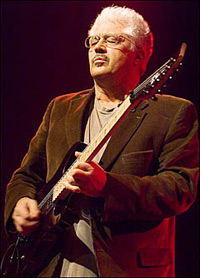 In 1969 he became a student of Sri Chinmoy, an Indian spiritual teacher popular at the time. The guru gave many of his followers new, spiritual names; guitarist John McLaughlin became Mahavishnu, and Carlos Santana – whom Coryell introduced to Chinmoy – became Devadip. McLaughlin and Santana became ardent disciples for a season (they both left in the eighties), but Larry’s appetite for sex and drugs kept him from fully committing; “I left or lost interest of something. At that point my most important goal was to drink beer and get high…”
There were no hard feelings when he left, and they continued to see each another when occasion allowed up until Chinmoy’s death last year.
One of the more contentious groups he managed to avoid was the Church of Scientology. It’s most well-known practitioners in the jazz community were Chick Corea and Stanley Clarke, who together led Return To Forever, one of the most popular of the fusion groups.
“I never got into that. I saw what it did for Chick. It really helped Chick’s life a lot; [he] became a different person. But something told me that I just shouldn’t. I never was drawn to it. Initially because I was told by some people who shall remain nameless, that they really asked for a lot of money.”
Money is just one of the issues detractors have focused on. Stanley Clarke became one of the few celebrities to speak out publicly against the religion after he left. Cautious of appearing to take sides, Coryell chooses his words carefully; “I don’t even want to get into it; it really did work for Chick, and of course I love Stanley, and these guys are my life-long friends. And [Return To Forever guitarist] Al Di Meola as well. But Al was just a kid when the Scientologists were proselytizing him, and he was rather uncomfortable.”
Astrology is an area that has fascinated him for years. In Improvising he cites one Astrologer in particular who has managed to predict - either directly or by inference - many of the important events in his life.
Having sampled from a wide range of philosophies over the years, his overriding conviction is that all paths lead to the divine; “You know; there are many, many Masters out there; you just have to grab onto some life philosophy in your life, and get it and believe in it - almost no matter what it is - because it's just a necessary thing to cope with the modern world.”
Despite his reputation as a player, for a variety of reasons, Coryell’s initial success was never capitalized on. His numerous solo albums - over seventy at last count - all had their moments of brilliance, but were rarely consistent stylistically. He had the respect of his peers and the press, but personal issues were another matter. He loved to party, and by the seventies, drinking had become a problem. When a therapist sent him to a twelve-step program, it didn’t take; he agreed to stop drinking, but continued getting high.
Life become an endless round of disasters; “I was a hurtin’ buckaroo. I mean, I had all kinds of opportunities; my career was rising and rising, and I kept shooting it down by my own hand.”
The slide continued until 1981, when the options had come down to a “decision between life and death.” He entered rehab, and this time, stayed straight. He hasn’t had a drink or drug since.
Many jazz players used heroin as a means of tapping into what made Charlie Parker, Miles Davis and John Coltrane – all junkies at various times - reach such musical heights. Larry was one of them; “Well, yeah. But I used that as an excuse.” For an addict, a very convenient excuse; “For me it was. I mean; I was very immature. I had talent, I could play. I could see that very early on. But I had not evolved. The rest of the areas of my personality were really kind of in the dark.”
Once he sobered up, he began to understand the impact drugs and alcohol can have on a family dynamic. His father was an alcoholic musician who had abandoned the family when Larry was still a child. Today, he believes he was predestined to live life as a musician with an addictive personality; “Absolutely; in my opinion - based on my experience - a lot of it is congenital.”
That concept - that his problems weren’t simply the result of personal weakness - came as a revelation; “Once you understand that it’s kind of like a disease - when you understand the treatment for taking drugs and drinking is simply not taking drugs and not drinking - then you’re able to approach it in a rational way, even though it’s not easy. One can deal with it rather than living with the shame and the stigma of negativity that is so often associated with all of that.”
The philosophy that finally stuck for Larry was Nichiren Buddhism. He had worked with a number of musicians who practiced the religion, a relatively new branch of Buddhism based on the teachings of Nichiren, a thirteenth century monk. A core doctrine is the practice of chanting.
“I was extremely impressed with the way Wayne Shorter and Buster Williams and Herbie Hancock had changed as a result of their starting to chant. I liked the way they had changed. They kept saying ‘You gotta do this; you gotta try it.’ One thing led to another, and I found myself in the middle of an empty field in France, chanting. Chanting just for the willingness to stop taking all mood-changing substances.”
The motivation to chant was intrinsically linked to his new-found sobriety. “When I walked out of rehab, I was determined that no matter what would happen in my life, I would no longer go back to that poisonous and destructive lifestyle. I felt good about getting actively involved in chanting and joining the organization.”
His passion is unmistakable, and he’s eager to explain just what sets Nichiren Buddhism apart from other branches of Buddhism.
“Nichiren Daisho¯nin lived in the 13th century, in Japan, and after he died he passed on his legacy to some priests, who were his disciples. During the course of the several hundred years that passed – up until the last century – it remained a viable school of Buddhism. But in the last century some Japanese educators got together and formed a value creation society based on the principles embodied in the Gohonzon, which were basically that Buddhism is life itself, and people - especially students - needed to be treated like people. And they started a whole pedagogy of education based on that.”
He didn’t expect an instant cure-all when he started; “I knew that chanting wasn't like a magic lamp; sometimes it takes time to have your prayers answered.”
Today, his life is centered around the practice.
“We have a beautiful Gohonzon; [a scroll adherents are given] it’s enshrined in our home…what’s written on the scroll, is Nichiren Daisho¯nin’s enlightenment to the law of Nam-Myoho-Renge-Kyo. [Pronounced Naam Nee-oh-hey Rengay-kyo].
“When we chant to the Gohonzon, we are taught that all the other Buddhists in all the directions of the Universe line up behind us and support us and chant with us. And you magnetize your life.
“You’re in a state of Buddha-hood when you chant to the Gohonzon. And you go back to the other states of life – the lower states – when you stop. But as you do it over a period of time, you raise [your consciousness] – you have a tendency to be more like a Bodhisattva [an individual dedicated to attaining enlightenment for himself and others], or at least someone who is interested in truly understanding the nature of things the way they are, and less of being in the animalistic state of life. Or a depressed state of life. Or angry; it works for everyone in all conditions.”
Time prior to his morning ceremony is rarely focused; “I’m always a little befuddled – a little negative and distracted. But when I chant, I think about what I want to accomplish that day, I also open up my life through the chanting; I stop thinking so much about myself, and I start thinking about other people.”
Part of his routine includes chanting for friends who have passed away. When saxophonist Steve Marcus – who recorded a number of early fusion works with Larry - learned he was dying in 2005, Larry convinced him they should chant together, even though Marcus had never tried before. “When you chant, that’s the highest, most compassionate act you can do to another person. Even though it was brief, I’m glad that we chanted together. Because I feel that where he is, he’s happy now. He’s in a state of non-substantiality. He had a great sense of humor, and when I’m really chanting a lot, I’ll recall one of his jokes, and I’ll break out laughing.”
Marcus received a traditional Jewish service when he died, which didn’t phase Larry in the least; “Oh, that was beautiful. That still was beautiful.”
Eric Fuchsman was another friend. As director of sales at Cort guitars, he worked closely with Larry, and when he was diagnosed with a brain tumor, Coryell sent him daimoku [the repeated chanting of Nam-Myoho-Renge-Kyo] for hours on end. “I still feel him – feel his life is still important. I even wrote a song called ‘We Miss You, Eric,’ that I recorded. It’s going to be put out by the guitar company. Danny Gottlieb played drums on it.”
He believes they will all return to earth to continue working on their music, and chants “not just for their lives, but for the music…I chant in great appreciation for their contributions.” It’s a term he doesn’t take lightly. “Appreciation; in the Western word, it seems that it’s a lost art. It’s considered kind of corny and hokey.
“Billy Higgins, for example; nobody could ride their cymbal – no one could ride that ride cymbal like Billy Higgins. And Billy was a very beautiful human being, as well as an amazing drummer. But the quality of his humanness came out in his drumming. And whenever I think about him, I chant to appreciate what he has done. And I also chant for him to come back real soon. And do it again.”
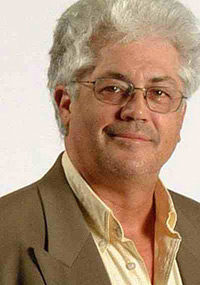 He believes chanting is effective for people of all faiths. “You can come from any religion. I come from the Protestant religion. And now that I chant full time, I don’t need to go to the Protestant Church. But we don’t reject it; we embrace it. The Buddhist practice covers everything.”
For instance, prayer? “Absolutely; it’s praying. When I’ve had real problems in relationships, I chanted a lot. Sometimes we chant for hours. I’m doing it right now,” he laughs; “one’s karma is always right in front of you. It’s always there. And through this practice you can change your karma. Through this practice you can change negativity into positivity.”
He’s thankful for his life today, and claims he can never fully repay the Universe - or God; “It’s roughly the same thing” - for his gift; “I truly believe that.”
Not that it’s been smooth sailing ever since he got straight. A year after he began chanting, his first marriage fell apart. He married again, but that relationship ended a few years back as well, after, he says, he began to grow emotionally, “evolving toward another type of relationship.”
He married again last year; “My third one - third and last one.” Both divorces took a toll, but he’s philosophical. “As things go in life, all those minuses - all that negativity - if I hadn’t gone through that, I wouldn’t appreciate looking out my window here in Florida, and appreciating the sunset, and being grateful for my life, and my wife - my new wife.”
“Buddhism is very, very deep.” He sums up. “I’ve been doing it now 23 years. It’s extremely deep.”
While he’s been influenced by many of the players who came before him, there are a few who have had an especially profound impact. John Coltrane stands at the top. Coltrane influenced an entire generation, both in his playing, and when he forsook drugs to follow a rigorous spiritual path.
“I was very much inspired by A Love Supreme. When I first encountered Coltrane’s music, I didn’t think I would ever be able to understand it, much less play any of his stuff, but over the years, by being around it, and working and re-working and studying and re-studying, I’ve been able to receive Coltrane’s gift.”
He holds another master – typically, from a totally unrelated musical genre - in equally high esteem; “I’m the same way with [classical composer Igor] Stravinsky. I’m just now relearning The Rite of Spring [Coryell recorded an acoustic guitar treatment of the piece in eighties, as well as Petrouchka and the Firebird Suite] and getting all kinds of ideas. I’m totally on the same page as Coltrane, when he said ‘Stravinsky is my universal musician.’ I have to go with that myself.”
I mention Warren Zevon, who was briefly mentored by Stravinsky. Larry was unaware of the connection, and impressed; “Unbelievable. Unbelievable. And so he became an Excitable Boy [Title track of Zevon’s breakthrough 1978 album]…I loved him. You know, I never knew much about him, but I just saw a review of one of his books, [I’ll Sleep When I’m Dead a recent biography of the late singer]. He and I would have gotten along.” I’ll Sleep When I’m Dead is a vivid account of Zevon’s struggles with alcoholism, Obsessive Compulsive Disorder, and drug addiction, but the story doesn’t end there – it’s as much about redemption – in the end he has years of sobriety under his belt, made amends and reunited with family and friends. “Yeah, but his life is [still] a tragedy. I’m sorry, that’s my opinion, you know.
“After practicing Buddhism for twenty three years, this is one thing I’m sure of; life is eternal, and we do come back. And the people who love Warren can pray for his return, and that he can receive the kind of benefits in the next existence where he’s able to deal with his alcoholism, and overcome it.”
For addicts, those benefits are relatively recent; “For me, the great thing about living in the 20th Century is that there were ways to get sober that I don’t believe were available in earlier centuries.” He’s referring to the twelve-step program first modeled by Alcoholics Anonymous in 1935.
Coryell credits chanting as a positive factor in staying straight, but feels there needs to be more when battling addiction issues; “Well, I believe in support groups, too.”
Respecting the long-held principal of never speaking for or representing A.A., he won’t go on the record as to whether he’s a member; “People who are in twelve-step programs – one of the rules is never break you anonymity. So you have to stay anonymous.” That said, he will offer his heartiest endorsement; “I certainly recommend it…and the gift of sobriety - to be drug-free and alcohol-free - it gives you a new lease on life. And we don’t always appreciate it. We’re human beings; we can get down into the world of anger, self-pity and resentment – it’s normal - but there are ways to use all of that and become a better person.”
In 1979 he toured Europe as part of a trio of guitarists with John McLaughlin and Paco de Lucia. The tour was well received, but his drinking was out of control. “Alcoholics can’t stand success, and at that time I was doing everything I could to sabotage things with my drinking.”
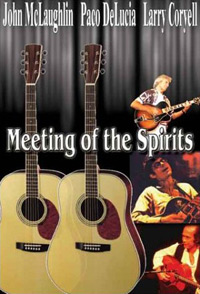 When he wrote Improvising, he still couldn’t bring himself to watch the video from the tour. Recently, he found the courage; “It took me 30 years before I ever watched the concert [McLaughlin, DeLucia & Coryell: Meeting of the Spirits]. “I finally saw it; it was unbelievable.” He’s hopeful he can do it again, this time in a healthier state of mind; “I want us to play again, and I’m seeking out John and Paco as we speak. I feel like I was in one of the best groups ever. I just couldn’t handle it at the time. But those of us who are fortunate enough to survive this self-destructive thing, we do get a second chance, and in order to really take advantage of that second chance you have to work a little – a lot – harder. Because now I’m 64, I’ve got to take care of myself: doctor’s orders. I’ve got to loose weight, and eat different stuff; no sugar, no salt, that kind of thing.”
Dieting issues aside, at least he’s no longer trying to destroy himself. “Yeah. That devilish function that gets inside everyone – the potential of the devilish function is in everyone’s life. It’s just how you deal with it.
“You know, the United States went through a revolution to become a country, and in a similar way, we have to go through our human revolution to become a Buddha. And a Buddha is not an extraordinary thing. It’s simply the effect that you receive from making the cause to become a Buddha by chanting. But look; I’m not Bishop Sheen. I’m no paragon of virtue; nothing like that. I have all kinds of faults and warts. I’m always fighting the negativity – you know - like, devils want to get inside my life and take over. But when my life condition is strong; I recognize them for what they are.”
John Cody, a regular contributor to canadianchristianity.com, is working on a book featuring musicians and their spirituality. While the majority of the artists featured are Christians or are clearly inspired by the Christian tradition, some represent other paths. The inclusion of these articles on canadianchristianity.com indicates a desire to appreciate and understand important musicians and their spiritual outlooks. However, the site remains specifically Christian, and does not promote an interfaith outlook.