


THE East Vancouver neighbourhood around East Hastings Street and Commercial Drive is one of the poorest and most troubled districts across Canada.
In this area, there are a number of social housing apartments where some 500 First Nations families reside.
Poverty, drug and sexual abuse, teenage pregnancy and alcoholism are rampant; such activity is normal to many families and youths in the area.
Above all, youth gang activities and violence are clearly present in the neighbourhood.
Family violence
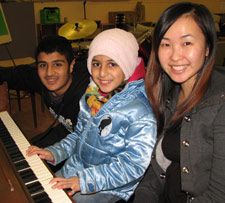
When some of the mothers get drunk, they become physically aggressive; they neglect parental responsibilities, and don’t attend to even the basic needs of their children. Kids become agitated, then angry and aggressive. It is a breeding ground for violence.
Once, a 14 year boy showed up for one of our youth events, and he looked really banged up.
He said he just fell down; but it turned out that he actually got beaten up by his drunken mom, and was too embarrassed to admit what really happened.
In this neighbourhood, there are a dozen youth gangs active, with names like IP (Indian Posse) and EVS (East Vancouver Soldiers).
Actively recruiting
Some of these groups are just street gangs, and some are serious crime organizations.
These gangs actively recruit new members from the neighbourhood, and have three requirements for new members:
• Commit a significant crime
• Go through a rite of passage, which involves getting badly beaten up by existing gang members.
• Sell drugs.
These gangs use violence and fear to gain ‘respect’ and territory from other gangs.
A while ago, there was a gang fight in a local park, and one youth’s arm was hacked off by a machete swung by a rival gang member.
Stabbing often happens, and occasionally some youth use guns to show rival gangs how tough they are.
Recently, a guy got shot in his leg in one of the local apartment buildings.
Police barricaded the entire block, and searched for suspects and guns all night. Many families who resided in the building could not get a good night’s sleep because of this incident.
Drinking & drugging
Retaliation is a big issue.
Fighting often happens when youth are drinking and drugging.
They get drunk and get into a fight with someone over trivial matters. The initial fight might stop soon, but it becomes an ongoing conflict when retaliation kicks in.
Last year, the plight of a 15 year old named Austin caused serious problems for his family.
Austin had been chased by local teenagers looking for revenge; they kept coming to his apartment and attacking him physically.
His older brother was also attacked; his back was seriously injured by a machete.
The repeated intrusions by these vengeful youths disturbed some tenants, and Austin’s family got an eviction notice.
Austin stopped going to school, because he knew he would confronted by rivals in the classrooms – and it would be too risky to face them again.
The result was that he dropped out of school. While this was partly due to a lack of good parenting, retaliation also took a serious toll on him.
Cycle of retaliation
Retaliation by organized youth gangs is much more vicious and destructive.
To gain respect and turf, they will get into a cycle of retaliation to eradicate a rival gang if they are in serious conflict.
One of local youths explains: “They will fight until the whole rival gang is down.” This can precipitate severe violence, such as loss of limbs or gunshot wounds.
| Previous article Charges against Chris Kempling dropped | Next article My sobering reality: the Slumdog Millionaire’s India |
 |  |
| Page 14 | Page 15 |
Even if they arrest some suspects, the police often have difficulties in finding out who did what, because of the ‘code of silence’ among the gang members or their friends,
This kind of gang violence causes self-destruction, and hopelessness without the end. Many addicted and drinking parents and youth are already in a life of hopelessness in this impoverished neighbourhood. This violence significantly adds to the misery and brokenness to these lives.
George is a struggling young man whom I have been working with for the past several years. He was born into a life of gang and crime. Once, George said to me: “All of the males, of my family members and relatives, have criminal records.”
He was a very troubled kid; but he met a Christian teacher when he was in grade 5, and he became a Christian. However, he backslid into in a life of crime and gang warfare, mainly because that was all he had in life.
There were not many alternatives for him; he was constantly around family members and friends who were engaged in criminal activity.
A couple of years ago, he got in serious trouble with the law. I was in touch with him regularly by phone, and supported him.
A different path
Somehow, God slowly worked things out for him, and George realized he had to take a different path in life.
He started to work with the police, and provided them with valuable inside evidence of gang activities; now, the police really favour him.
Before, George was bitter about the treatment he got from the cops, since they treated him like a ‘criminal.’ The cops were the worst enemy to him. Now, George sees the cops differently; they are friends who do public good.
His faith in Jesus has also been deepened, through all the difficult times he has gone through.
What can Christians do, to help young people who are embroiled in gang activities?
George has one key answer. “Prayers are the foundation, and then we should show these trapped lives genuine support and love, as described in 1 Corinthians 13.”
George says gang life starts when a child does not have parental support and love. They often have no one who prays for them.
When a child feels there is no one to trust, and then is looking for love from somewhere else, they often find it within the wrong crowd – a gang, who provide what George calls “blinded support and love.”
Gang members may say: “We support and love each other.” But this is not genuine love. George concludes: “We Christians have real love and support.”
Christians can really help these troubled young people, and make a difference in their lives, because we have a genuine love to offer.
If we reach out to them with authentic love, there is a chance they will turn their lives around.
More safe places
Another practical idea, suggested by a community parent, is to establish more safe places for inner city youths to go.
Kids in East Vancouver often do not have a safe and caring place to go, especially on weekends and holidays. If they do not find positive alternatives, they will get into troubles.
Vancouver Urban Ministries has been looking for a youth drop-in place in the neighbourhood; we are one example of a faith-based approach to problem of youth gangs.
We seek to enable underprivileged youth reach their full potential by demonstrating and sharing the love of Christ. We run a variety of ministries in the Grandview-Woodlands area of East Vancouver.
Presently, VUM is running a youth music school, and is planning to set up an after-school program in partnership with a local inner city school.
We also partner with local churches, like West Coast Christian Fellowship, to reach out to underprivileged families.
Contact: myvum.ca.
March 2009