


Underground movement
Sjenta was born to a Jewish father and a Christian mother in the Netherlands. At age 19, in 1942, she was unwittingly drawn into the Dutch underground movement by an older brother who was in hiding.
Meanwhile, Sjenta’s mother was hiding Jews in the family home and placing others with friends throughout Holland.
Sjenta travelled to Amsterdam on behalf of her brother, delivering packages to designated locations in the Dutch capital.
Her freedom ended with the arrival of two SS guards at the family’s home near Haarlem December 7, 1943.
Sjenta sweated under powerful search lights for an hour as SS interrogators pummeled her with questions and wild accusations that she had been involved in the derailing of German troop trains.
Camp Vught
One of those trains took Sjenta and hundreds of others to KZ Herzogenbusch – aka Camp Vught.
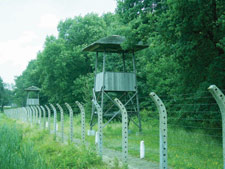
Once off the train, the mob silently marched for a half hour to the camp’s massive gate flanked by monumental watch towers.
Then on to a long, ominously grey stone wall against which all were ordered to face, just inches from its surface.
One would be shot for even slightly turning his or her head. Then came a thunderous fusillade of gunfire.
The SS had focused their revolvers on the line of prisoners, but all fired in unison into the air. Supreme psychological terror was intended to instill robotic obedience. “What an awful moment that was!” Sjenta grimaced.
Her saving grace during those first months and throughout the war, Sjenta emphasizes, was her strong Protestant faith. Twice, at critical junctures during her ordeal, a consoling vision of a healing Jesus appeared to her as she lay despairingly upon a prison bunk.
Jesus’ presence, Sjenta says, sustained her through the massive shocks which characterized the days and months into 1944.
Sadistic SS guards would drop by periodically, taunting the wives whose husbands had been slain by firing squads the previous night, even displaying their bodies for excruciating witness.
As political prisoners, Sjenta says she and her13 barrack mates were feared by their Nazi captors, since all were highly intelligent professionals and top underground workers – doctors, lawyers and a professor’s daughter among them.
Tenderness amid tragedy
Sjenta carried a few tender memories amid the tragic gloom – scenes indelibly engraved into her soul.
Every day she saw children cuddling together in a large room;. Not one adult there, older brothers and sisters lovingly embraced and attended to their younger siblings.
“We smiled and threw kisses to them through a glass window. It’s as much love as we could express. But, sometimes a door was ajar and we would storm in and repeatedly hug one after another. They loved it. Sometimes we got caught, and were punished heavily.”
Her time in Vught ended when a bus took the political prisoners into a factory whose windows were blacked out.
The bus exited through an opening and into another plant entrance with open grassland encircling it in an industrial area.
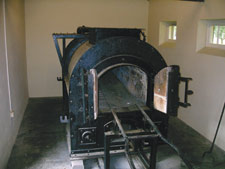
In the factory, plant SS guards pointed to monstrous kettle furnaces.
“They said that’s where anyone who caused trouble would be incinerated.” Sjenta and the other political prisoners produced gas masks.
One day Sjenta was summoned to the prison office, where a man in civilian clothes identified himself as a Nazi lawyer. He told her he had been asked by her boyfriend to free her.
“He told me he would try to arrange that if possible. I just burst into tears when I heard that word, ‘free.’ The lawyer smiled graciously as he handed me some chocolates. He told me not to tell anyone. At last, my survival was possible.”
| Previous article Global citizens care about orphans’ dreams | Next article Lifesong: 26 years of spiritual help for Penticton |
 |  |
| Okanagan Page 04 | Okanagan Page 05 |
Buoyant with hope, Sjenta was soon aboard a bus for Amsterdam. She was dropped off in Utrecht, where she was imprisoned for a month before her court appearance.
Silenced by fear
During that month, Sjenta’s fearful anxiety over her future caused her to lose her voice several times.
Thankfully, a brave young girl, daughter of a town police commissioner, arrived as a prisoner.
“She observed my speechlessness, grabbed my shoulders and shook them angrily. She demanded that I smarten up, declaring that we must win the war.” A dear friendship blossomed from that stern confrontation. “After a couple days, my voice returned for good.”
Every day Sjenta and her new friend played make-believe court, coaching and rehearsing to each other what their answers would be to the make-believe judge, whom each took turns portraying, complete with a wooden spoon as a gavel.
“One day, she returned to our cell crying, happily saying she had been freed to go home, but saddened that we were parting.
“I promised her, in fact I vowed to her, that I would fight for my life and become free. We hugged each other, both of us sobbing. A week later, I was freed.”
Seven years after the German surrender in 1945, Sjenta, her husband and their two children immigrated to Canada.
Fulfilling new lives
From wartime misery, deprivation and harsh post-war readjusting, the couple eventually fashioned hugely fulfilling new lives. Her husband partnered in operating a floral show garden, while Sjenta worked as a nurse’s aide at Kelowna General Hospital.
“I loved helping people, caring for them as I had been cared for earlier – especially those Vietnam War veterans who returned suffering the terrible traumatic effects of combat.”
Sjenta had been married 25 years when her husband died. Five years later, she remarried. She and her second husband had also been wed 25 years when Sjenta again became a widow.
Their time together overflowed with world travel and global servanthood to God.
In Portugal, they assisted at a home for street kids, transforming many lives, with Sjenta parenting, schooling and even massaging the disabled kids.
Unique servanthood
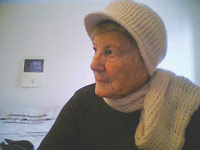
Obviously, all that Sjenta is today came from God’s hand moulding her for her unique servanthood to others.
“Studying prisoners and myself taught me a lot back in those camp days. You had to master the art of living, and surviving.”
Sjenta’s life today is focused on a great finish for God. While her heart aches from news of the recent European outbreak of anti-Semitic incidents triggered by Islamic extremists, she goes on energetically addressing audiences about those nightmarish wartime years.
Years ago, she discarded the word ‘worry’ from her vocabulary, realizing it’s the darkroom in which negatives are developed.
This remarkably energetic and enthusiastic lady emphasizes that a positive mindset and a spirit grounded in faith sustained her.
“With God driving us, we are strengthened for a future, but we also should be prepared to die, if necessary, for our values and ideals. Helping other people in that camp ensured my own sanity and survival.
“So, I’m really no heroine. I was just using my God-given gifts helping others. I just did what anyone would do.”
Camp Vught is now a national monument. More than 1,800 Jewish children, separated from their parents, stayed there until they were transported to extermination camps in Poland and Germany.
Outside the building into which Sjenta and her friend tried to smuggle sandwiches to the kids is a sheet metal memorial – with stars of David at the top, and toys at its base.
March 2009