

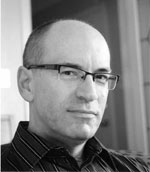
BCCN interviewed Michael Skinner, a lawyer, who is the media spokesman of the group.
Skinner explained: “Our rector, Ron Corcoran, believes passionately in episcopal oversight. But he faced a dilemma, because the highest leadership of the Anglican Church of Canada had for a number of years been setting a course to alter foundational, biblical Anglican church doctrine. Ron had already determined that if he could no longer obey his bishop in good conscience, he would have to resign.
“Now, with the formation of the ANiC, an alternative had emerged, where he could function under biblically orthodox episcopal oversight provided by Bishop Donald Harvey, Moderator of ANiC, functioning under the jurisdiction of Gregory Venables . . . . This alternative would allow St. Matthias to remain in full communion with that greater part of the worldwide Anglican church that believes the American and Canadian Anglican church has become apostate.”
Skinner noted another key factor Corcoran struggled with.
“The other part of the dilemma was Ron’s commitment to the congregation. With his influence, he could have simply announced his resignation – and many in the congregation would have followed him. But the question would then be: are they following Ron, or Jesus?
“The path he took, chosen with great care and consultation with leadership within the parish, was to lead the church on a disciplined, years-long path of biblical discernment as to its future. To respect the bishop’s directive, this had to be done without mentioning ANiC within the premises of the church. Suffice to say we were walking on eggshells.”
At the conclusion of the discernment process, Corcoran and the other clergy of St. Matthias tendered their resignation, to take effect March 8. But Diocesan Archdeacon Bruce Bryant-Scott beat them to the draw.
Acting on behalf of Bishop James Cowan, who was away on study leave, he sent an email to St. Matthias, announcing he had accepted the resignation effective immediately, February 26.
He gave as reason for this action, “I am compelled to do this because, as you stated in your letter, you can no longer give your obedience to those in authority over you.” As he further explained in the Diocesan Post, his action was based on canon law.
“The parish as such cannot leave the Diocese of B.C. any more than the City of Victoria can vote to become part of Washington State” and further, “The Anglican Church is episcopally led and synodically governed, but in this case congregationalism has been the dominant ecclesiology.”
As this email was being opened by the church secretary, Bryant-Scott himself arrived, accompanied by two other individuals, who gave Corcoran a short time to collect his personal belongings from his office, under supervision, and then escorted him from the premises.
A congregational meeting was held March 8 in another church, to determine the future. Out of 187 church members attending, 94 percent voted to join ANiC.
The transition was to be as seamless as possible, with the clergy continuing to function as before. Sunday worship would continue at the Fairfield Community Centre, not far from St. Matthias, with 1 pm services in March, and 8 and 10 am services resuming April 5.
| Previous article Hundreds of kids sponsored | Next article Port Hardy church has big plans for hotel |
 |  |
| Island Page 1 |
Skinner described this landmark meeting as “quietly joyful – respectful and peaceful.” He continued, “Some people were grieving for having to leave the building that contained so many memories of very significant ministry in their lives, but we avoided acrimony.”
BCCN asked if it was not possible to stay within the Anglican Church of Canada and try to reform it from within.
“That is a legitimate position”, Skinner responded, “and we have considered it. But though it is a noble enterprise, it is probably a fruitless one. The ACC has been on a well-defined trajectory for many years now. There is the gradual erosion of biblical doctrine, the alteration of the canons. Some of the bishops are rebellious against the gospel, saying it was misrepresented in the past.
“The issue of blessing gay unions is just the most visible symptom that attracts the attention of the secular press. The real issue about which people are concerned is the authority of scripture. Without the authentic, living, life-changing word that has survived countless assaults over the centuries, the church is just a marginally relevant social club.”
Any plans to contest the diocesan possession of the church buildings?
“We decided not to leave amid litigation. We want to move forward with dignity, and avoid any negative attitudes that could accompany such a transition. I prefer to think of this as a fork in the road rather than a church split. When in the future we meet friends who chose to stay within the building, we want to be able to greet them warmly, as brothers and sisters in Christ.”
A month earlier an almost identical chain of events occurred at St. Mary’s Anglican Church in Nanoose Bay, and for the same reasons. Rev. Guy Bellerby reported that 85 percent of the congregation voted to join ANiC, and now meet at the local library, with the administration and future ministry being housed at Seven Springs Retreat Centre.
Bellerby views the future with enthusiasm and confidence. Already his congregation, called Christ’s Church (Oceanside), has a Sunday attendance at least 10 percent greater than it used to be at St. Mary’s.
He is planning new family ministry and a discipleship program, as well as an evangelistic mission during the last week of May. It will be conducted by Steven James, now rector of the largest Anglican church in Northern England. For four years he was responsible for the evening service of St. John’s Shaughnessy in Vancouver, where the attendance grew from 75 to 400.
April 2009