

By John Cody
 “The blues had a baby and they named it rock ‘n’ roll.”
That lyric, from a latter-day Muddy Waters song, is pretty much received wisdom when it comes to understanding the music’s roots. Yet just as essential to the fledgling form was the role of gospel music.
From the very beginning, the church has had an undeniable – and ongoing - influence on rock ‘n’ roll music. From those who left, to those who returned, and every permutation in between, the list is extensive.
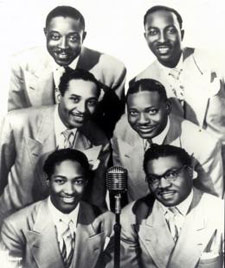
Others headed in the opposite direction.
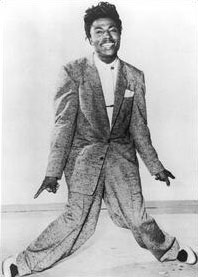
At the height of his fame in 1957, flamboyant rocker Little Richard threw his jewelry into the sea and announced his retirement, allegedly to become a Seventh Day Adventist Pastor. He returned a few years later, setting up a pattern of moving between the sacred and the secular that continues to this day.
As a free-lance musician, I’ve had the opportunity to work with a few Rock And Roll Hall of Fame members, including Bo Diddley the same year he was inducted. He was hardly impressed with his inclusion, lamenting how, despite the honor, record companies continued to rip him off.
Buddy Holly had also planned on recording a gospel album before his death in a plane wreck at 22 years old.
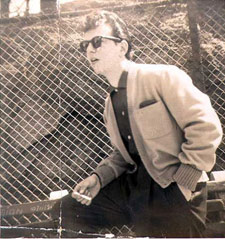
Doo Wop legend Dion DiMucci battled a heroin habit throughout his hit making years, until 1968, when he returned, rejuvenated with ‘Abraham, Martin and John.’ Twenty years later, he wrote about his struggle and road to faith in The Wanderer: Dion’s Story. When I spoke with him a few years ago, it was evident his faith continues to remain vital and vibrant.

| Previous article Human side of Darwin shown in flawed Creation | Next article Barlow Girl’s Love and War one of 2009’s best |
 |  |
| Page 20 | Page 21 |
Like fellow Hall of Famer ‘Little’ Anthony Gourdine (Little Anthony and the Imperials), Dion recorded for Christian labels in the 1980s, eventually returning to mainstream. In Dion’s case, out of frustration over questionable business practices; both remain active in the church today.
Ironically, Dion – who turns 71 this year - and Little Anthony – one year younger - appeared far more focused and energetic that the relatively younger performers at the recent Rock And Roll Hall of Fame Concert.
Raised in the Pentecostal church, Elvis Presley dreamt of singing gospel, and in 1953, auditioned for the Songfellows, an offshoot of the legendary Blackwood Brothers. It was only after he failed - the group claimed he couldn’t sing harmony - that his future as the King of Rock began to take shape.
Presley earned three Grammy Awards over the course of his career, all for gospel recordings, which remained a staple in his repertoire. He even hired the Blackwood’s J. D. Sumner, who as leader of the Stamps Quartet sang with Elvis right up until his death.
Johnny Cash experienced a similar false start; he sang gospel – and only gospel - when he auditioned for Sun Records’ owner Sam Phillips.
Claiming there was no market for the music, Phillips turned him down, telling him to go home and learn something more commercial.
He returned a few days later with his first hit, ‘Hey Porter,’ but, like Presley, incorporated gospel into his performances for the rest of his career.
In his 1977 autobiography, Disciple in Blue Suede Shoes, Carl Perkins wrote of his own faith journey, which took him from hit records and addictions to a whole-hearted return to the church later in life.
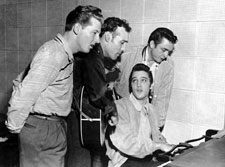
In 1958, the four Sun stars – Presley, Cash, Perkins and Lewis – were captured in an informal recording. Dubbed the Million Dollar Quartet, many of the selections were gospel, a common bond they all shared.
February 2010