

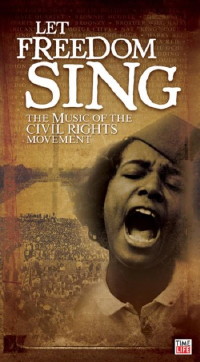
 |
For the better part of the last century, blacks were relegated to the back of the bus, with beatings, and even legalized lynching imposed on those that challenged the status quo.
When Rosa Parks was arrested for refusing to give up her seat to a white passenger in 1955, it set in motion a sea change. Alabama's policy of segregated seating on public transit was outlawed the following year; but the decision was met with derision, and sparked violent reprisals. Snipers fired on buses, and the home of Baptist Pastor Ralph Abernathy - one of the Civil Rights movement's key leaders - was bombed.
While it would be folly to pretend racism has been eradicated, there's no denying the massive strides made over the last century.
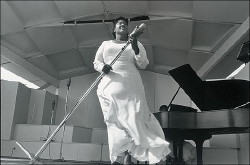
It's hard to underestimate the role music played. In the film, Freedom Riders tell of being jailed, deprived of food, water and even toilets. Their only recourse was to sing. The music brought a sense of empowerment; as one Rider explains - the music could somehow make you a better person.
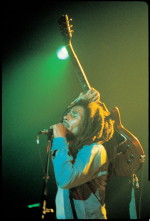
Spanning 1939 to present day, the variety of music is astounding; jazz, rock, funk, rap, reggae, blues and more, sharing the same message. There are anthems; from Mahalia Jackson singing 'We Shall Overcome' to Bob Dylan's 'Blowin' In the Wind' to Bob Marley's 'Get Up Stand Up'; songs that hit the top 10 pop charts by Aretha Franklin, James Brown, Marvin Gaye and Isley Brothers; all the way to the underground, with songs rarely, if ever, heard on radio.
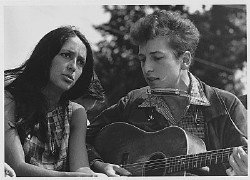
That should come as no surprise, as the Civil Rights movement was birthed and nurtured in the church. Leaders invariably came out of the church; and in the south especially, the story of the Israelite slaves leaving Egypt for the Promised Land was easy to relate to.
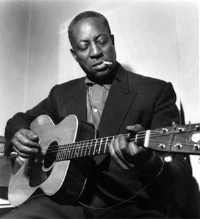
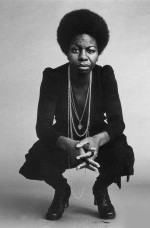
Recorded in May, 1956, a month after he was assaulted on stage while performing before a Whites Only audience in Alabama, Capitol Records simply refused to put it out. The recording finally became available a half century later.
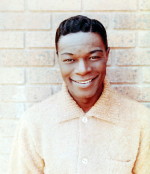
Maybe that's a good thing; conditions had improved to the point where artists were addressing other issues - which is a sad irony. When conditions were at their worst, the music was inspired. Thankfully, it's a genre that is becoming more and more obsolete.
The Civil Rights movement brought together people of all colors and walks of life, and the music was just as diverse. That diversity guarantees - unlike some compilations dedicated to a single theme - that listening to this release never becomes a chore. The quality stands strictly on musical merit.
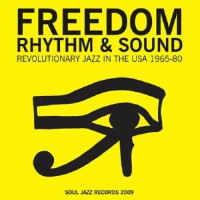 |
The timeline - twenty years - is more concise, as is the music itself. The majority comes from the seventies, and according to the compilers, the focus is on the avant-garde/free jazz sound birthed in the sixties. But that's just a starting point; in some ways, the description is misleading, and could potentially turn off listeners leery of the term.
 |
 |
The mandate included economic and - just as importantly - musical independence. Initially, inspiration came from Rev Martin Luther King and Malcolm X. After both leaders were assassinated, the radicalized Black Power movement - which emphasized self-reliance in all areas - grew in popularity.
That Afro-centric world view is front and centre on tracks like Oliver Lake's 'Africa,' 'The African Look,' and 'Black Survival,' but gospel roots are just as evident.
The Art Ensemble of Chicago's take on 'Old Time Religion' shows just how close the ties to the church could be, and 'Yes Lord,' (by Gato Barbieri and Dollar Brand), and Michael White's 'The Blessing Song' reference the gospel story to varying degrees.
 |
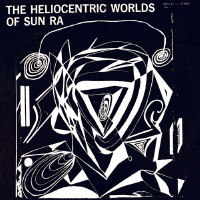 |
Archie Shepp's 'Attica Blues' addressed specific political issues, as does Sun Ra's 'Nuclear War,' with the simple truth;"If they push that button, you can kiss your ass goodbye."
In spite of the demands for change and equality, the jazz scene remained one of the last bastions of traditional male-domination. By the early 70s, the women's movement was making great strides, yet, tellingly, of the 23 acts here, only two are fronted by women.
Mary Lou Williams had already secured her reputation through working with heavyweights like Duke Ellington, Benny Goodman and Dizzy Gillespie. After a self-imposed religious sabbatical, she returned to compose a number of works that addressed spiritual issues. 'Miss D.D.' from her groundbreaking 1963 release Black Christ Of the Andes is typical, with a unique sound bordering on exotica.
 |
The handful of names already mentioned might ring a bell, but for the most part, this was truly an underground movement; one with zero commercial potential. Foreshadowing the D.I.Y. ethos almost a decade before the punk movement, the majority of music came out independently, pressed and sold via labels set up by the musicians themselves.
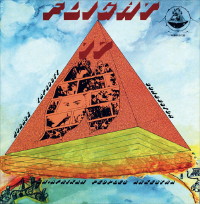
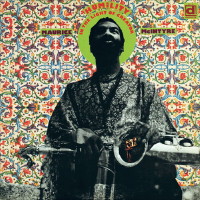
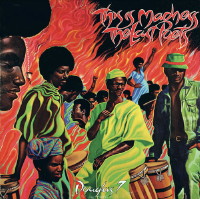
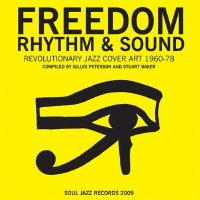
That's where the book really shines. The description; "Radical Art For Radical Music," is right on the money. With full size graphics, the artwork - which reflected the ethos of the movement - is presented in the best possible light. Running almost 200 pages, the length and format allows for a generous sampling.
 |
More's the pity. Decades on, this music; creative, vibrant, and with a tangible sense of joy, stands on its own, in stark contrast to what came after.
For anyone interested, a first rate sampler of a scene ignored by most the first time round.
March 2010