

 |
Yet, for some potential listeners, Dolly Parton's brash, larger-than-life personality and amply-endowed figure - she's described her look as a combination of Mother Goose, Cinderella and the local hooker - makes it hard to appreciate the big picture.
Truth is, she's an astute performer; behind the artifice lies an uncommonly honest individual. As she once pointed out, "There's a heart beneath the boobs, and a brain beneath the wig."
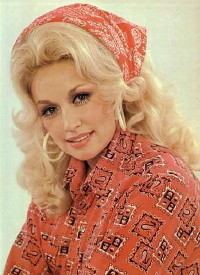 |
Born in the Great Smoky Mountains of East Tennessee in 1946, Parton was the fourth of a dozen children. Depending on the source, her cash-strapped sharecropper parents paid for her delivery with either a pig or cornmeal. Both sides of the family were musical, and she grew up singing at home and in church. Her maternal grandfather was a fiddle playing preacher, and she's described her grandmother as the "prayingest, singingest, shoutingest resident of Tater Ridge, Tennessee."
The area is rich with musical history; folklorists were venturing into the region well into the last century, collecting old English folk songs.
Parton was playing guitar and writing songs at five years old, and appearing regularly on local radio and TV by the time she was ten. The day after graduating from high school - the first in her family to do so - she boarded a Greyhound bus to Nashville, intent on making a name for herself.
She succeeded, and then some.
 |
The early recordings are a bit a pop potpourri; one track sounds like a forgotten girl group classic, another in the style of Skeeter Davis. Initially, Parton was pushed in a pop direction, even appearing on American Bandstand at one point. It was only after Bill Phillips took her 'Put It Off Until Tomorrow' into the Country top ten in 1966 - and scored again with a second Parton cover - that she succeeded in convincing her record label that she should be recording country instead of pop.
 |
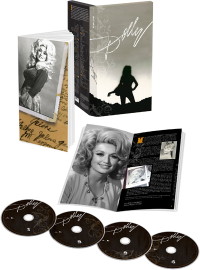 |
A prostitute laments leaving her home and first love for the big city In 'My Blue Ridge Mountain Boy.' The protagonist in 'Gypsy, Joe and Me' contemplates suicide after her dog and the man she loves ("The flower of my soul") both meet with an early demise.
The grieving parents in 'Jeannie's Afraid of the Dark' honor their only child's request to leave a nightlight on, despite the fact she has died. Deserted by the father, an unwed girl in 1969's 'Down From Dover' delivers a stillborn daughter; "She knew she'd never have a father's arms to hold her."
Out of context, these songs might appear morbid and maudlin, yet each is written and sung with genuine empathy.
Parton was a pioneer at addressing politically sensitive issues: 1967's 'Just Because I'm A Woman,' and 1969's 'Just The Way I Am' tackled female empowerment and double standards years before the nascent woman's liberation movement hit critical mass.
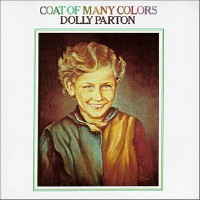 |
Film increased her renown, and in 1986, she opened Dollywood, a theme park that celebrates life in the Appalachian Mountains. Currently celebrating its 25th anniversary, the park remains the most popular ticketed tourist attraction in Tennessee, attracting millions of visitors each year.
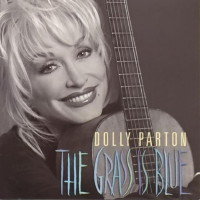 |
Typically, she was not above bending the rules, even in the most traditional of forms; a bluegrass remake of Led Zeppelin's 'Stairway To Heaven' won kudos from both Jimmy Page and Robert Plant.
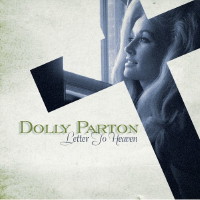 |
The majority of tracks were written by Dolly herself, including 'Would You Know Him (If You Saw Him),' a previously unreleased original from the Streets sessions.
It could be argued that gospel is the music closest to Parton's heart. She readily identifies herself as a Christian, and the music has been a constant since the very beginning.
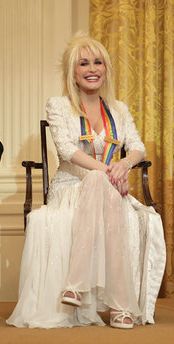
Last year saw her induction into the Gospel Music Association's Hall of Fame. Her sacred songs - like the rest of her catalogue - are far from formulaic. From the pastoral beauty of 'God's Coloring Book,' to the weightier 'God Won't Get You' (sung from the perspective of a believer struggling to understand why God would allow them fall in love with another's spouse) to 'The Seeker,' Parton looks at faith from a variety of perspectives.
Much like the character she played in Steel Magnolias - who declared; "Honey, God don't care which church you go, long as you show up" - Dolly has never publically aligned with a specific denomination, and doesn't hesitate to question the status quo. She simply calls it like she sees it.
 |
 |
Her first theatrical work, 9 To 5: The Musical opened on Broadway last year, with 16 songs composed specifically for the production.
It wasn't her idea; she'd never attempted anything on this scale, but when the producers approached, she was game: "I was just dumb enough to say yes."
The production will tour America later this year, and she's already at work on a second musical.
May 2010