

As China’s economy continues to expand – with more people from villages moving to the city to get jobs – so too does the opportunity to create business deals.
But while working with a population of 1.3 billion people may appear to some as the perfect money-making opportunity – and to others, the ideal place to start a ministry or non-profit organization – it is important to note that doing anything in China is tricky. It is a country that does not follow the same rules as the Western world.
Asian Outreach and Power to Change teamed up May 20, to host a business dinner and discussion forum dealing with ‘Business Strategies for a New China.’ The event was part of a two-day gathering called the China Summit, that brought together different speakers to discuss China’s economic and spiritual impact on the world.
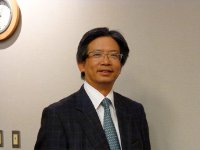
The speakers at the business dinner were Francis Tsui, president of Asian Outreach International; and Brent Fulton, founder of China Source. They each touched on the evolving ideologies of China – from a purely communist country, to what it is now: a socialist market economy with some distinctive cultural traits.
“China is definitely not what we understand as a Western capitalist country,” said Tsui. Instead, he called it a “socialist market economy of Chinese characteristics.”
He described it as a fusion of planned and market economy. This is something many in the Western world will undoubtedly have trouble understanding, Tsui stressed.
“China has only one big boss,” said Tsui. “From the Communist Party’s point of view, it is about financial security. That is why, for those of us doing business in China, it is important to know that China is still a family business. The patriarch is the Communist Party – and you are not going to cross them.”
In China, public property is still number one in importance; private property, the trademark of a capitalist country, is number two.
Tsui said the Chinese government indirectly owns most of the key businesses in the country.
Although pursuing business in China may seem rather daunting for foreigners, Tsui stated there is a simple way to go about starting a successful business in China.
He argued that a thriving business in China is dependent on how well a business plan fits into the government’s five year plans.
Fulton described the Chinese leaders as “Engineers sitting in the control room of a power plant.” They do not necessarily have a long term ideological plan for China; they just see problems, and try to fix them.
According to Fulton, the success of business in China is largely dependent on the ability to be flexible; the ability to make money; and the ability to align business strategies with the strategies of local officials, so as to make them look good.
As an example, Fulton spoke of a woman in China who started a chocolate factory. She specifically sought out former prostitutes as employees, and trained them to make chocolate.
“In doing that, she not only makes great chocolates that are sold at hotels across China. She contributes to society by giving these women another chance,” said Fulton.
Stewardship is an important part of doing business in China. The enterprises Fulton saw as successful were not afraid to give away knowledge – or wealth. If there was a crisis, the ones who gave were rewarded; and the ones who did not were blacklisted.
Pandering to the government’s wishes is important for businesses, as well as non-governmental and missions organizations. In a place like China, good will activities are only seen as good will if they fit into the country’s plans.
To those who are “kingdom minded,” Tsui’s advice was “to be a good business man first. If you don’t have a good business platform, don’t expect it to become a good mission platform. If we cannot even run a viable business, and we think that will become a platform for mission, are we actually compromising our message?”
Tsui’s goal, as the international head of Asian Outreach, is to change lives by working with individuals; to transform communities by offering solutions to their needs; and to influence nations through the empowerment and training of national leaders.
By bringing the gospel to areas of China, Asian Outreach also hopes to better the lives of individuals there – by upgrading the standard of living and addressing deeper issues.
“There is still a spiritual emptiness in Chinese people’s lives,” said Tsui.
Asian Outreach, he asserted, is focusing on a “holistic ministry.” Through Tsui’s leadership, Asian Outreach hopes to spread the gospel – but also to be a blessing to China by helping to fulfill the worthwhile aspects of the country’s social agenda.
June 2010