
Permanent resident status sought for Algerian man living in Montreal church
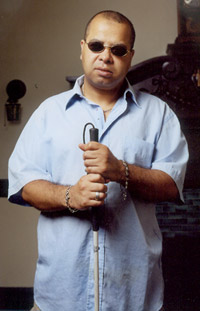
Abdelkader Belaouni, 39, sought sanctuary in St. Gabriel's Church in Point St. Charles, Montreal when he discovered he would be deported to Algeria.
"Abdelkader is a full member of our local community and we would like nothing other than for Abdelkader to return to live with us normally," said former Point St. Charles municipal councilor Marcel Sevigny at a Parliament Hill news conference.
Ligne des droits et libertes spokesman Philippe Robert de Massy referred to the broad cross section of Quebec groups that have supported Belaouni's residence bid, calling it a "question of democracy."
At a news conference on Parliament Hill, they joined politicians in asking that Immigration Minister Diane Finley use her ministerial powers to allow Abdelkader Belaouni to remain in Canada on humanitarian grounds.
"He is living in sanctuary because the government is still threatening to deport him, to send him back to the country he came from, despite the fact that he has successfully integrated into the Quebec community," said Bloc Quebecois MP Thierry St-Cyr, who represents the Jeanne-Le Ber riding where Point St. Charles is located.
"I want to stress that church communities do not enter into a sanctuary arrangement lightly," said NDP immigration critic MP Bill Siksay (Burnaby Douglas, BC).
"Church communities offer sanctuary out of a deep commitment to seeing justice done," he said, calling the array of support for Belaouni "unprecedented."
More than 70 community leaders and representatives of non-governmental organizations signed a May 17 letter to Finley in support of Belaouni.
The leaders warned that he would face undue hardship and physical danger if he were forced to return to Algeria, the country he fled in 1991. He first went to the United States and applied for a Green Card, but found he was ineligible because he had been living without status in the country. After the 9/11 terrorist attacks, he "fled the atmosphere of racial tension and policies of racial profiling, such as the 'special registration' programme,'" said the letter. This program, designed to meet security concerns, targeted individuals from countries with large numbers of Islamic extremists, including Algeria, though North Korea is also on the list.
The letter charged that the Canadian government discriminated against Belaouni because he is blind. The letter said that five individuals, including the priest at St. Gabriel's, Father James McDonald, are willing to sponsor him until he can become economically self-sufficient. They cited his many volunteer activities prior to his taking sanctuary as evidence of his willingness to "give back" to society.
Though the more than 500 days holed up inside the church have had their toll, Belaouni has managed to broadcast life a radio program on community concerns once a month on CKUT 90.3 FM.
Sharon Difruscia, representing the Montreal archdiocese's justice and peace committee, signed the letter, along with representatives from several Christian and Muslim organizations, immigration groups, and other human rights, community and welfare organizations.
A spokesman for Immigration Minister Diane Finley said the present system is fair.
We cannot comment on this specific case," said Finley's press secretary Philippe Mailhot. "We can say that Canada has a fair, internationally recognized system for providing refuge for those fleeing persecution in their home country."
"The United Nations High Commission for Refugees has said that 'Canadian policy and practice are often seen as setting an example for other countries,'" Mailhot said in a telephone interview from Ottawa.
"Each individual is assessed on a case by case basis and our legal system ensures that human rights of migrants are fully protected."
"I don't know if he's a security risk," said Mackenzie Institute president John Thompson, a terrorism expert, in a telephone interview from Toronto. "I don't think so, but there's always the chance."
Thompson said Algeria's civil war has pitted the secular militarist government against Islamic extremist rebel groups. Many people have been caught in the crossfire. "How much of a risk is he in if he goes back to Algeria? The problem with a nasty civil conflict like Algeria, there are people who do have to flee."
"I think he was certainly exaggerating the situation in the United States," Thompson said, pointing out he had been in the United States illegally and came into Canada illegally as well.
"It might have been a lot better for him if he tried to immigrate through legitimate means in the first place," Thompson said.