
Christafari: reggae for Jesus
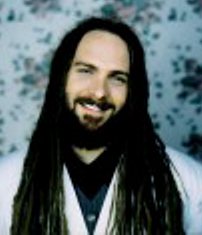
CHRISTAFARI founder and lead singer Mark Mohr's mother described her son's turbulent teenage years as "pure hell."
Just in case you're wondering who or what Christafari is, the band is recognized as one of the main forces in American reggae and Gospel music. Christafari was nominated for the 2002 Marlin award for International Artist of the Year. The band's album, Word Sound & Power, was also nominated for four Marlin Awards in 2000: Caribbean Group Vocal Performance of the Year, Caribbean Duo Vocal Performance of the Year, Caribbean Reggae/Dancehall Recording of the Year, and Caribbean Album of the Year.
But today's success didn't come overnight. It was a difficult road for both Mohr and his parents while the Lord was bringing him to where he is today.
Raised by godly parents in a Christian home, for awhile Mohr became a drug-dabbling, pot- smoking rebel.
Mohr, who smoked marijuana for the first time when he was about nine or ten, said he was initially influenced toward drugs when he was being babysat by his older brother.
Although Mohr was "dabbling" in drugs, he was also going to Christian camps. The problem was that when he came home he would hang out with the same friends he'd had before camp -- and he'd be right back in trouble.
Mohr was able to hide from his parents the full extent of his involvement with drugs; but they still knew that something was going on. "While I was in the Boy Scouts, I leaned toward kids that were messed up. My parents never knew everything; but as a result of what they did know, they sent me to drug counselling and AA programs -- and I also had random urine tests."
Introduced to reggae
In his mid-teens, Mohr went to Jamaica with his parents, on what should have been an innocent and enjoyable family vacation. That experience introduced him to reggae music -- which is pro-marijuana.
Mohr explained that reggae is the music of the Jamaican counter-culture, Rastafarianism. Rastafarians worship the late Ethiopian emperor Haile Selassie (whose previous name was Ras Tafari) as the black Christ -- or the living God for the black race. They use marijuana as a holy sacrament to draw themselves closer to Selassie.
Interestingly, Selassie was not a Rastafarian himself; he was a Christian. As one commentator () writes: "In fact, no one is really sure what he thought of the whole Rastafarian movement. When a group of Rastas went to Ethiopia to honour him, an official of the palace told them to go away! This did not make the Rastas question their belief, it only made it stronger. God is not supposed to know he is God."
Mohr liked the Rastafarian beliefs. He went back to Jamaica time and time again. "I started to write songs about it. I thought that I had found the perfect religion. It quoted from the Bible in a way that made me feel comfortable, and justified my use of marijuana."
Not surprisingly, Mohr's parents were very concerned about their son's behaviour.
Going down
Then, when he was about 15, Mohr ran away from home. He routinely went from party to party, many times spending the night in abandoned houses.
Despite that, his parents never gave up on him. As Mohr recalled: "They were like the prodigal parents, always willing to do anything to see me get right with God." The fundamental requirement for Mohr coming back home was for him to attend Bible study once a week. As Mohr recalled, this resulted in him "getting filled with the Word" every week.
During his prodigal years, Mohr attended 14 Christian camps -- at which he rededicated his life. However, it seemed that nothing made a lasting difference in his life. Even then, his parents persisted with their wayward son, ultimately sending him to the J H Ranch, a high adventure extreme camp. Then came the time for which his parents had patiently waited and prayed.
Coming back
"The Lord met me in an undeniable way," Mohr told me. "I was surrounded by people I didn't know, with no friends. I was the one rebel."
While Mohr did find someone at camp with whom he did have a lot in common, and who impacted him greatly, there was one huge difference between the two of them. Mohr asked him what that difference was and the young man said: "The love of God." His friend, he said, "was what I was -- but he was someone different. That was the trigger; and the bullet was when the pastor gave the altar call."
Mohr was immediately and intensely serious about his newfound faith; and the camp staff helped him to cement that dedication, by encouraging him to read the Bible every day for six weeks. The idea was that if you do something for six weeks or longer, then it becomes a habit and much harder to break.
Reggae for Jesus
Mohr said he felt the Lord speaking to him even before he came home from that eventful camp.
"When I was (there) and I came to Christ, I remember saying: 'God, I don't want to be some suit and tie missionary' -- and he impressed upon me to start the first Christian reggae band."
Consequently, Christafari was birthed in 1989, consisting of Mohr and a few of his friends. He was blessed almost immediately with wise advice from a good pastor. "He said: 'If you're really serious about that, you need to get doctrinally sound.' He was a Biola [University] alumni --and it was natural where to go."
Biola
Although Mohr didn't finish his degree at Biola, he greatly appreciated his experience there. He was able to focus on his interests -- so not surprisingly, in a course on cults, he focused on Rastafarianism.
Just prior to the end of his degree, Mohr and his band were invited to take part in a major reggae tour. He and the band were the only Christian artists ever invited to do so. However, Mohr told me that, while the tour went very well, one of the most popular artists on the tour tried to kill him
Mohr explained that, while at Biola, he had written a paper dealing with why Selassie couldn't be the Messiah. He turned it into a booklet, which he distributed to all the artists on the tour. All of them had read it.
However, according to Mohr, one musician wanted to do more than disagree agreeably. "The guy was very popular but he didn't like it [the booklet]. He wanted to prove himself to the Rasta elders -- and he tried to stab me. I lunged back every time he lunged forward. Finally the police came. I chose not to press charges -- which could have resulted in him being deported. I figured he couldn't begin to understand and receive my God of grace, unless I forgave him."
The split
After the reggae tour was over, Christafari was signed by Sony Epic. In Mohr's words, "Things started growing." However, after the group recorded another album titled The Valley of Decision, things started getting difficult. Several members of the band quit.
However, in retrospect, Mohr can see God's hand working in what was then a very unpleasant situation. "While it was a tough struggle, God used something that was initially construed as being very negative. We had a different approach to ministry [from those who quit]."
Mohr explained that, as a result of the split, he was able to do the hard-core reggae he had always wanted to do -- and to reach the Rastafarians "right where they were at." The members of the group who left had wanted to stay within the parameters of more mainstream contemporary Christian music.
Happily, Mohr was able to put together a whole new band within three days of the split. An added bonus was that he also formed his own record label, based upon a business plan from a friend he had met at school.
Mohr has a definite vision for bands that record with his company. "Rather than having the world see Christianity through blue American eyes, I wanted to have America see the world through a global perspective -- as Christ created it."
Dad's perspective
I wondered what Mohr's parents had been feeling while their son was going through his teenage rebellion.
Edward Mohr described his son's rebellious teenage years as being a period when the family "all came closer to God. He was the catalyst . . . We had a lot of problems."
I asked Edward what he had done to help himself and his wife emerge successfully through that difficult time. He said there were two key things. "We persisted in telling [Mark] how much we loved him, and how much we needed him to focus on what God would have him do."
In addition, he said that he and his wife stood on a Bible promise: that as they had raised their son in the word of the Lord, he would not depart from it. "We trusted totally in the Lord, and stayed in communication."
Edward praised Focus on the Family's James Dobson as a "stabilizing influence in our lives. We got all the tapes he had on this subject, and listened to them a lot."
Edward also had some words of advice for parents going through a similar situation. "When you're going through the teenage years, don't rock the boat unnecessarily. While you need to hold strong on the major points, sometimes you've got to give on the minor ones. Of course, you have to still hold them accountable."
Mom's perspective
Margaret Mohr said that the situation with Mark got so bad that all she could do was to turn him over to the Lord. "I would say, 'He's yours, Lord. He's yours.'"
She added that, while she and her husband didn't tell a lot of people what was going on with their son, they did tell a few close Bible study friends -- who she described as being very supportive and prayerful.
Margaret had some encouraging words for parents suffering through their children's teenage rebellion years. "Keep praying, and believe that the deeds you have sown will not be in vain."
Looking back, she said that the struggles and the emotional turmoil were all worth it. "I would do it again. Mark would not have the ministry he does today unless he had been down that path."
What does she think of her son now? She didn't hesitate in her response. "I don't know anybody who is closer to the Lord than he is. I totally trust him to pray through the circumstances. I have seen him go through so much, and come through closer to the Lord."
Mohr's brother
I was curious about what had happened to Mark's brother. After all, he was the one who had initially 'helped' Mohr stray from the straight and narrow. Mohr said that, after a little while, he turned out good.
"He got real bad when he was in a [college] fraternity; but at about the age of 23, he became a missionary in Nome, Alaska. When I ran away from home, he was begging me to come back. Now he raises money to help fund those in the Lord's service."
New project
So, what's ahead for Mohr and Christafari? A new album, Gravity, will be in stores June 3. It's the band's first studio release in four years. A portion of the advance promotion describing the album declares: "Gravity is a musical delicacy stuffed with the word of God. Most songs contain verse-by-verse scriptures straight from the Bible. Engineered in a dubwise fashion, the tunes on Gravity are replete with incessant delays and eternal reverberations. This masterful production is a continuous therapeutic sonic collage without a second of silence."
Mohr is very excited about this new project. He told me that, while other albums had taken about three months to put together, this one took over a year; and production took place throughout the United States and Trinidad.
"This is more of a solo album. This album is 100 percent me. A lot of it is very autobiographical. We're in a place of strength, and able to do things right. For the first time, we will have worldwide distribution."
Mohr told me that he has a broad vision for the album -- and that it not only addresses Rastafarianism, but other belief systems also. Mohr said he is praying that, as a result of listening to the album, non-believers will seek God's kingdom, and will be drawn closer to Christ; he is also hoping that the music will inspire Christian listeners to get to know Jesus better.
- ASSIST News Service