
CELLULOID EVANGELISM takes a leap forward
Mission Fields,

IF YOU grew up in the '70s, you likely remember sitting in church on a Sunday night having your pants scared off by some low-budget, low-quality 'scare-'em-into-the-kingdom' film about the Rapture and and the Great Tribulation.
One of my earliest memories of Christian film was a scene featuring a young girl -- mysteriously holding a red balloon and wearing a white, blood stained robe -- being ushered to the gallows by the anti-Christ's henchmen, and presumably being martyred for her faith.
The end of the film included an invitation for viewers to become Christians and avoid all the trouble that comes from being left behind -- as the camera lingered on the red balloon floating heavenward.
The scare-'em pics, equipped with a much bigger budget and some well-known actors, made a resurgence a few years ago -- in Canada, of all places. The LaLonde brothers, based in Niagara Falls, produced thrillers such as Revelation and Tribulation; this led to their production of films based on the best-selling Left Behind books. However, while these films have had an impact, the broad Christian community isn't stuck on apocalyptic fervor.
To varying degrees, Christians have embraced a wide breadth of film projects to promote the Christian message, from overt Hollywood productions like Mel Gibson's The Passion of the Christ, to Visual Bible International's word-for-word filming of The Gospel of John, to the biblically compatible themes expressed through secular productions such as the Lord of the Rings trilogy.
Of course, the quintessential movie-as-ministry tool is Campus Crusade's use of the Jesus film, which has been translated into a remarkable 812 languages and been screened in some of the world's most remote locations.
And while that model has proven to be very effective, the relationship between film and the Christian message has become more complex, reaching moviegoers in different ways.
When Gibson's Passion began getting advance publicity, the director came out with some surprising statements about his motivation for doing the film. Some Christian leaders, like Dave Currie -- who heads Family Life, a ministry of Campus Crusade for Christ, Canada -- started to take notice. Gibson, he told Mission Fields, "was saying some evangelical, solid biblical things that got us curious."
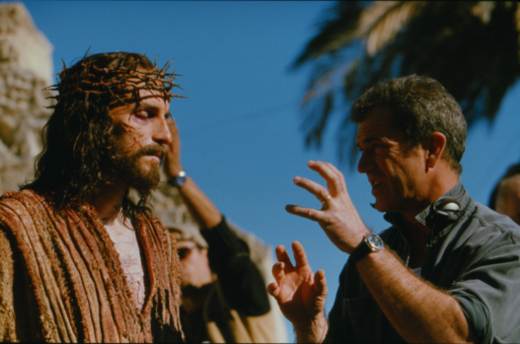
Campus Crusade made some calls and got in contact with Icon Productions, Gibson's company; they were very receptive to a Canadian contingency of 15 ministry staff, pastors and business people -- who Campus looks to to underwrite the cost of their outreach efforts -- seeing the film in advance. Because no one was handling the film yet in this country, Icon invited the group to see it in one of their own screening rooms in L.A.
Currie and the other leaders who attended the screening spoke to Gibson afterward via speakerphone in a company boardroom. According to Currie, Gibson said the movie had been "on [his] heart for 12 years," that he believed the time was right, and that God wanted him to do the movie. He also talked about people knowing so little about the gospel and the need to get back to the basics, "the heart of the Christian belief," quotes Currie. Gibson also alluded to threats he and his family have received since the making of the movie became publicized.
According to The Christian Examiner, Billy Graham wept while attending a private showing with Gibson and actor James Caviezel, who plays the role of Jesus. "I have often wondered what it must have been like to be a bystander during those last hours before Jesus' death," the evangelist reportedly said. "No one who views this film's compelling imagery will ever be the same again."
Winnipeg entrepreneur Herb Buller also attended the L.A. preview, and wrote of the experience for ChristianWeek. "My wife and I watched for scriptural accuracy and, of course, the professionalism of the film. The last thing we wanted to see was another hokey Christian movie."
He concluded that Gibson's film "is not just cheap Hollywood drivel. It is surely the word of God presented in a very deliberate and creative manner. We can be proud to be associated with a movie of his magnitude."
"I fully endorse the movie as a powerful gift to our generation, to stimulate legitimate and compelling discussion on the purpose and meaning of the Passion of Jesus Christ," says Currie. "I will do all I can to encourage attendance, and a complete searching of the truths laid out through Christ's life and death as seen in the movie. This powerful and relevant film will open many doors for us to interpret the love of God in Christ. Begin planning your strategy to reach out to your network of family and friends."
And Campus has set out to do just that. The ministry banded together with other prominent organizations -- including Focus on the Family, Alpha Canada and the Evangelical Fellowship of Canada -- and organized advance screenings across Canada in mid-January for pastors and parachurch workers.
The preview showings were virtually conducted as worship services. They began in prayer, and those in attendance were invited to view the film as an opportunity to directly experience the emotional impact of Christ's sacrifice. Many in the audiences were moved to tears at various times, and there were several minutes of silence after the film ended. Audience members were then urged to use the film as an outreach opportunity, and were given visually dynamic posters and brochures.
Organizers of the initiative have established a website (thelife.com) designed to draw theatre-goers who may have questions after watching the film. Plans are not finalized, but Currie says Campus is planning to advertise the site alongside theatre ads in newspapers and, potentially, in static on-screen ads appearing before theatrical showings. The Passion of the Christ is scheduled to open across North America February 25.
In a similar vein, The Gospel of John (gospelofjohnthefilm.com) -- produced by Canadian impresario Garth Drabinksy and shot in Spain and Toronto -- was shown in advance to pastors, to encourage churches to centre outreach efforts around the film. Strong praise for the film and its lead actor (Henry Ian Cusick) from mainstream secular publications nearly guarantees that the movie will not be pushed to the fringes and end up being viewed solely by evangelicals.
For example, Todd McCarthy, critic for Variety, praised the film's complexity and accuracy. "The Jesus most commonly imagined in drama and legend -- the health-restoring, inspirational and selfless itinerant rabbi who met a painful end, then presented his resurrected body to his disciples on his journey home to his Father -- is entirely present," he wrote. "But so is a complexity that allows for multiple sides of this most influential and conjectured-about figure: the provocateur, the showman, the preordained victim, the self-proclaimed deity."
Toronto Sun critic Bruce Kirkland gave the film four-and-a-half out of five stars.
The Gospel of John has not been given the typical mainstream 2,000-theatre wide release. Instead, Visual Bible has been sending the film across the continent gradually -- starting in Ontario, then going across the U.S., and finishing back in Canada. The film is also available on DVD and VHS.
Talk to any Christian in the film industry and the term 'postmodern age' is likely to come up. It's no small point that film, the medium itself, carries a legitimacy, a license, like no other at this time in North America.
That's why people like Currie are saying it's critical that the Christian community take seriously the fact that truths told through film reach a wider, more receptive audience than through any other medium. Regarding Gibson's movie, he says: "We think this film will be talked about at every watercooler across Canada."
"People equate life -- reality -- with the silver screen," says Byron Jones, past president of Cloud Ten Pictures (Left Behind series) and now president of Garden City Pictures (gardencitypictures.com) in Niagara Falls, Ontario. "People see what's going on -- from Denzel Washington wearing a certain type of sunglasses, to the Mini-Cooper being marketed through The Italian Job -- and they think 'that's what life should be.'" Recognizing the power of that tool, Jones says he strives to record the acts of modern-day "heroes of the faith" through feature films.
Two decades ago, when he was 12 years old, Jones used to show 16 mm 'end-times' flicks at his father's church; notably, film producer Peter Lalonde became a Christian at one of those movie nights.
Jones says his company uses film to both help the average churchgoer reach out to his or her neighbour, and to encourage those who are already Christians.
In February, Garden City will release the feature Home Beyond the Sun -- which, among other things, deals with the persecution of Chinese Christians. The feature will be screened in theatres, through a partnership between churches and the filmmaker -- as well as within churches.
"The film can both raise awareness of faith persecution in other countries and help with home missions programs," he says, adding that new projection capabilities have allowed most churches to show films in a more dynamic format than the old whirring reel-to-reel that were the standbys during the Rapture craze of the '70s and '80s.
Jones is convinced that today's more polished films could have a powerful evangelistic impact.
"Film is a conversation starter that allows [Christians] to get started on one-to-one ministry. People don't just watch what's on the screen and become Christians. They watch, and then want to ask us questions."
-- With additional reporting by David F. Dawes.