
A Canadian's view of life in Afghanistan
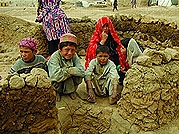 Ken Foster, a doctor specializing in hand surgery, has spent most of the past five years working in Afghanistan with Interserve Canada. At one time, he was a plastic surgeon with a practice in Vancouver. In June, he and his family returned to Canada from Kabul, the Afghan capital; they recently moved to Thailand. Just prior to leaving, Foster responded by E-mail to several questions.
BCCN: During the five years you have been visiting and working in Afghanistan, how have living conditions changed? What were conditions like in Kabul just before you left the country?
Ken Foster: Our living situation was very good. There are some very nice houses in the city, and we had electricity most of the time. We lived the first three years in the part of town destroyed during the civil war, so we had no electricity; but we had solar panels for lights and charging the computer. We moved to the nicer part of town last year to be closer to work. Our new house had electricity most of the time, and running hot and cold water.
We never lacked for food, and there was plenty available if you had money. Fruits and vegetables were seasonal. For example, we had cauliflower and carrots for three months in the winter. The basics are all available, though not the highest quality. Because of the increase of foreign aid workers, Western goods were even more available than they were when we first arrived. The drought however, did make water scarce -- though our well did not dry up.
When we first arrived, we had local Afghans in our home -- and even Afghan women were permitted to come. The Taliban gradually restricted the interaction between local people and the foreigners, to the extent that local women were strongly discouraged from visiting foreign women's homes in most neighbourhoods. Foreign women were allowed to visit local women's homes, but not on a regular basis. This also applied to the men. Local men were discouraged from socializing with foreign men on a regular basis. We could see that the Saudi influence over the Taliban was increasing. By the time we left the country, foreign women were no longer allowed to drive; foreign women were sometimes spit at and harassed. Winfer and the children had rocks thrown at them by the kids, who called them "pagans". There was definitely more and more anti-Westerner sentiment in recent years.
BCCN: What sort of specific medical problems did you deal with over there?
KF: I worked in the orthopedics department of the largest and busiest civilian orthopedics hospital in Afghanistan. As far as I know, I was the only person with specific training in hand surgery in the country. So as a consultant surgeon, I did primarily upper extremity cases and reconstructive cases -- along with occasionally dabbling in other areas of orthopedics that my colleagues were not comfortable in. A large part of what I dealt with was not acute, but rather the result of neglect and/or maltreatment. A significant part was due to old penetrating war injuries leading to stiffness, weakness, deformity, fracture non-union, bone infection, etc. The single biggest cause of morbidity I saw related to hand injuries was preventable by simple splinting in the correct position.
BCCN: I realize that, because of the governmental and social situation in Afghanistan, you would not have done any direct proselytizing regarding your faith. However, did you have opportunities for discussion of spiritual matters with Afghani people? If so, how open were some of them to hearing the evangelical view of Jesus?
KF: Muslims are very religious people and it is actually very easy to share about God without offending them, unlike the situation here. We could answer questions, and many tried to convert us to Islam with their arguments. Most of them shared their own view of Jesus, and some asked how different our views are. We had opportunities to engage in discussions of spiritual matters. Some were willing to listen and some were not. We were very careful, and never forced the issue.
As with Muslims anywhere, it is better if we respond to the issues they raise, rather than being seen to initiate some attempt to convert them. It takes time to develop a relationship such that people want to listen to you, let alone trust you and see from your life that what you say is truth. I don't think that telling propositional truths about Jesus is as important as showing Jesus to them. They are religious people, and God can work through His Spirit if people are open.
The Jesus of the Gospels did very little arguing of propositonal truths -- in comparison to His appealing to people's consciences, by calling them to take the first steps in initiating relationship through obedience.
BCCN: Are the majority of Afghanis devout Muslims?
KF: Virtually all Afghans would identify themselves as Muslims, but I suspect that the majority are nominal. However, in a belief system that fuses religion with state and culture and tradition so visibly and centrally to their whole identity, it is difficult for those who do not take their faith seriously to allow that to be known. I once had a group of three doctors admit to me over lunch that they were atheists, but this is only because they trusted each other and trusted me.
When it comes to the perception that their clan or nation is being threatened, then even nominal Muslims will tend to become very worked up. In that case, it is difficult to sort out patriotism, clan loyalty and religious sentiment. There is a whole spectrum of religious sentiment -- both qualitatively and quantitatively.
BCCN: Did you have any direct interaction with the Taliban authorities? If so, can you give details?
KF: We lived in a neighbourhood with many Taliban. They are like people here. Some are very courteous and kind, and some are mean. Some of our expatriate friends were invited to homes of the Taliban, and were treated very well. Mind you, the men were never there, but the women and children were always friendly. Some of them even wanted to immigrate to the West. Some recognized that the West could offer them a much higher standard of living.
Not all the Taliban are radicals. The younger, lesser educated Talibs from more rural backgrounds do tend to come closer to the stereotype, in terms of being more visibly hostile -- or at least, less friendly to foreigners. On the other hand, educated technocrats within the government tend to be much more understanding and friendly. The problem is that they, for that very reason, have to be very careful.
BCCN: Is the Taliban's rule as harsh as it has been portrayed? KF: Yes. There were a lot of rules, but they were not enforced all the time. Often the rules were just an excuse which they used to punish and mistreat those who were not one of their own ethnic group or clan. Women were generally not allowed to work; but women in healthcare, like doctors, nurses, physiotherapists and ladies who cleaned the hospital were allowed to work. Girls were not allowed to go to school; but some of the women teachers who no longer had a job had small classes teaching the neighbourhood girls in their homes.
Generally, what you see in the media is true -- but often not widely representative of how things are actually enforced. In Kabul, they often enforced the rules a lot more harshly than even in their own heartland -- because they seemed to feel threatened, or wanted to impose tighter control or just to teach the liberal city-dwellers a lesson.
BCCN: Would you like to comment about whether the Taliban regime is directly harbouring and encouraging members of the terrorist group which perpetrated the catastrophic September 11 events in the United States?
KF: We can't be certain that there were members of the terrorist group in the country; but we can say that in the neighbourhood we lived in, there were also groups of men such as Chechens, Algerians, Moroccans, Uighurs, as well as lots of Arabs and Pakistanis. We were told by other Afghans that there were links, but did not have first hand knowledge.
BCCN: Would you like to comment regarding the American war effort in Afghanistan? KF: We think that most Afghans want America to remove the Taliban, but are not free to say so. They are not into negotiation, and will only understand power.
BCCN: How has your faith sustained you in your work in Afghanistan?
KF: There were many times when we were frustrated with the authorities, and angry at the injustice and the abuse of power. Knowing that God will bring justice helped us deal with the anger. Knowing that God loves the Afghan people and grieves to see them suffer also reminds us that God will not abandon them --even though we may not have the chance to openly share with them. Belief that God will ultimately succeed in bringing his love to all people is fundamentally reassuring.