
Ministry soldiers on in perilous Colombia
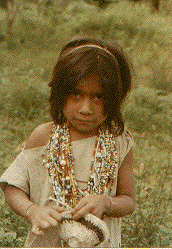
COLOMBIA Para Cristo has been going for almost four decades, in one of the most perilous countries in South America. In recent years, Canadian evangelicals have become a crucial component of the ministry's support base.
Founded by the Stendal Family in 1964, Colombia Para Cristo was originally established to reach out to the country's aboriginal tribes. The ministry's website explains their approach to the natives:
"The Kogi people live in the Sierra Nevada mountains in northern Colombia, South America. The Kogis are human beings made in the image of God Almighty, just like you are. They deserve the same hopes and dreams as everyone else. They deserve to be free citizens who can choose what to plant, where to go to school, to be lawyers or doctors or whatever they wish to be, what clothes to wear and what religion to choose for themselves. They should not be treated as lesser evolved beings, to be shut up in a sort of zoological preserve to be gawked at as if they were animals. They need to be treated with respect and dignity."
The most prominent representative of the ministry is Russ Stendal. At Vancouver's Missions Fest (MF) January 31 - February 2, he was a featured speaker; he also participated in a panel on terrorism. Just before he returned to South America, Stendal spoke to CC.com.
The main topic of his MF address, he said, was his perspective on the event's official theme. "I spoke about 'Whatever It Takes,' in terms of the Great Commission. Basically, I said that it's going to take Christ's life in us, in order to accomplish the Great Commission. We can live our lives in our own way; or we can let Jesus come forth in us, and deal with our hearts as he sees fit."
Stendal expressed his appreciation for the many Canadians who support Colombia Para Cristo. "Most of our literature has been paid for by Canadian evangelicals. We've mainly gotten that support through Missions Fest events across Canada."
He reflected upon the ministry's history. "We're in our 40th year in Colombia. We lived through a period of time when there was lot of missionary activity -- from 1964 to 1984. In the past 20 years, we've witnessed the withdrawal of some 800 missionaries from the country." Most of them, he said, belonged to Wycliffe Bible Translators and New Tribes Mission. They pulled out for reasons of "security," he emphasized -- pointing out that several New Tribes personnel had been kidnapped and killed by Communist guerrillas, and that a Wycliffe worker had been held captive for two years.
The guerrillas, Stendal maintained, have been exploiting the infamous Colombian drug trade since the 1980s. Arrayed against them, he said, are paramilitary forces known as the 'Self Defense' faction, who work for landowners and business people. The paramilitaries, he asserted, are also involved in the drug trade.
"Both sides have done a lot of human rights abuses," he emphasized, but added that there was a key difference between the two sides: "The paramilitaries allow some Christian activity," including church attendance, in the areas they control. The guerrillas, however, "don't allow any churches -- but they occasionally allow home meetings."
The Communists, he said, "consider themselves freedom fighters, combatting government corruption." He has first-hand experience with the guerrillas. On August 14, 1983, while working as a bush pilot in a remote area of Colombia, Stendal was kidnapped by a Communist group. He was held for 142 days. Following his release, he wrote a book entitled Rescue the Captors. The following excerpt sums up his perspective:
"In Colombia it is common for victims of kidnappings to feel an intense desire for revenge after their release. If they still have enough money, many of them will draw up a list of their enemies and have them all killed by hired assassins. Since a person tends to be very suspicious after having been kidnapped, this practice leads to the death of many innocent people. The relatives of all the deceased then feel an intense cultural desire for revenge and proceed to each draw up another list of suspected guilty parties. There are professional assassins in Colombia who will kill a person for a surprisingly small amount of money. One act of violence can snowball into an unbelievable sequence of violent murders. The press then labels this the work of rightwing death squads.
"The first Time magazine I picked up after regaining my freedom contained the unforgettable story of how Pope John Paul II forgave the man who tried to kill him. I decided to follow the Pope's example and forgive my kidnappers; I decided that I would not attempt to retaliate against the individuals responsible for kidnapping me, but rest my case in God's hands -- letting Him do as He saw fit. I left Colombia with my wife and daughter, to go on a speaking tour of the United States and Canada, confident that God's justice would be much superior to man's.
"I can remember feeling very concerned for the guerrilla members I had known, who were really fed up inside with violence and terrorism but who found themselves trapped into overriding their own inner convictions. I thought, 'It's too bad everything is going so well for the guerrillas of Colombia.' Ever since they tapped into controlling the cocaine traffic, they have so much money at their disposal that it is easy for them to live in the jungle and prosper. If hard times were to come upon them, that might make it easier for each man to follow his own conscience instead of the strict, Marxist discipline of the F.A.R.C. guerrilla organization.
"I kept thinking that God very obviously had a plan and a purpose in allowing me to be kidnapped. Over the centuries God has a history of taking some of the very worst people available, the dregs of society, and turning them into the very best. God seems to specialize in doing the 'impossible.' I thought, 'The only real solution that I can see for the guerrilla problem of Colombia would be for God to convert the guerrillas into true Christians.' If they could be changed into ambassadors of Jesus Christ, spreading mercy and love instead of violence and terror, that could turn the whole country around.
"I began to pray that the message I had planted among my captors would fall onto fertile ground and receive optimum conditions to blossom and bloom -- creating a positive, upward spiral of God's mercy and love. To the best of my knowledge the Spanish version of this book is still circulating among the guerrillas."
In addition to problems with the guerrillas, Stendal's ministry has had conflicts with government officials. "The previous government was directly controlled by the Roman Catholic church; they were directly opposed to our ministry. The recently elected government, however, is less corrupt --- and they've been ignoring us."
Exacerbating the "corruption and chaos" in Colombia, he said, is the "drug mafia, who are continually making deals with both the guerrillas and the paramilitaries. This creates a nasty environment in which to do missionary work."
Further complicating matters, he added, is that "a significant percentage of evangelical church people in a lot of rural areas are involved in drug trafficking. It's the only thing that's economically viable in some areas."
Colombia Para Cristo takes a "three-prong approach," he said, involving evangelistic crusades, literature and radio broadcasts. The ministry is also attempting to reach out to both sides in the military conflict. Last November, he said, at a 'Forum for Peace' sponsored by the guerrillas, which was held in Villa de la Paz, "we had a meeting with 7,000 people -- including guerrillas and their sympathizers. We gave three messages to this crowd."
Stendal wrote the following account of an even more extraordinary encounter, which happened January 12 at a paramilitary-controlled town called Casibare:
"Thirty-three years ago, at age 14, I had helped build a little church there by taking the tin roof off of my chicken coop to help the poor people there in the midst of a great revival. Now, I found most of the Christians backslidden and up to their ears in the prosperity of the cocaine business, even while they continued to hold highly emotional services which were quite obviously not winning the town for Christ.
"Our meeting, at the invitation of the main paramilitary leader (who was present) began with his order to close all the drinking establishments. Then he ordered his men to round up all the 'backslidden' evangelicals (practically at gunpoint) and sit them down in front of the largest tavern in town, Las Pampas (which we had commandeered for the meeting. The scene at this horse and cattle town could have been right out of the Wild West -- except for the addition of automatic weapons and the 'cocaine prosperity'.)
"Canadian evangelist Len Carter then proceeded to give a fiery message that would have done credit to Charles Finney or Peter Cartwright. At first I was afraid that this was too strong for the paramilitary, but I continued translating with gusto when I saw the effect this message was having on the local apostate Christians. As the message ended, everyone seemed paralyzed; but one man, the ringleader of the local evangelicals who had been causing us problems for 25 years, responded to the message in tears. Later, he told the others [that] God was giving them all one last chance, and encouraged them to take it. As I and several others followed up with more messages and music, uniformed paramilitary began coming out of the nearby woods asking for Bibles, and hundreds of people surrounded [us] . . . We distributed all of our camouflage Bibles and thousands of books and tapes to hundreds of hungry people, who had obviously been starving spiritually. By a series of miracles, these special Bibles had been paid for and delivered by the print shop the day before we left Bogota.
"The paramilitary leader asked us to come back later and witness a drug eradication program. He now wants to push to help the people pull up the coca bushes and plant something else. As, one by one, the sheepish 'Christian' backsliders began to tell me of the guilt resulting from their involvement in drug growing, I then suggested that they be the first ones to sign up for the new coca eradication program. The paramilitary leader also expressed a desire to meet with his guerrilla counterpart and 'work things out.'
"Pray as we air a radio special communicating all this to the guerrillas."
Contact: 604-467-9820.