
Cassidy calls for Christian unity and transformation
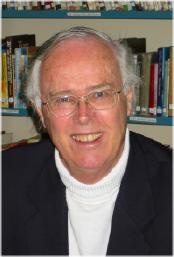
'A TRANSFORMED Church for a Transformed City' was the theme in early October, as veteran evangelist, author and African Enterprise (AE) founder Michael Cassidy made two appearances in Vancouver.
He presented 'The Marks of the Church Jesus Prayed For' October 5, at Broadway Church; and then on October 7, at Glad Tidings, he led a 'Consultation on City Reaching and Transformation.'
Cassidy said evangelicals needed to use the early church as an example, referring to the description in Acts 2:14-17. The major principle Christians should derive from that passage, he told CC.com, is "the togetherness of the church." However, he added, "One has to aim for what is also in verse 42: there was a togetherness in truth, not just a togetherness based on the lowest common denominator.
"The exciting thing about Acts 2 is what follows from that togetherness: a spontaneous and effervescent explosion of mission and evangelism." Mission, he said, "is a logical outflow of the togetherness; the early church was effective because of the togetherness."
Enriching that togetherness, he said, were concepts inspired by Jesus' prayer for the church in John 17: "The two poles of the prayer are truth and holiness at one end, with unity and love at the other end."
During his presentations, he also spoke of 'seven Goliaths' - glaring social problems -- which have troubled his native country of South Africa. Asked to outline his perception of what Canadian evangelicals need to be most mindful of, he responded:
"It's a bit presumptuous for me to say, but these are my impressions of what your Goliaths are in Canada: materialism, hedonism, family crisis of marriage and the home, confusion on sexuality and ethical issues, apathy in some churches and inadequate disciplining of children." He also cited "prejudice toward immigrants and First Nations people," adding: "Canada is one of the world's most open societies; but the openness can be selective."
Asked what should the 'Davids' of the church should to do to topple these Goliaths, Cassidy quipped: "Get a sling and some stones."
Regarding the current challenges to traditional marriage, he asserted: "One thing is needed: a positive affirmation of what marriage is." Evangelicals, he added, need to be wise in their approach to the same-sex marriage issue. "Great tenderness, love, compassion and attempts at understanding need to be directed at homosexuals." However, he cautioned, "to withhold approval of homosexual behaviour and practice is not to be homophobic."
Commenting on the various 'tent cities' set up by squatters recently in Vancouver, Cassidy especially exhorted Canadian Christians to grapple with "the Goliath of the poor, the homeless, the marginalized and the often powerless. This is also one of our Goliaths in South Africa."
He then recommended what he considers an effective strategy for maximizing the resources available in the Christian community. "How can people on different sides of the church learn from each other unless they come together? Working together is very powerful and creative. Encourage the church leadership to come together across denominations, on a theologically heterogeneous basis -- evangelicals, liberals, Catholics and others." Next, he said, "cluster people around the needs of the city."
He cited AE's 'Block Buster' campaign, about which he writes:
"The entire city is broken down, according to the city map, into blocks one kilometre square. Research is then done into what churches and Christian resources are located in each block, and then an attempt is made to connect these to the special needs of people, homes, factories, schools or whatever exists in that block.
"As the Christian resources of that block are linked to the need, and as the believers in that one kilometre square block come together, so they are challenged to make their own particular block the target and focus of their own witness and outreach during the citywide endeavour."
Further, he told CC.com, Christians "need to confer and meet and gather at the city level, then the provincial level, and then the national level. You need Christians from all domains -- pastors, business leaders, lawyers; people involved in social justice issues; people in fields such as sports, science, arts and agriculture. Ask them to look at all the issues from the place of their domains."
Cassidy also shared a metaphor drawn from Numbers 13 and 14. Referring to the 12 spies sent into Canaan -- 10 of whom concluded that the Israelites would be defeated if they attempted to conquer the land -- Cassidy declared: "You can either look at the problems through the eyes of the 10, through man's eyes; or else take the example of Caleb and Joshua, and look through the eyes of faith. Lack of faith stirs the Lord's anger; 40 years in the wilderness was God's judgement on this episode.
"Looking at the problems from a paralysis-inducing lack of faith displeases God, and it means God's work doesn't get done. Canadian churches could spend another 40 years in the wilderness -- or they could 'take the land.'"
However, he admonished: "Salvation and prayer are not enough. People must learn how to live under the kingship of Christ; otherwise, the kingdom can't be present in their lives." There must, he said, be a transformation "into kingdom living -- Thy kingdom come, Thy will be done on earth. It is the obligation of Christians to live under the kingly rule of Christ on a day-to-day basis; otherwise the kingdom is compromised."
To accomplish all these things, Cassidy stressed, Christians must "lay a strong basis and foundation in prayer."
Cassidy has also been involved in the 'African Transformation' movement for the past several years, through mass rallies. "In 2001, in South Africa, we had 45,000 people in one rugby stadium. In 2002, there were 330,000 in eight stadiums. On this past May 1, there were more than 2.5 million in 88 stadiums -- in South Africa and 27 other African nations."
He asserted that a similar prayer initiative, a decade ago, helped South Africans survive as the Apartheid system was disintegrating. "From 1993 to 95, we had non-stop prayer, 24 hours a day; there were millions of people in prayer chains, in churches and homes. It was done systematically, with people scheduled for certain times. People elsewhere joined them -- in Canada, the U.S., Australia, Switzerland and the U.K. This initiative helped avert a civil war."
Cassidy concluded: "In the strange economy of God, he moves when people pray. The Lord tells us to pray; he stirs his people to pray, and he answers these prayers."