
Missions Fest 'birthed out of the heart of God'
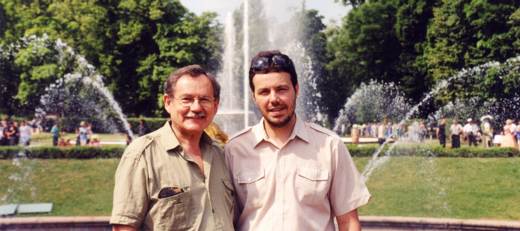
Richard Dodding is CEO of Missions Fest Vancouver -- which will be holding its next annual event January 30 - February 1. He recently spoke to CC.com, giving his perspective on contemporary missions.
CC.com: Missions Fest Vancouver is entering its 21st year. What is most significant about the first 20?
Richard Dodding: Most significant is that many churches have been working together for the sake of mission around the world. Now there are about 150 sponsoring churches from most of the Christian denominations -- and many other churches [are coming] alongside, having not yet formalized a working agreement.
This conference has a worldwide impact. We cannot keep a record those who God called during Missions Fest and who are now serving full time globally. Some of the seed was planted during the children's programs, and are now bearing fruit as people go out to serve the nations.
This annual event continues to stir up the [local] Body of Christ to be thinking about the needs of others. It helps the church see the big picture, and why its local ministry is so important in God's kingdom. And, it helps to keep in balance the international needs, compared to our local needs.
Hundreds of volunteers experience the fellowship and shared vision for mission, as they serve each year to organize and operate the conference. The comradeship and friendships are valuable products of this joint venture each year.
When mission agencies come together, they learn from each other -- and consequently, new strategies and perspectives bring many positive changes to their organizations, and the way they reach out to a needy world with the life-changing gospel of Jesus Christ.
Missions Fest has been a catalyst to create a vision for mission and a renewed sense of responsibility for global outreach. One evidence of this is the number of Perspectives Courses that have proliferated in Greater Vancouver. Five to six courses are held annually, with an average of 20 to 30 people involved in each.
CC.com: The Missions Fest movement began in Vancouver, and has spread to several other locations worldwide. What are your thoughts on the success of the movement?
RD: In regard to what people see as 'its success,' it is, in fact, something birthed out of the heart of God. It is his work, he has provided and brought people together to be reminded of what he called them to do in the words of Jesus referred to as the Great Commission .
At a time when the missionary vision is in considerable decline in the West, Missions Fest is a fresh breeze generating a new commitment of response to unreached people groups; a spirit of compassion for people in the inner cities; a spirit of generosity in giving for the support of missionaries, both from the West and those missionaries of Third World origin; and the development of spiritual networks of ministry around the world. Missions Fest has also been a profound benefit to mission agencies who struggle to find a venue to gain access to local Christians. vAs more cities discover what God is doing through Vancouver's annual festival, they are asking how they can replicate it in their locations. One can attend a Missions Fest in many cities across Canada: Edmonton, Winnipeg, Toronto, Montreal and Halifax. Our American neighbours are now holding affiliated conferences. Portland had their second in October of 2003. Perth, Australia had two.
CC.com: Where do you see the Missions Fest movement heading in the future?
RD: We are exploring ways to include equipping with mobilization, such as the Institute for Intercultural Mission that began in May, 2003
We have begun to be a growing resource and voice for fostering mission within the Vancouver context, such as the Vancouver Persian Partnership.
Since we live in a changing world, Missions Fest Vancouver will continue to adjust to these changes and plan accordingly. The original mandate was to help people 'find their field,' that fit with God's call on their lives. New and more accessible means to assist people will develop in the future.
Since Missions Fest is a church-driven event and has access to dynamic resources, it can assist the church with its vision for mission. It will become a stronger agent of consultation and education for churches and denominations.
CC.com: Can you give some perspective on the state of missions worldwide, and the progress of the Great Commission?
RD: When we learn about what God is doing in China, we realize that God's mission is much greater than we could have ever imagined. India, too, is experiencing great inroads of the gospel, with so many indigenous missions taking the lead.
Central Asia, once a little-known part of the world, is now coming alive with new believers. Russia, in spite of what might have seemed to be huge obstacles, is realizing changes never seen before in the propagation of the gospel.
Africa, along with its sorrowful epidemic of the HIV/AIDS affliction, is experiencing many revivals throughout the continent. The evangelical church in Latin America is growing at an incredible rate. In four or five countries of that region, there are now more evangelicals in church on Sunday morning than there are Roman Catholics. Countries like Gautamala, Argentina and Chile have very sizeable evangelical populations.
Third World missions is outstripping the West in their sending, giving and going. Korea now sends out and supports 8,000 missionaries.
CC.com: What are some of the key trends in international missions?
RD: Both informal and formal partnerships are forming where organizations are working together to get the task accomplished. Due to the massive migrations taking place around the world, new pockets of receptivity are emerging daily. Recent immigrants to Canada -- Korean, Fijian, Chinese, Filipino, Latinos and Burmese -- have become very open to the gospel. Muslim immigration is significant, despite the setbacks of 9/11. According to Patrick Johnston, more Muslims have converted to Christ in the last 13 years than in the entire period from Mohammed to 1990.
Urbanization continues as a very important trend. Short term missions [are important]; the key challenge is how to tap this phenomena beyond being merely a 'rite of passage' for Christian young people, into an effective missionary arm of the church.
Missions and security -- this is a reality of the post 9/11 world, and part of counting the cost of being active in mission. 'Tentmaking' or bivocational ministries are becoming increasingly important, and may become the only way to serve unreached people groups.
Holistic ministries that touch both the physical and the spiritual needs have never been [more essential]. For example, the recent report issued from the UN states that "25 million die of hunger per year."
CC.com: Who are some of the key people in the contemporary missions movement?
RD: Probably most of the key people in the contemporary mission movement are people unknown to most of us. Missiologist David Hesselgrave once said: "Missionaries. You'll never be rich, and you'll never be famous, but you will travel."
Seriously, the call of missions is a call to service to 'the least of these' of our world. However, over the years we have exposed at Missions Fest many remarkable people, who have had significant impact in the world missions movement. A few examples would be David Wang, George Verwer, Bruce Olssen, Vishal Mangalwadi, Chris Marantika, Tony Campolo, Brother Andrew and many others.
CC.com: Who are some of the more dynamic B.C.-based people involved in world missions?
RD: Naming names is very difficult -- as invariably, we would omit some who should be mentioned. Probably, as said before, the most significant are not known to us. However, we observe Ron Pearce and David Waines, who are in the forefront of missions these days -- but we leave out a host of others not named.
CC.com: What are your plans for upcoming Missions Fests?
RD: This is an ongoing question the leadership of Missions Fest seeks to address every year. Currently, the vision remains the same: to provide current information, to celebrate God's work, and to invite people to participate in the Great Commission. And, we wish to continue to encourage and assist other cities in holding Missions Fest conferences.