
Incorporating truth: distinguishing faith from 'spirituality'
 |
IN THE recent and controversial Canadian documentary, The Corporation, phrases like 'moral responsibility' and 'guilt' are used freely -- as the film argues corporations are totalitarian institutions, devoid of conscience and servant values.
Words which imply moral standards have not always been welcome in so-called secular circles; but the recognition of various types of abuse by corporations is certainly bringing the language of moral values and truths to the fore once again.
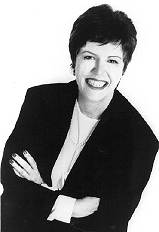
This is welcome news for Ann Coombs, author of the national bestseller, The Living Workplace: Soul, Spirit and Success in the 21st Century. She believes that the ability to speak truth into the corporate world is the only way to maintain one's faith with integrity.
"It's about being challenging and thought provoking, as opposed to just making people feel good," she says. She wrote her book as a way to find a bridge between the reality of corporations and the truth of one's spiritual values. In other words, at what point to individuals start idolizing profit?
"Corporations exist to serve profit and shareholders; but who are we here to serve? There is such a disconnection between true spirituality and the workplace that we need to name it. The person who names it will have to be very courageous, because it will be the truth," she says.
Coombs has proposed a business model to counter the traditional Strength, Weakness, Opportunity and Threat (SWOT) model, and to instead reflect Spirit, Wisdom, Openness and Thoughtfulness.
"Since 9/11, we're living in a fear culture -- and from society's perspective, we're more into control than every before. This does not augur well for openness, truthfulness and fearlessness of the individual spirit to bring creativity, love, hope and patience to work. Where is that in the job description?"
She adds that faith in the workplace is not about being judgmental of others, but about being clear about our faith base. "Faith in the workplace will remind me to be non-judgmental, to be patient and gentle," she says. It's important, she adds, to distinguish faith from spirituality -- because many see spirituality as being just about 'feeling good.'
While it's valid to bring the spirit to work, this type of spirituality is not about faith or what we are called to do, she says. The definition of spirituality seems to be as varied as the people who name it. But for Coombs, true spirituality is distinctly different from just being inspired.
"We can be tricked about how God works in the workplace," she says. Marketers are now exploiting the concept of spirituality in the workplace, she adds, describing that as a "terrifying thought." When you've got angels selling cream cheese, she says, you've got the wrong idea about spirituality.
Coombs says: "I'm prepared to stand forth and serve God, and know that he'll look after me when I'm clear about serving him. I'm going forth with qualities and values and his words."
Coombs intends to make her thoughts about faith and spirituality clear when she addresses a Canadian Businesses for Social Responsibility event in Vancouver March 11.
Related stories:
An anti-corporate snuff film
Despite interviewing every left-wing icon under the sun -- from Noam Chomsky to Howard Zinn to Ms. Klein -- the directors can't offer their viewers a serious vision for what should replace the capitalist system they so fervently despise. The closest they come is a scholar who rhapsodizes about the communal land ownership system enjoyed by medieval peasants.
Jonathan Kay, National Post, February 6