
CBC crowns Baptist socialist 'the Greatest Canadian'
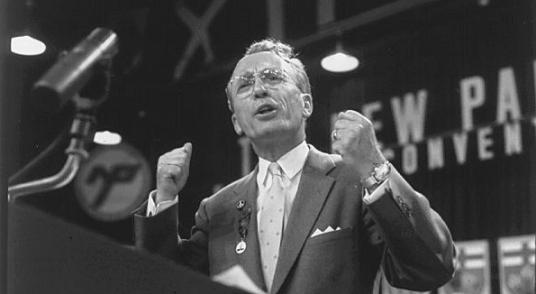
TOMMY DOUGLAS, the late former leader of the federal New Democratic Party and the mastermind behind Canada's universal Medicare system -- and a Baptist minister, as well -- has been officially deemed 'the Greatest Canadian' by CBC Television.
The public contest, based on 140,000 public votes cast last spring, culminated with a prime-time countdown November 22, with MuchMusic producer and host George Stroumboulopoulos documenting the life and milestones of Douglas. He is the one who nominated the former premier.
"Tommy Douglas never got the kind of attention he deserved," George said in an interview with the Weyburn Review, a newspaper from Douglas' hometown. "I didn't learn about him in school. You just don't learn that much about him. But clearly, we have to get to a point where we start recognizing and appreciating our true heroes. And Douglas is the greatest one this country's ever had."
In addition to serving five terms as premier of Saskatchewan, Douglas passed more than 100 bills, introduced universal Medicare, paid off a provincial debt of some $20 million (the highest in Canada at the time), removed sales tax from food and meals, pastored Calvary Baptist Church in Weyburn, married and had two daughters, and became the first leader of the federal NDP, a position he held for 10 years. He retired from Parliament in 1979 but remained a prominent public figure. He died from cancer in 1986.
Douglas was born in Scotland and his ironworker father brought the family to Winnipeg in 1911, the then hub of the 'social gospel' movement. He became a printer's apprentice at 14 and completed degrees in arts and theology at Brandon College. He became a pastor in 1930, just as drought and economic depression began to ravage the province.
Calvary Baptist served as the distributing centre for the area's needs. In 1932, his mentor and his family's Methodist minister, James Shaver Woodsworth, urged him to join the Saskatchewan Farmer Labour Party, which soon became the Cooperative Commonwealth Federation (CCF). He was at the first CCF caucus in Ottawa as one of the party's federal candidates. In 1942, he assumed leadership and was voted as premier in June 1944.
Before dying, Douglas said: "You're never going to step out of the front door into the kingdom of God. What you're going to do is slowly and painfully change society until it has more of the values that emanate from the teachings of Jesus or from the other great religious leaders."
The faith of Pierre Trudeau, another of the top 10 finalists, also became a matter of public record after he died. At his funeral in 2000, Fr. Jean-Guy Dubuc said Trudeau would "pray with Benedictine monks near his home on lunch hour, a faithful believer, he would go to his parish church on Sundays." In his time as Prime Minister, he "took the state out of the bedrooms of Canada" and reformed the divorce and abortion laws.
Some commentators were not impressed by the CBC series, and said the nominees were trivial or did not represent Canada at its fullest. Macleans writer Shanda Deziel said Canadians should be "turned off by the fact that a hockey commentator made this [the original top 50], which is void of women and natives." She called the survey irrelevant and said that, although it may have been "fun," it was "futile."