
 |
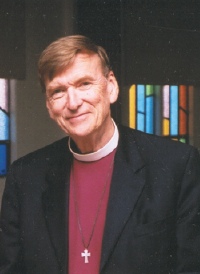
Spong 'loves the Bible,' decries scripture's 'sins'
VANCOUVER area Anglicans kicked off a global controversy three years ago when they voted to endorse the official blessing of same-sex unions. So it was fitting that John Shelby Spong, the controversial former Bishop of Newark and an outspoken liberal himself, came here to launch a 10-city tour of North America in support of his newest book, The Sins of Scripture: Exposing the Bible's Texts of Hate to Reveal the God of Love.
Spong began his April 15 lecture at Christ Church Cathedral by saying it was great to be in the company of local Bishop Michael Ingham, who authorized the same-sex blessings despite opposition from a number of bishops and archbishops, as well as several of his own parishes. Spong called him "my favorite Anglican bishop in the whole world."
The Sins of Scripture is a series of essays on passages in the Bible that Spong says have been used to justify immoral attitudes and behaviour, such as anti-Semitism, male chauvinism, homophobia and child abuse. He said the title he had wanted to give his book was 'The Terrible Texts of the Bible,' but the publisher re-named it.
| Image not preserved |
Spong said he wrote the book because this subject needed to be addressed by "someone who is within the Christian community and clearly loves the Bible." He said the Bible gets off to a problematic start right from the first chapters of Genesis, where God commands the first human beings to be fruitful and multiply.
"From that, we get overbreeding and excessive population," Spong said, adding that, contrary to what some Christians say, he believes it is "immoral" to not practice family planning.
The opening chapters of Genesis, he said, have also been used to undermine the equality of the sexes: "Only Adam, the man, is created in God's image." He said this belief was supported by the Ten Commandments, which treat wives as a form of property.
Spong said the God of the Torah was a "tribal deity" created by the ancient Hebrews to support their prejudices against Egyptians and others, but the Minor Prophets, such as Hosea and Micah, helped to "raise the consciousness" of the Bible by depicting the love of God for all people. This, he said, set the stage for the more inclusive message of Jesus.
In his book and lecture, Spong repeated arguments made in his earlier books, such as his belief that the apostle Paul was a self-loathing homosexual. Some points, regarding racial segregation and anti-Semitism, reflected his upbringing in a fundamentalist home in the 1930s and 1940s. "Nobody ever told me that Jesus was a Jew," he said.
He also took issue with the evangelical emphasis on the sinfulness and fallenness of human beings, noting that even popular songs like 'Amazing Grace' make the point that the person singing them was a "wretch" before God saved them. Spong asked why Christians couldn't talk about God positively without talking about humanity negatively.
"I don't know about you, but I'm tired of going to church and hearing my humanity insulted," he said. "It can't be good theology if it's based on bad psychology."
Spong's emphatic speaking style was reminiscent of Billy Graham; while both men are at basically opposite ends of the theological spectrum today, they were both born in Charlotte, North Carolina between the World Wars.
One of his final points was that people need to be encouraged "to be all that they can be." He added: "Anything that diminishes the life of any human being is wrong, and anything that enhances the life of any human being is right and good."
Spong concluded: "The Bible is not finished. You and I, today, are writing the next chapter in this incredible faith story."