
Sharia law decision opposed by religious groups
REPRESENTATIVES of some of Canada's major faiths are united -- in opposition to a decision just announced by one of Canada's premiers.
"There will be no sharia law in Ontario," Dalton McGuinty declared September 11.
Strict Islamic law, however, is not the only thing which will be affected by his government's policy. Speaking to the Canadian Press, he added: "There will be no religious arbitration in Ontario." Such arbitrations, he said, "threaten our common ground."
McGuinty said his government intends to provide "one law for all Ontarians. [They] will always have the right to seek advice from anyone in matters of family law, including religious advice. But no longer will religious arbitration be deciding matters of family law."
According to The National Post, legislation will be introduced later this year, outlawing the use of religious tribunals.
McGuinty's announcement came after international protests over the proposed implementation of sharia law in Ontario. Demonstrations were held recently in various Canadian cities, as well as London, Paris, Amsterdam and Dusseldorf. Protesters maintained that sharia discriminates against women.
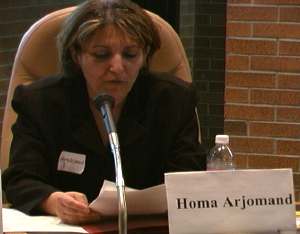
Homa Arjomand, coordinator of the International Campaign Against Sharia Court in Canada, thanked McGuinty "for listening to the people and for having the courage to make this historic decision." She added that the ruling "will improve the standard of human rights for everyone in Ontario."
Arjomand said her group would now focus on "how to prevent religious arbitration from continuing underground, and how to assure the laws of Ontario are followed and enforced. It seems we'll need to educate the communities, especially the people who are most vulnerable to private religious courts."
Spokespersons for several faith-based groups quickly registered their objections to McGuinty's statements. The Canadian Islamic Congress (CIC), which represents both Sunni and Shia Muslims, called the Ontario move "misguided." The CIC said in a press release: "We believe that regulated and recognized faith based arbitration is less vulnerable to abuse than unregulated and unrecognized arbitration because it allows transparency and accountability."
One of the key Canadian proponents of sharia, Syed Mumtaz Ali, condemned the Ontario decision as "Islamophobia," and insisted that it "infringes on our guaranteed freedom of religion." He told The National Post: "I wouldn't be surprised if there is a court challenge that goes all the way to the Supreme Court. These are very fundamental rights being affected."
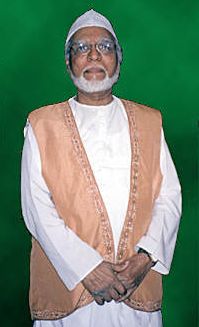
Steven Shulman, regional director and general counsel for the Canadian Jewish Congress in Ontario, told CC.com: "We are strongly disappointed by the way this was done."
"As Canadians who live in a democratic, multicultural society, we find it shocking that the premier would make this kind of decision without proper consultation both from within his government, and with external parties who will be affected by this change," added CJC chair Joel Richler.
"To prohibit and outlaw Christian and Jewish mediation committees because there is an issue within the Muslim community itself doesn't seem to follow a very fair path," B'nai B'rith Canada executive vice president Frank Dimant told CanWest News Service.
"I believe that society is best served when individuals are free to take their actions based on the fundamental freedom of religion that is a cornerstone of Canadian democracy and protected by our constitution," John Weston, a Christian constitutional lawyer and Conservative candidate for West Vancouver, told CC.com.
Weston added: "If people freely enter into arbitration . . . based on rules that they agree upon in advance -- and they understand those rules -- then I think the results will be better than if they are imposed by, let's say, a court system."
"In one sense, the Ontario decision is a good way to ensure that the same family law is applied uniformly to all Ontarians," said Janet Epp Buckingham, director of law and public policy for the Evangelical Fellowship of Canada. "On the other hand, it is indicative of a government that does not respect people's rights to live in accordance with their fundamental beliefs."
Shulman stressed that CJC are "not experts on sharia, or any other form of religious law." However, he said some of the recent protests had obscured what he considers the key issue, giving the public the impression "that somehow this was about sharia law and not about faith-based arbitration in general."
Epp Buckingham said she makes a distinction between sharia law and Muslim personal law. "Muslim personal law is family law under the Islamic system. Sharia law includes the entire Islamic code -- criminal law, stonings, et cetera. The rest of sharia law was never at issue in Ontario, or elsewhere in Canada."
She added that opinion within the Christian community is "divided" on the issue of Muslim arbitration boards. "Some were very concerned about allowing decisions of boards that apply Muslim personal law to be enforced through the courts. But others argued that people should be able to live in accordance with their deeply held religious beliefs. Both points are valid."
Further, she noted that the decisions of binding arbitration boards can be enforced in Canadian courts. "It is one thing to choose to follow your religious beliefs, but quite another to have them enforceable as orders of the court," she said. "While the decision to outlaw all religiously based arbitration seems heavy handed, it was the only way the premier could deal with the issue in a way that was equal for all religions."
Muslim personal law, she contended, is "discriminatory against women. Men can obtain a divorce much more easily than women. Women are only entitled to spousal support for three months. Custody of children passes to the father when the child reaches eight years of age. It is Muslim women who led the campaign against Muslim arbitration boards because of their own experiences of discrimination."
Many Muslims, she pointed out, "came to Canada to escape the strict enforcement of sharia law." Canadian legislators "would be wise to refuse to recognize sharia law -- lest we end up with a patchwork of different legal systems that people can opt into. Muslims continue to have the option to voluntarily allow Muslim personal law to be applied to their family disputes through mediation by an imam, and many Muslims follow this option."
Several critics of the Ontario decision maintain that the government is making poor use of its own resources.
Rachael Turkienicz, vice chair of the CJC national executive, said Ontario "has completely ignored the report it commissioned from Marion Boyd, former attorney-general of Ontario. Her mandate was to explore the use of private arbitration to resolve family cases. Her recommendations proposed ways to balance the rights of faith and other communities with the rights of vulnerable minorities within those communities."
In a pluralistic society, she added, "we would expect the government to act with sensitivity towards interfaith issues. We would expect that appropriate consultation is not only desired, but a necessary part of the trust relationship."
According to the National Post, Boyd's report "recommended 'Muslim principles' for potential use in arbitrating family disputes. Custody disputes, for example, could be settled outside of the provincial family-court system using sharia principles."
Shulman said the Ontario decision "came out of left field. It was not consistent with the report by Marion Boyd. The premier commissioned her to come up with a report on family law. She met with people from various faith communities."
Boyd, Shulman said, made 46 recommendations regarding how to "strengthen" the arbitration of family law disputes; some of these recommendations, he maintained, would help guard against the abuse of faith-based arbitration.
"Regulated and recognized faith based arbitration," stated the CIC, "was working well for Ontario's Catholics, Jews and Ismaili Muslims. This is a testimony to the value of this alternative and voluntary system of settling family disputes."
"Instead of examining how the arbitration system used for years in this province by numerous faith communities could be enhanced and further safeguarded," said Richler, "the Premier has decided to throw the baby out with the bathwater. He has ignored the recommendations his own government requested, and in the process has taken away people's rights.
"This development will not prevent or discourage people who would otherwise choose faith-based arbitration from doing so. It will only serve to remove the checks and balances that are already in place, and will prevent the enhancement of those checks and balances to ensure even greater protection under Canadian law."
Shulman said all faith-based arbitrations should be allowed "if any religious community can come within the requirements that Canadian principles of law are adhered to." CJC, he said, are "sensitive to concerns that people could be forced into faith-based arbitration. Greater public scrutiny will lead to less abuse." The Ontario decision, he asserted, could possibly lead to more instances of abusive arbitration, by "driving it into the shadows."
CJC, Shulman told CC.com, is hoping to meet soon with McGuinty to discuss the issue.
Related stories:
Female MPPs' concerns delay sharia decision
Ontario government urged
to go slowly on proposal to allow Islamic tribunals
Globe and Mail, September 8
Ontario Shariah law plan protested
Fears move would threaten rights of
women
National Post, September 9
Also: Vancouver Sun
McGuinty rejects Ontario's use of Shariah law and all religious arbitrations
Ontario will not become the first Western jurisdiction to allow the use of a set of centuries' old religious rules
called Shariah law to settle Muslim family disputes, and will ban all religious arbitrations in the province, Premier Dalton McGuinty told The
Canadian Press on Sunday. In a telephone interview with the national news
agency, McGuinty announced his government would move quickly to outlaw existing religious tribunals used for years by Christians and Jews under
Ontario's Arbitration Act.
Canadian Press, September 11
Religious groups say they'll fight to keep tribunals
Jewish, Muslim organizations upset after premier scraps faith-based arbitration
Canadian Press, September 12
Ontario rejects sharia law
Jews, Christians to lose their religious tribunals as Premier vows 'one law for all'
National Post, September 12
McGuinty government rules out use of sharia law
Following widespread condemnation of the plan, Premier says he'll make boundaries between church and state clearer
Globe and Mail, September 12
McGuinty says no to Shariah
Premier's surprise announcement ends all faith-based arbitration
Ottawa Citizen, September 12
Sharia law move
quashed in Canada
The head of Canada's Ontario province has rejected attempts to allow Muslims to use Sharia law in family disputes.
BBC, September 12
McGuinty faced rebellion in his caucus
The Liberal government at Queen's
Park inherited the political problem of sharia and has been wrestling with
a solution for the better part of a year. . . . It was the Arbitration Act
-- a law introduced by Ontario's NDP government 14 years ago -- that opened the door to religious arbitration of family law disputes. The motivation for the move was to offer consenting couples an alternative settlement mechanism and thereby relieve pressure on the province's overcrowded courts.
Ian Urquhart, Toronto Star, September 12
Ban on religious courts draws multi-faith attack
Jewish, Muslim groups say hasty McGuinty move will backfire, hurt women
Ottawa Citizen, September 13
Female caucus swayed McGuinty on sharia law
Unanimous opposition from
17 ruling MPPs; McGuinty sped up announcement, source says
Richard Brennan, Toronto Star, September 13
McGuinty's sharia call
Premier Dalton McGuinty may have rid himself of a
nasty political controversy by deciding to ban faith-based arbitration in
Ontario, rather than introduce Islamic traditions into a process already
used by Christians, Jews and others. But by signalling his move in a hurried weekend phone call to the Canadian Press news service, without consulting those affected, McGuinty looks more like a firefighter than a
crafter of coherent public policy.
Editorial, Toronto Star, September 13
One law to rule them all
When Canadian Muslims demanded the right
to use faith-based tribunals to settle civil disputes, as used by Christians and Jews, the government baulked and banned them all.
Guardian, September 14
Jews, Muslims to Seek Tribunals in Canada
Jews and Muslims in Ontario
pledged Wednesday to fight for faith-based tribunals to settle family disputes after its premier stunned their communities by announcing he would ban all religious arbitration in Canada's largest province.
Associated Press, September 14