
Canadian Christians send relief to Lebanon
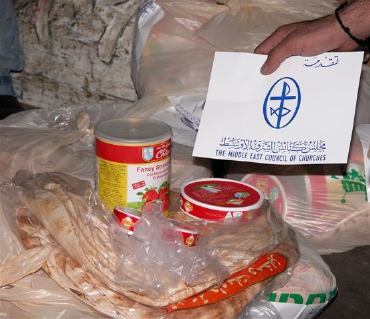
AS ISRAELI BOMBS rain down on Lebanon, aid agencies -- including Canadian Christian relief organizations -- are trying to respond to the emerging humanitarian crisis.
The Israeli onslaught -- triggered by recent provocations by the Hezbollah militia -- has been destroying Lebanon's infrastructure, including roads, bridges, airports and fuel supplies. It is estimated that some 500,000 to 600,000 people have been displaced in Lebanon by this conflict -- most fleeing from the south, and many from parts of Beirut.
As CC.com went online, some 60,000 people had been evacuated to Cyprus. According to one Arabic estimate, the death toll so far includes at least 430 killed in Lebanon, and 41 dead in Israel.
Lebanon is a small country, with an area of 10,452 square kilometres (4036 square miles). In 1997, the estimated population was around three million -- not including Palestinian refugees and foreign workers, mainly Syrian. Lebanon, like other Arab countries, has a complex religious tapestry; however, unlike most Arab nations, the country has a high degree of religious and cultural diversity.
Estimates of the number of Christians vary. Around 30 percent of Lebanese people describe themselves as "Christian." Most belong to the Maronite Catholic Church and live in northern Lebanon and parts of the capital, Beirut. Other Christian groups include Greek, Coptic and Armenian Orthodox communities, as well as some evangelical Protestants.
Some Christian relief and development organizations have had a presence in the Middle East for decades. In the case of the Mennonite Central Committee (MCC), the group has been in the region for more than half a century.
Rick Janzen and his wife Jan, the European and Middle East directors for MCC, left Beirut July 10, escaping from Lebanon just before Israel's offensive began.
"We are very discouraged about what is happening there," Janzen said. "We all understand the stance of Hezbollah as indefensible; but we have no comprehension how destroying the country can weaken them."
MCC retains a presence in the country with a solitary Lebanese staff member, Bassam Chamoum, who mans the office in Beirut. Power and communication has been maintained so far, and MCC Canada gets reports many times during the day.
In an e-mail July 25, Chamoum described meetings he had attended that day with government representatives in Beirut, stating: "The government's starting today six refugees camps, taking place in soccer fields in Beirut and other areas. The numbers are: 635 schools as displacement centers; 750,000 internally displaced peoples; 200,000 Lebanese left the country, mainly to Syria and other Arab countries."
Asked how best to help the situation on the ground, Janzen said: "We are partnering with the Middle East Council of Churches [MECC]. Most Christian groups belong to them; and they are coordinating NGOs and churches, to assist in [helping] the displaced."
MCC has donated an initial $40,000 US, and will likely send further similar emergency amounts.
In their July 25 update on Lebanon, MECC reported a "critical situation with a mounting lack of food and medical supplies," and stated that the MECC Emergency team "has been meeting with different government institutions, UN agencies and local and international NGOs -- for coordination and collaboration purposes."
A poignant glimpse into one Christian's situation in the midst of the war was forwarded to CC.com by MCC. The July 25 e-mail came from Mary Mikhael, president of an evangelical school in western Beirut. Mikhael wrote:
"I greet you from the wounded city, Beirut; from the country of burned beauty, Lebanon. But most warmly from the Near East School of Theology, that has been a nest for families and students from Nabatieh -- and from Marjeoun in the south and from the Becaa Valley. Those have had no choice but to leave their homes and town and come to the safety -- up till now -- of our area in Beirut."
Mikhael noted that, in addition to Lebanese and European students, people from a variety of nations were still at the school, including residents of Sudan, Sri Lanka, Bangladesh, Britain and Canada. Several were in the process of arranging evacuations.
"All rooms that are getting empty are prepared to be used by Lebanese displaced," she continued. "In addition, our gymnasium will be a store for relief material for the displaced -- which MECC will receive and distribute."
Mikhael's e-mail concluded: "All these [conditions] bring back to our minds the memory of the sad events in the '70s and '80s. Dear friends, please continue to pray for us, for peace to the region and for justice and righteousness to prevail for all."
Another key Canadian Christian organization in the region is World Vision, which has been working in Lebanon since 1975. CC.com was unable to reach a World Vision spokesperson; however, their website states that World Vision "is addressing the needs of more than 5,000 Lebanese people, displaced by the conflict between Hezbollah and Israeli military."
Further, "internally displaced people began migrating into World Vision project areas just days after bombing by Israeli forces began. Many of the displaced people are women and children who lack food and medical supplies. World Vision is helping families find shelter in mosques and schools, and is providing food, water, baby food, and medical and hygiene supplies."
MCC, meanwhile, is planning further assistance -- depending upon how logistical factors develop in the coming weeks.
"We are going to send an assessment team into Lebanon, hopefully around the middle of August," Janzen said, adding: "From that, we can increase donations substantially in three areas: cash, materials including food, medicine, and baby kits, and perhaps volunteers such as engineers. However, we prefer to employ locals."
Related stories:
Two sides, imprisoned by their own histories
As the rockets fly and the bombs fall and casualties on both sides of the Israeli-Lebanese border rise by the day -- the vast majority so far being Lebanese -- the repercussions are being felt as far away as the Lower Mainland, which is home to large Jewish and Arab populations.
Vancouver Sun, July 22
'Christians, Muslims, we're all together now because of the war . . . we're all Lebanese'
When Faiz Osman and his relatives fled their homes in south Lebanon -- 18 people crammed into a bedraggled brown station wagon -- they had no idea where their journey would take them. It was a desperate scramble just to escape their war-hit hometown, which had been made unlivable by constant Israeli attacks and growing food shortages. Last night, after several days on the road, their exodus ended in this scenic Christian village in the mountains northwest of Beirut.
Globe and Mail, July 22
July 27/2006
