
Pope, Archbishop of Canterbury discuss church unity
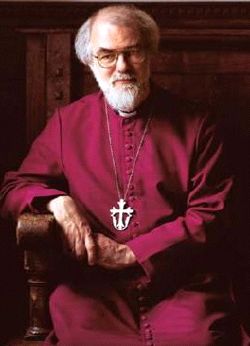
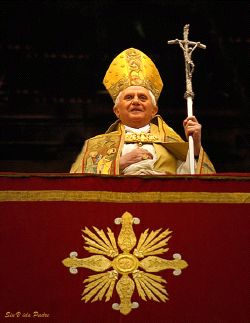
ROWAN WILLIAMS, Archbishop of Canterbury and leader of the Church of England, met with Pope Benedict XVI, head of the Roman Catholic Church, in Rome November 23. In a joint statement issued afterward, the two affirmed that they were "renewing our commitment to pursue the path towards full visible communion."
The relationship between the two offices began in 596, when Pope Gregory the Great sent Augustine, the first Archbishop of Canterbury, to England to be the leader of the fledgling Christian church there.
However, the Church of England broke away from the Roman Catholic Church in the 1530s as a result of the Protestant Reformation and the desire of the English King Henry VIII to be divorced from his Roman Catholic wife.
Since that time, there had been no meetings between the Pope and the Archbishop until 1966. In that year, as a result of the changes made in the Roman Catholic Church by the Vatican II council, Pope Paul VI met with Archbishop of Canterbury Michael Ramsey.
This month's meeting thus represents the 40th anniversary of that historic meeting. After 1966, an Anglican-Roman Catholic International Commission (ARCIC) was established to study various theological issues. After issuing joint statements on various issues -- such as the Eucharist, or Lord's Supper; ministry and ordination; and authority in the church -- the commission completed its work in 1981.
A second commission was then appointed and recently completed its work after issuing statements on salvation, church authority and the role of Mary.
Canon Alyson Barnett-Cowan, director of faith, worship and ministry for the Anglican Church of Canada, said the statements outline areas of agreement and disagreement.
For instance, there are only "very minor differences" over Mary, but Anglicans do not accept the Roman Catholic doctrines of the Immaculate Conception, which states that Mary was born sinless, or the Assumption, which states that Mary was carried bodily into heaven.
And while Anglicans also are willing to give great respect to the role of the Pope, they are not willing to accept the Pope and his council as the supreme authority in the church.
The most joint recent declaration pointed out several areas in which Anglicans and Roman Catholics can work together:
- the pursuit of peace in the Holy Land and other parts of the world marred by conflict and the threat of terrorism;
- promoting respect for life from conception until natural death (that is, opposition to abortion and euthanasia);
- protecting the sanctity of marriage and the well-being of children in the context of healthy family life;
- outreach to the poor, oppressed and most vulnerable, especially those who are persecuted for their faith;
- addressing the negative effects of materialism;
- care for creation and the environment;
- inter-religious dialogue with non-Christians.
Observers suggested that this refers to recent trends -- among the more liberal wing of the Anglican Church -- to ordain women as bishops and recognize same-sex unions. The latter issue is particularly important to Canadian Anglicans, because of the intensely divisive controversy over the blessing of same-sex unions in the Diocese of New Westminster.
Fr. Gabriel de Chadarvian, chaplain at St. Mark's College at the University of British Columbia, said the Roman Catholic Church was close to recognizing Anglican ordinations 10 to 20 years ago, but then stepped back when the Anglican Church started ordaining women as priests. He noted that the Church of England is also moving toward ordaining women as bishops, something which has already happened in North America, and that that is an even bigger obstacle.
Fr. Gabriel said the other difficulty is orthodoxy -- the Anglican Church is so inclusive that it tends to accept both very orthodox and unorthodox theologies and practices.
At the same time that the Pope and Archbishop were meeting, Barnett-Cowan was participating in the annual meeting of the Anglican-Roman Catholic Bishops Dialogue. This meeting brings Canadian Anglican and Roman Catholic leaders together in order to learn from each other on issues of pastoral ministry. It also fosters working together on issues similar to those mentioned in the joint declaration of the Pope and Archbishop: aboriginal justice, water, peace.
Barnett-Cowan said she is "very pleased with the way things turned out" in the meeting between the Pope and Archbishop. She said the fact that the two apparently got along and didn't break off relations is "a positive development." She said she hopes this means that the ARCIC will be re-established, likely with some new members and a mandate to discuss new issues.
However, any notion that the two denominations might merge in the near future is very unlikely. "We are in this for the very long haul. We are working at healing very old and complex issues," said Barnett-Cowan.
She noted that the discussions are occurring in a larger context of increasing church cooperation. Shortly after the meeting with Williams, Pope Benedict XVI travelled to Turkey to talk with leaders of Eastern Orthodox churches. Barnett-Cowan noted that Roman Catholics are also cooperating with evangelicals on issues such as abortion, something that "would not have been thought possible a few decades ago."
She said she is not sure that full union between Anglicans and Catholics is likely. However, she does think 'full communion' -- recognizing each other as fellow Christians to the point of celebrating the Eucharist together -- is possible even if organizational union does not happen. Anglicans and Lutherans came to such an agreement five years ago.
Fr. Gabriel said that although it is "getting very difficult" to achieve unity, "We are all praying for a miracle. We want visible union with the Orthodox, Anglicans and other Christians before the Lord returns."
Barnnett-Cowan said that, in one sense, church unity is easier now that Protestants and Catholics "live side by side" in the same communities. "We know each other," she said, "and this dispels the myths about each other that used to divide us."
She added, "I hope that Christian churches grow closer together because it confuses people that there so many different sorts of Christians."
November 30/2006
